
burlesque - Master This Word
Master this word with our 5-step learning method – Learn English in English
Train English Through Brain Routes, Not Translation.
This page helps you stop memorizing isolated translations and start understanding a word through its shared mental image, native-style thinking, and practical training steps.
Master this word with our 5-step learning method – Learn English in English
Example sentences are the start of understanding. Don't rush to memorize. First feel how the word works in a sentence.
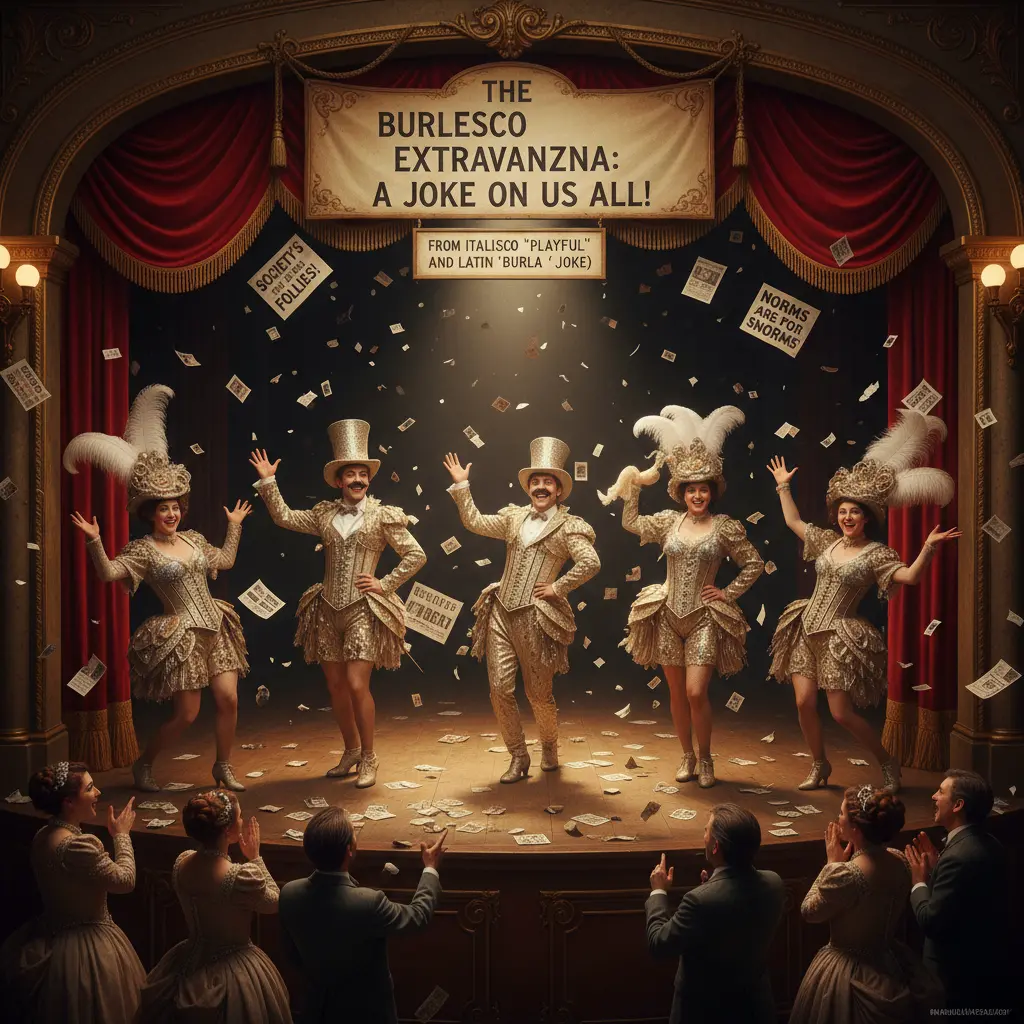
Root: burlesque (from Italian 'burlesco', meaning playful or humorous) originated from Latin 'burla', meaning 'joke'. Memory image: picture a lively stage with performers comically exaggerating movements, making the audience laugh while commenting on society's norms.
Note 1: These definitions and etymologies are not standard dictionary definitions, but extended explanations provided to help with memorization and understanding of the actual application of words. Through this background information, we strive to make words more vivid and easier to understand, and help you remember their meanings in real life.
Note 2: LexiTalk designs the learning flow around the linguistics principle of “Comprehensible Input.” When learners encounter material that is slightly above their level but still understandable from context, the brain naturally absorbs the language. That’s why we keep every word inside authentic contexts, using examples and associations to help you understand it and use it flexibly.
Read the FAQ explanation of Comprehensible InputBurlesque is a theatrical form that uses exaggeration, parody, and playful satire to comment on people, trends, and social norms. Historically rooted in 19th-century variety shows, it blends humor, music, dance, and clever imitation to lampoon subjects rather than to present serious drama. A burlesque performance often features larger-than-life characters, witty dialogue, and visual gags that push boundaries with a wink. While some modern burlesque retains risqué elements, the core idea remains: to entertain by poking fun at conventions and expectations. Learners can recognize burlesque by its intention to amuse through artful exaggeration rather than mere slapstick.
To an English speaker, burlesque often calls up satire and performance art, not mere vulgarity. Learners may confuse it with striptease or casual parody, so emphasize its historical roots, stagecraft, and the intent to critique society through humor.
What is the meaning of 'burlesque'?
Which of the following sentences uses 'burlesque' correctly?
Which word is most similar to 'burlesque'?
What is the opposite of 'burlesque'?
Can you think of a real-life context where humor imitates another setting?
Download LexiTalk app for personalized learning experience
Download AppCookies
We use cookies for essential site functions, analytics, and ads. You can accept, reject, or manage preferences. Privacy Policy