bush - Master This Word
Master this word with our 5-step learning method – Learn English in English
Train English Through Brain Routes, Not Translation.
This page helps you stop memorizing isolated translations and start understanding a word through its shared mental image, native-style thinking, and practical training steps.
Master this word with our 5-step learning method – Learn English in English
Example sentences are the start of understanding. Don't rush to memorize. First feel how the word works in a sentence.
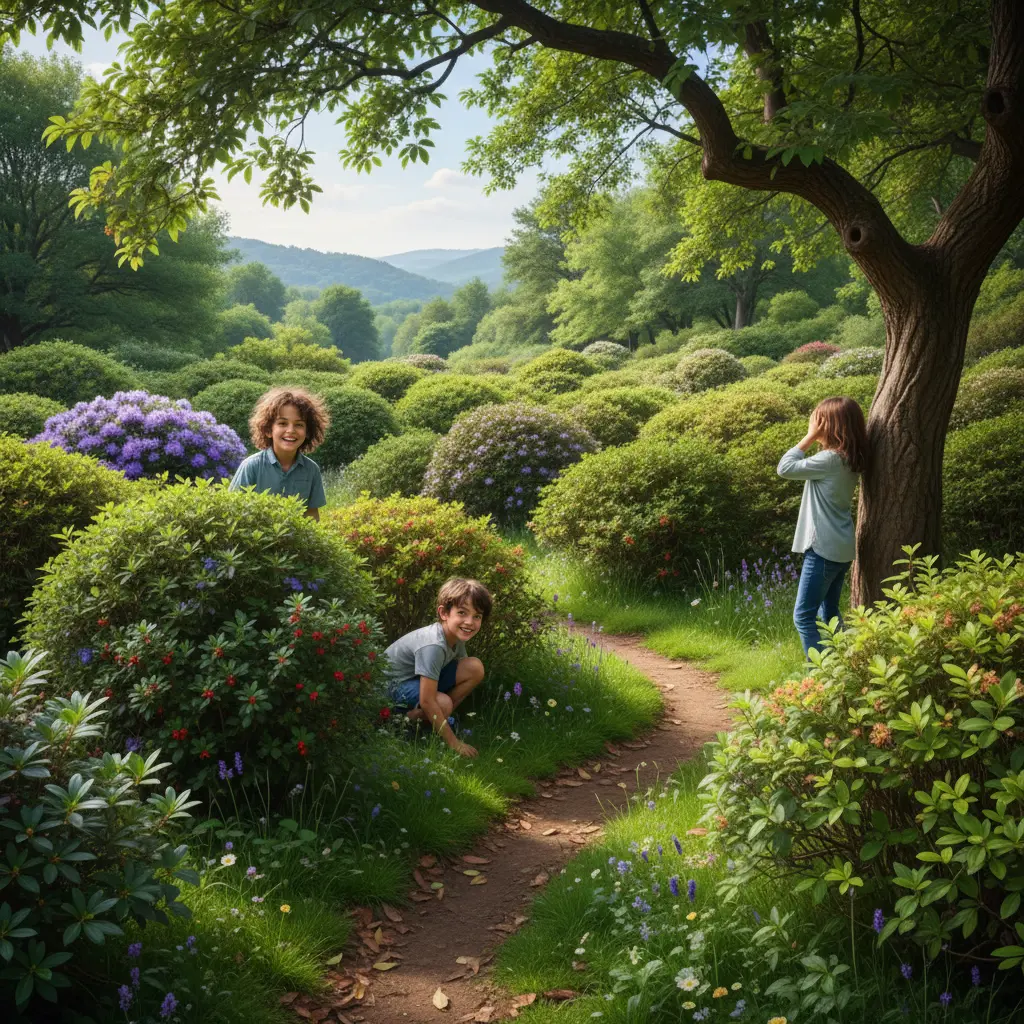
Root: bush (from Old English 'būsc', meaning 'shrub'). Historical origin: Old English → Middle English → Modern English. Memory image: Imagine a thick green area where children play hide and seek among the bushes.
Note 1: These definitions and etymologies are not standard dictionary definitions, but extended explanations provided to help with memorization and understanding of the actual application of words. Through this background information, we strive to make words more vivid and easier to understand, and help you remember their meanings in real life.
Note 2: LexiTalk designs the learning flow around the linguistics principle of “Comprehensible Input.” When learners encounter material that is slightly above their level but still understandable from context, the brain naturally absorbs the language. That’s why we keep every word inside authentic contexts, using examples and associations to help you understand it and use it flexibly.
Read the FAQ explanation of Comprehensible InputI push aside a low branch and move my feet into the green wall. The leaves brush my arms and the air cools as light shifts through the canopy. I hold my balance, turn a little to avoid snagging my clothes, and the thicket presses in around me. The word grows from the scene itself, a feel of a dense, wild space you can walk through rather than a neat yard.
Bush is a noun with three related senses. First, a dense plant or shrub, often singular as a bush or plural as bushes, forming hedges, thickets, or scrub that animals hide in. Second, a wild area covered in thick vegetation, such as scrubland or woodland, where people might say they are going into the bush. Third, a cultural term for the outback or wilderness in places like Australia or southern Africa, used in expressions like the Australian bush. Learners often confuse bush with brush, or think it always means a forest; the meaning depends on context, region, and collocations.
Explain to an English speaker that the word bush varies by region and context, so learners should note if you mean a plant, a wild area, or the Australian wilderness, and practice with both singular and plural forms.
What is the meaning of 'bush'?
Which sentence uses 'bush' correctly?
Which of the following is a synonym for 'bush'?
What would be the opposite of 'bush'?
In what real-life context would you expect to see a 'bush'?
Download LexiTalk app for personalized learning experience
Download AppCookies
We use cookies for essential site functions, analytics, and ads. You can accept, reject, or manage preferences. Privacy Policy