cereal - Master This Word
Master this word with our 5-step learning method – Learn English in English
Train English Through Brain Routes, Not Translation.
This page helps you stop memorizing isolated translations and start understanding a word through its shared mental image, native-style thinking, and practical training steps.
Master this word with our 5-step learning method – Learn English in English
Example sentences are the start of understanding. Don't rush to memorize. First feel how the word works in a sentence.
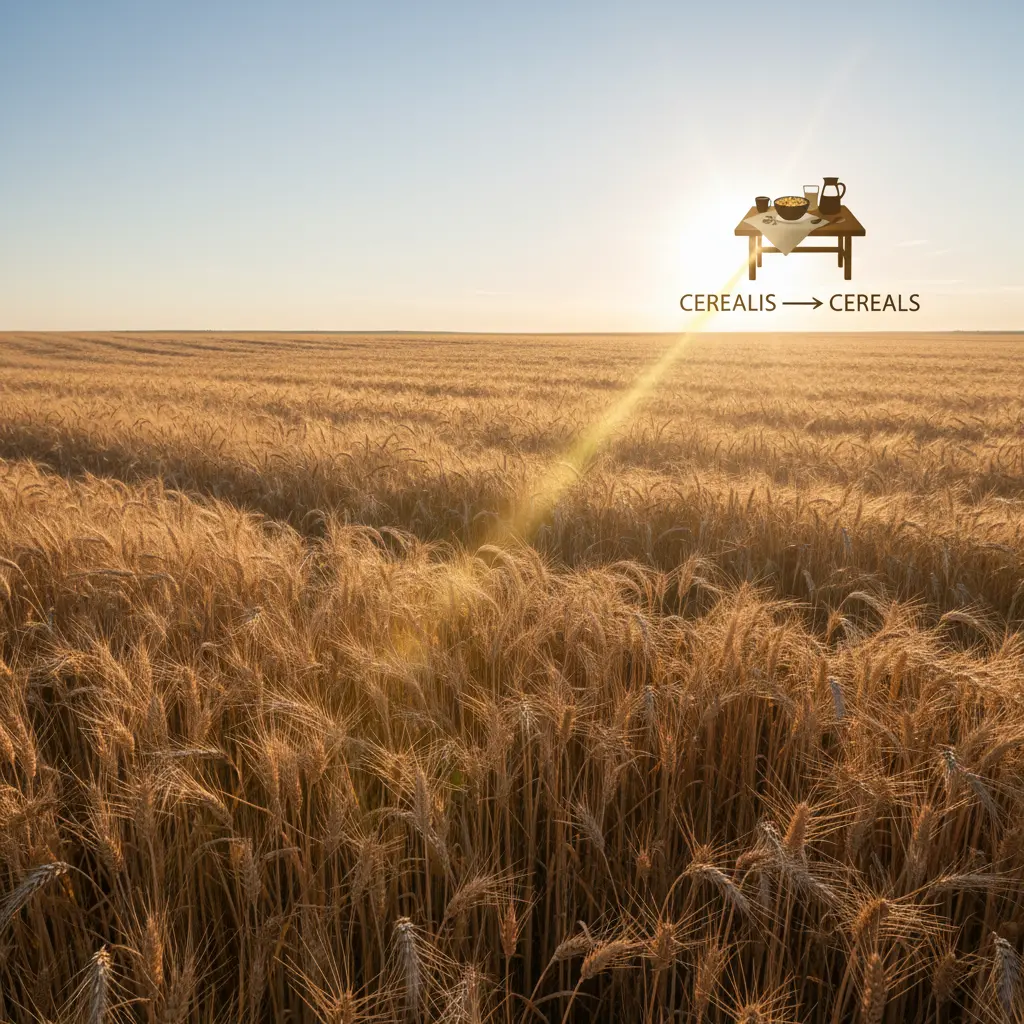
cereals = cerealis (Latin) + -al (adjective suffix). Origin: Latin 'cerealis' → Old French 'cereale' → English. Imagine a golden field of wheat swaying in the breeze, representing the grains that make up cereals. The connection to breakfast shows how grains fuel our day like they have for centuries.
Note 1: These definitions and etymologies are not standard dictionary definitions, but extended explanations provided to help with memorization and understanding of the actual application of words. Through this background information, we strive to make words more vivid and easier to understand, and help you remember their meanings in real life.
Note 2: LexiTalk designs the learning flow around the linguistics principle of “Comprehensible Input.” When learners encounter material that is slightly above their level but still understandable from context, the brain naturally absorbs the language. That’s why we keep every word inside authentic contexts, using examples and associations to help you understand it and use it flexibly.
Read the FAQ explanation of Comprehensible InputCereal is a word with three broad senses in English. Most learners meet it as a breakfast food: a bowl of processed grains, often corn, oats, or wheat, eaten with milk or yogurt. In botany, cereal refers to any plant that yields edible grains such as wheat, rice, maize, or barley. A third sense treats cereal as a dish made from cooked grains, like a warm porridge or pilaf. The word derives from Latin cerealis, through Old French cereale, and its connection to wheat fields reinforces the idea that cereals are energy foods for daily life. Pay attention to context to distinguish food, plants, and dishes.
English tends to separate cereal into three concepts (food, grain, and dish) and relies on context to distinguish them; learners often mix up 'cereal' as breakfast food with 'grain' as raw material.
What is the meaning of the word 'cereal'?
In which of the following sentences is the word 'cereal' used correctly?
Which of the following words is a synonym of 'cereal'?
Which of the following words is an opposite of 'cereal'?
In what context would you typically consume 'cereal'?
Download LexiTalk app for personalized learning experience
Download AppCookies
We use cookies for essential site functions, analytics, and ads. You can accept, reject, or manage preferences. Privacy Policy