
copyright - Master This Word
Master this word with our 5-step learning method – Learn English in English
Train English Through Brain Routes, Not Translation.
This page helps you stop memorizing isolated translations and start understanding a word through its shared mental image, native-style thinking, and practical training steps.
Master this word with our 5-step learning method – Learn English in English
Example sentences are the start of understanding. Don't rush to memorize. First feel how the word works in a sentence.
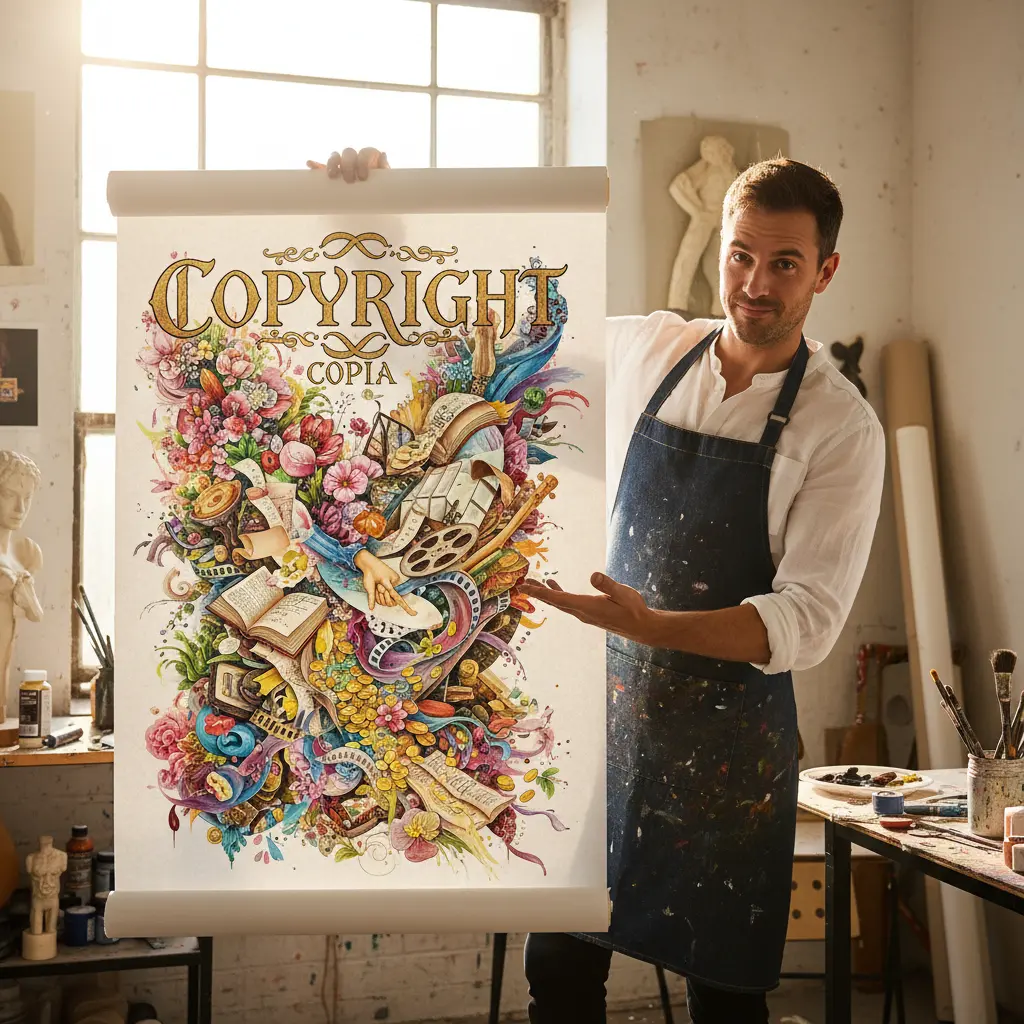
co- = together, right = claim/right; Middle English copyright < Old French < Latin 'copia' meaning abundance; Imagine a person holding a large creative mural, proudly claiming it belongs to them, symbolizing ownership.
Note 1: These definitions and etymologies are not standard dictionary definitions, but extended explanations provided to help with memorization and understanding of the actual application of words. Through this background information, we strive to make words more vivid and easier to understand, and help you remember their meanings in real life.
Note 2: LexiTalk designs the learning flow around the linguistics principle of “Comprehensible Input.” When learners encounter material that is slightly above their level but still understandable from context, the brain naturally absorbs the language. That’s why we keep every word inside authentic contexts, using examples and associations to help you understand it and use it flexibly.
Read the FAQ explanation of Comprehensible InputI lean over my desk, move a page, and push a draft toward the edge of the light. I hold the work in my hands and turn it toward a future where someone else might publish it or keep it to themselves. I adjust my plan, deciding who can copy or sell it, and I feel the grip tighten a little as I set limits. The moment of control settles in, and the meaning of the work shifts from idea to something I keep in check and share on my own terms.
Copyright is the legal protection granted to creators of original works, giving the author exclusive rights to use, reproduce, distribute, perform, display, or license their creation. It encourages invention and creativity by ensuring that the creator can control how their work is used and monetized. The term and scope of copyright vary by country, but most systems require fixation in a tangible form and automatically arise upon creation in many jurisdictions. People may need permission to copy or adapt a work, and infringement can lead to fines or civil actions. Copyright does not cover ideas themselves, only the concrete expressions of those ideas.
English speakers often think of copyright as a universal shield protecting a creator, but it is a complex bundle of rights with limits, timelines, and exceptions. Learners tend to pathologize documentation or think any use is allowed with a citation. Emphasize the distinction between rights to use, copy, distribute, and display, and remember that ideas themselves are not protected, only the expression.
What is the meaning of 'copyright'?
In which of the following sentences is 'copyright' used correctly?
Which of the following is a synonym for 'copyright'?
What is the opposite of 'copyright'?
How does 'copyright' apply in the real world?
Download LexiTalk app for personalized learning experience
Download AppCookies
We use cookies for essential site functions, analytics, and ads. You can accept, reject, or manage preferences. Privacy Policy