
curdles - Master This Word
Master this word with our 5-step learning method – Learn English in English
Train English Through Brain Routes, Not Translation.
This page helps you stop memorizing isolated translations and start understanding a word through its shared mental image, native-style thinking, and practical training steps.
Master this word with our 5-step learning method – Learn English in English
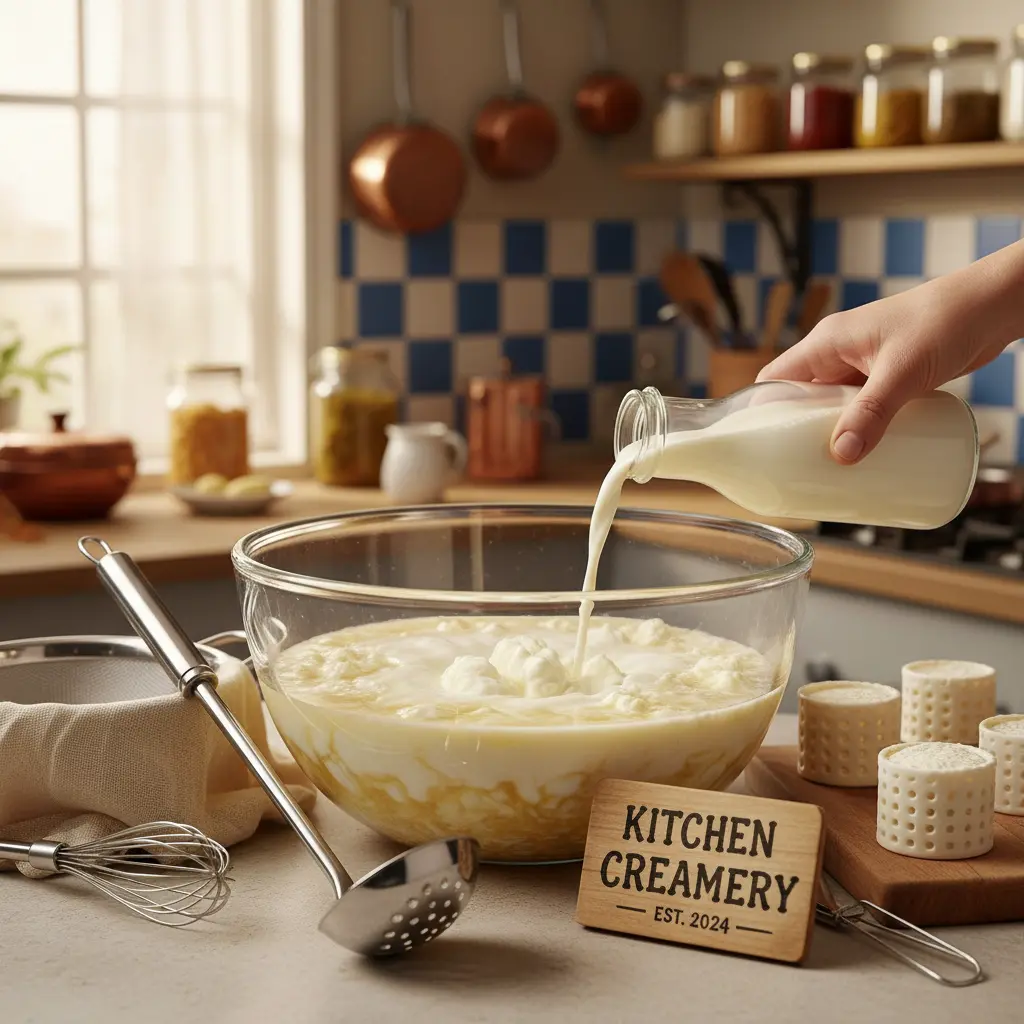
Example sentences are the start of understanding. Don't rush to memorize. First feel how the word works in a sentence.
(a) Root decomposition: 'curd' + '-le'. (b) Historical origin: Middle English 'curdlen' from Old French 'creder' (to curdle) from Latin 'coagulare'. (c) Memory image: Imagine pouring milk and watching it transform into solid curds, reminiscent of a small cheese factory in your kitchen.
Note 1: These definitions and etymologies are not standard dictionary definitions, but extended explanations provided to help with memorization and understanding of the actual application of words. Through this background information, we strive to make words more vivid and easier to understand, and help you remember their meanings in real life.
Note 2: LexiTalk designs the learning flow around the linguistics principle of “Comprehensible Input.” When learners encounter material that is slightly above their level but still understandable from context, the brain naturally absorbs the language. That’s why we keep every word inside authentic contexts, using examples and associations to help you understand it and use it flexibly.
Read the FAQ explanation of Comprehensible InputCurdle is a vivid, twofold verb. Literally, it describes a liquid such as milk thickening or turning into curds when heat, acid, or time disrupts its smooth suspension. Figuratively, it means to spoil or go bad, as a mood, reaction, or situation that turns unpleasant or tense. Learners often confuse curdle with curd, assuming any thickening is curdling; remember that cheese-making curds are products of careful processing, not simple spoilage. In everyday English you might describe cream curdling in a hot pan or milk that has curdled after sitting too long at room temperature. The etymology links curd with coagulation, a reminder of how liquids become solids through separation.
English learners benefit from separating literal dairy processes from metaphorical states; learners often assume curdling is always the worst outcome, which fuels overuse in negative contexts.
Download LexiTalk app for personalized learning experience
Download AppCookies
We use cookies for essential site functions, analytics, and ads. You can accept, reject, or manage preferences. Privacy Policy