
designer - Master This Word
Master this word with our 5-step learning method – Learn English in English
Train English Through Brain Routes, Not Translation.
This page helps you stop memorizing isolated translations and start understanding a word through its shared mental image, native-style thinking, and practical training steps.
Master this word with our 5-step learning method – Learn English in English
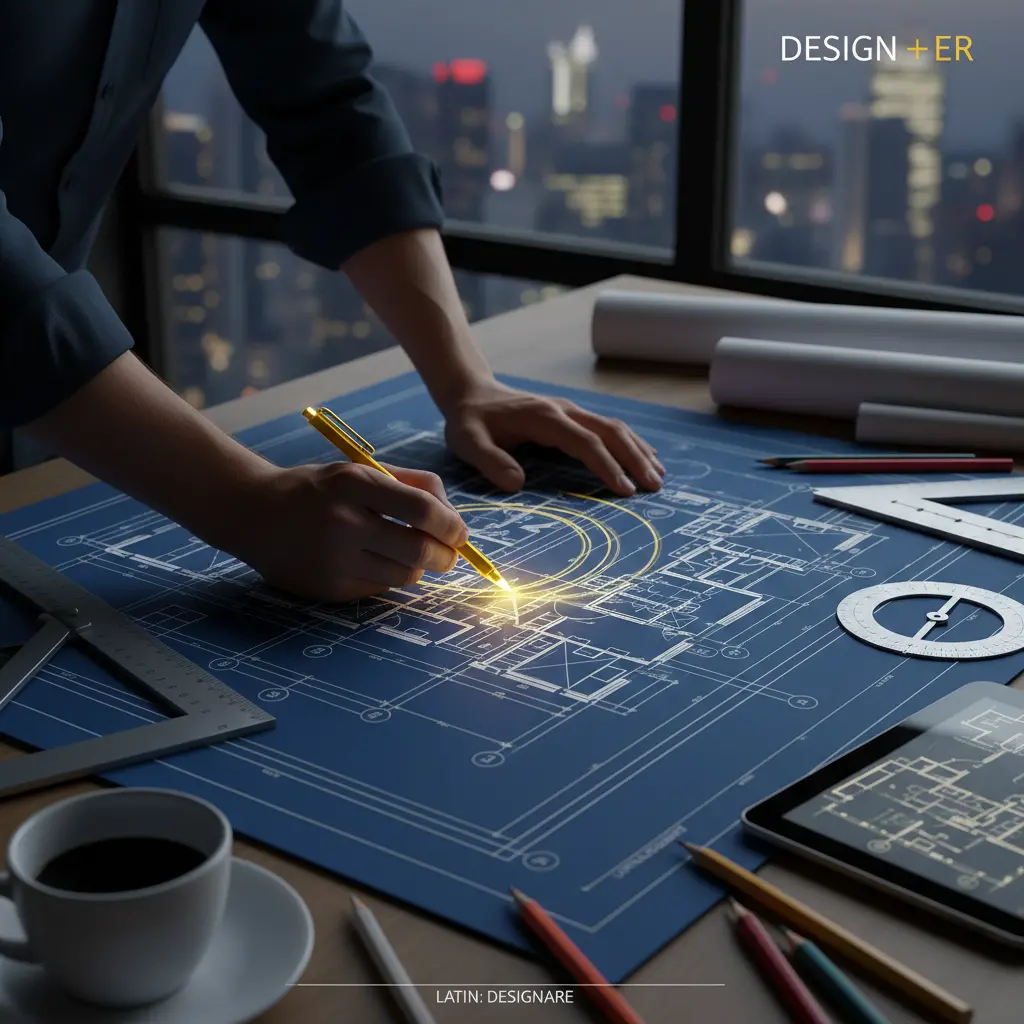
Example sentences are the start of understanding. Don't rush to memorize. First feel how the word works in a sentence.
Root decomposition: design + er; the suffix -er marks the agent who performs the action. Historical origin: from Latin designare 'to designate, mark out' via Old French desiner, leading to English design and designer. Memory image: picture a designer tracing a blueprint with a bright pencil, turning ideas into a tangible plan.
Note 1: These definitions and etymologies are not standard dictionary definitions, but extended explanations provided to help with memorization and understanding of the actual application of words. Through this background information, we strive to make words more vivid and easier to understand, and help you remember their meanings in real life.
Note 2: LexiTalk designs the learning flow around the linguistics principle of “Comprehensible Input.” When learners encounter material that is slightly above their level but still understandable from context, the brain naturally absorbs the language. That’s why we keep every word inside authentic contexts, using examples and associations to help you understand it and use it flexibly.
Read the FAQ explanation of Comprehensible InputFirst I pick up a pencil and place it on a blank page, then I move the line as the idea shifts. I push and pull the shapes, turning them until the feel of the page changes with each adjustment. When I set the final touch and keep tweaking the spacing, the design starts to breathe, as if someone with a plan is guiding it. That sense—control, choice, and patient iteration—travels into real projects, where a designer would balance form and function.
Designer is a noun for a person who designs things as a job. It can refer to someone who creates fashion, interiors, graphics, products, or digital experiences. In everyday speech, you may hear about a fashion designer, an industrial designer, or a designer label, where the brand implies quality and style. The word comes from the verb design and the agent suffix -er, and it emphasizes the role of turning ideas into plans and objects. A designer often collaborates with engineers, artists, or clients to solve problems through thoughtful choices of materials, aesthetics, and usability. In branding, calling something 'designer' signals a premium or luxury association.
For English speakers, designer is commonly tied to a role and a field (fashion, product, graphic). Learners often assume it only means fashion or a famous brand, and may mix up with engineer or architect. Emphasis in English is on the job identity plus the brand cue rather than a broad talent label.
What is the meaning of the word 'designer'?
Which sentence uses the word 'designer' correctly?
Which word is most similar to 'designer'?
What is the opposite of 'designer'?
Can you think of a real-life context where a designer would be essential?
Download LexiTalk app for personalized learning experience
Download AppCookies
We use cookies for essential site functions, analytics, and ads. You can accept, reject, or manage preferences. Privacy Policy