destruction - Master This Word
Master this word with our 5-step learning method – Learn English in English
Train English Through Brain Routes, Not Translation.
This page helps you stop memorizing isolated translations and start understanding a word through its shared mental image, native-style thinking, and practical training steps.
Master this word with our 5-step learning method – Learn English in English
Example sentences are the start of understanding. Don't rush to memorize. First feel how the word works in a sentence.
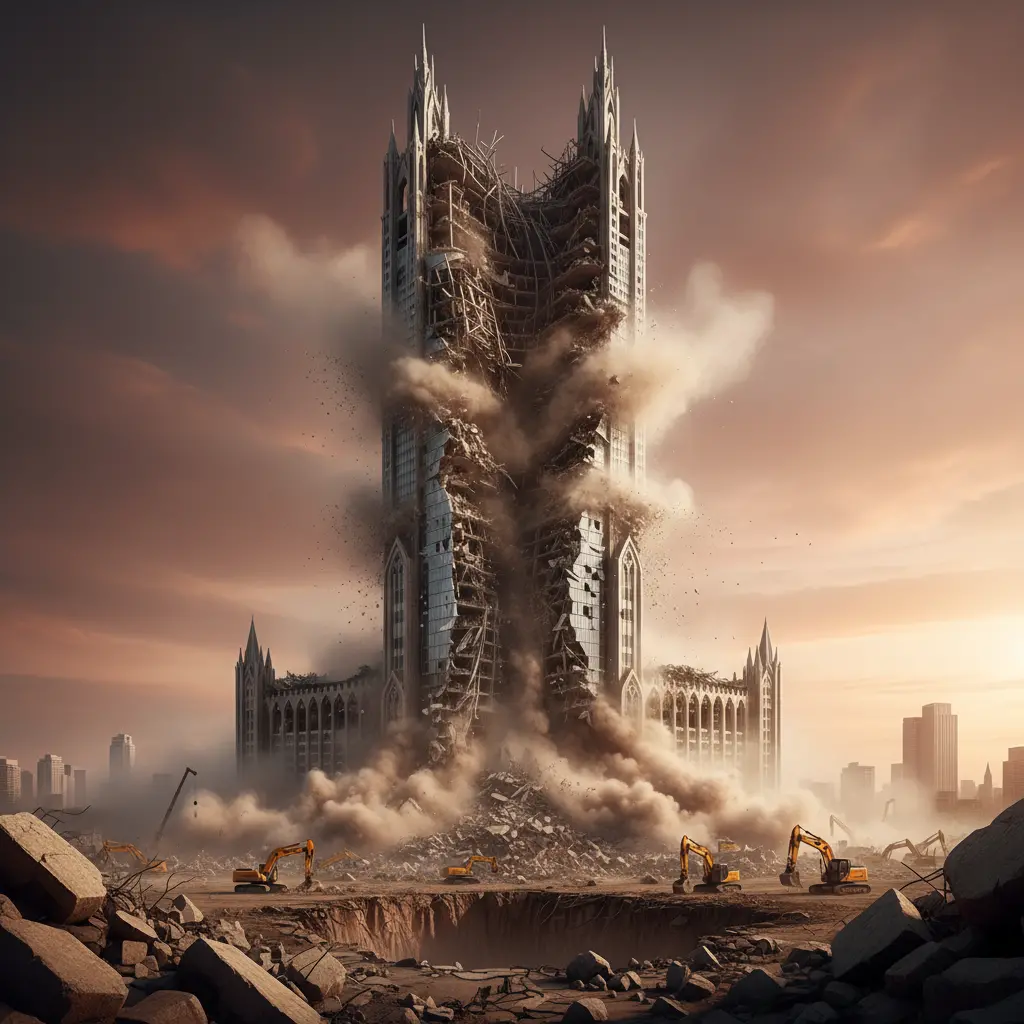
de- = completely + struct = build; Latin destructio → Old French destruction → English. Picture a towering building being torn down, symbolizing total ruin, just like a castle crumbling into dust.
Note 1: These definitions and etymologies are not standard dictionary definitions, but extended explanations provided to help with memorization and understanding of the actual application of words. Through this background information, we strive to make words more vivid and easier to understand, and help you remember their meanings in real life.
Note 2: LexiTalk designs the learning flow around the linguistics principle of “Comprehensible Input.” When learners encounter material that is slightly above their level but still understandable from context, the brain naturally absorbs the language. That’s why we keep every word inside authentic contexts, using examples and associations to help you understand it and use it flexibly.
Read the FAQ explanation of Comprehensible InputI set a fragile tower of blocks on the table and move it a little to test the balance. It wobbles, then collapses, and the pieces scatter in a riot of color. I hold my breath, adjust my grip, and decide whether to push on or pause. The sensation of destruction rises from the moment effort meets consequence, and the scene teaches me what change feels like in real life.
Destruction is a noun that refers to the act of causing great damage and the state of being destroyed. It can describe physical ruin: a building collapsing after an earthquake; it also covers metaphorical or symbolic ruin, such as the destruction of a plan, a career, or a relationship. In everyday speech, you hear phrases like the destruction caused by the flood or the total destruction of the city, but natural usage is usually 'destruction of' rather than 'destruction to.' The word often appears with adjectives like total, widespread, complete, or absolute. Destruction contrasts with destroy (verb) and destructive (adjective), which express the action and the quality rather than the result.
English tends to treat destruction as both a process and a result, with clear collocations like total destruction and widespread destruction. Learners often overgeneralize to contexts where ruin is temporary or reversible, or misplace destruction as a verb-like action rather than a noun. Focus on noun-only usage and appropriate prepositions.
What is the meaning of the word 'destruction'?
Which sentence uses the word 'destruction' correctly?
Which word is most similar to 'destruction'?
What is the opposite of 'destruction'?
Can you think of a real-life scenario of 'destruction'?
Download LexiTalk app for personalized learning experience
Download AppCookies
We use cookies for essential site functions, analytics, and ads. You can accept, reject, or manage preferences. Privacy Policy