dimes - Master This Word
Master this word with our 5-step learning method – Learn English in English
Train English Through Brain Routes, Not Translation.
This page helps you stop memorizing isolated translations and start understanding a word through its shared mental image, native-style thinking, and practical training steps.
Master this word with our 5-step learning method – Learn English in English
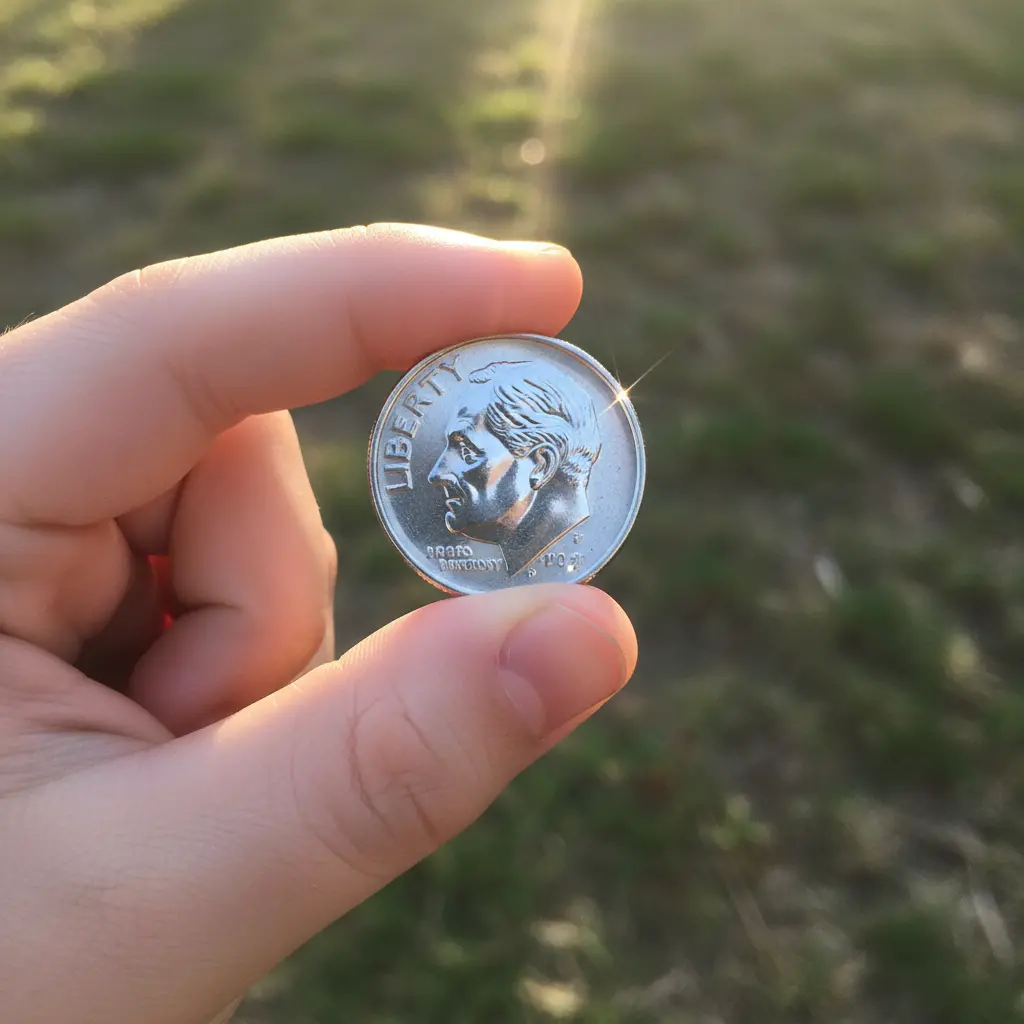
Example sentences are the start of understanding. Don't rush to memorize. First feel how the word works in a sentence.
Dime comes from the Spanish 'diezmo' (tenth), historically from Latin. The image is of a small shiny coin representing wealth—imagine the glint of a dime in a child's hand, signifying a small treasure.
Note 1: These definitions and etymologies are not standard dictionary definitions, but extended explanations provided to help with memorization and understanding of the actual application of words. Through this background information, we strive to make words more vivid and easier to understand, and help you remember their meanings in real life.
Note 2: LexiTalk designs the learning flow around the linguistics principle of “Comprehensible Input.” When learners encounter material that is slightly above their level but still understandable from context, the brain naturally absorbs the language. That’s why we keep every word inside authentic contexts, using examples and associations to help you understand it and use it flexibly.
Read the FAQ explanation of Comprehensible InputI reach for the coins, press my thumb to the dime and move it along the tray with a gentle push. I turn it in my palm, adjust my grip, and feel how such a small thing can steer a moment. Setting it down, I notice that a dime is a tiny amount of money, easy to tuck away, easy to joke about as a playful shrug. I keep the idea in sight and let the coin’s small weight nudge my thinking about value in everyday moments.
Dime is most commonly known as the ten-cent coin in the United States, with a distinctive size and a shiny, ridged edge. In everyday speech, English speakers also use dime figuratively to mean a very small amount of money, or to skim over something as merely trivial or cute in a playful way. The coin’s history taps into ideas of value, luck, and thrift, making it a handy example for beginners to talk about coins, prices, and everyday budgeting. When teaching, pair it with phrases like 'not worth a dime' or 'to cost a dime' to show versatility and nuance.
For English learners, dime blends coin value with lighthearted metaphor; focus on both literal and figurative uses to avoid overgeneralizing coin meanings.
Download LexiTalk app for personalized learning experience
Download AppCookies
We use cookies for essential site functions, analytics, and ads. You can accept, reject, or manage preferences. Privacy Policy