disagree - Master This Word
Master this word with our 5-step learning method – Learn English in English
Train English Through Brain Routes, Not Translation.
This page helps you stop memorizing isolated translations and start understanding a word through its shared mental image, native-style thinking, and practical training steps.
Master this word with our 5-step learning method – Learn English in English
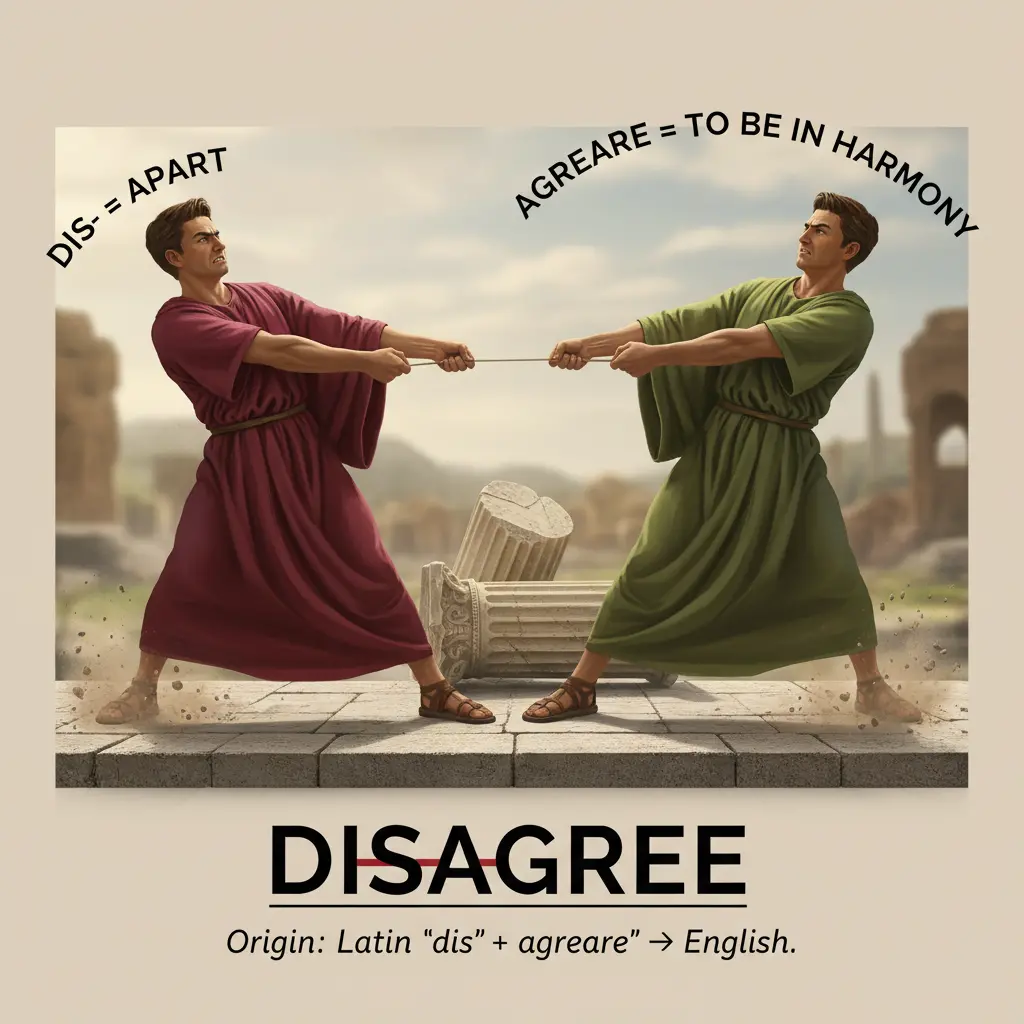
Example sentences are the start of understanding. Don't rush to memorize. First feel how the word works in a sentence.
dis- = apart + agree = to be in harmony; Origin: Latin 'dis' + 'agreare' → English. Memory image: Imagine two people pulling away from each other, symbolizing their disagreement.
Note 1: These definitions and etymologies are not standard dictionary definitions, but extended explanations provided to help with memorization and understanding of the actual application of words. Through this background information, we strive to make words more vivid and easier to understand, and help you remember their meanings in real life.
Note 2: LexiTalk designs the learning flow around the linguistics principle of “Comprehensible Input.” When learners encounter material that is slightly above their level but still understandable from context, the brain naturally absorbs the language. That’s why we keep every word inside authentic contexts, using examples and associations to help you understand it and use it flexibly.
Read the FAQ explanation of Comprehensible InputI tilt my chair, shift my gaze, and push away the first thought that shuts me down. I change direction in my thinking as the other person speaks, turn toward a different angle of the story. I adjust my mood from certainty to curiosity, hold back the urge to close ranks, and keep my own thread loose enough to tug in a new idea. When I speak next, the word lands not as a rule but as a choice: I can disagree, with respect, and still stay in the dialogue.
Disagree is a verb that means to have a different opinion or to fail to agree with someone or something. It is usually followed by with (disagree with someone) or about/over (disagree about something). For example: I disagree with you on that point. It is less common to say disagree to someone. Disagreeing can be respectful or heated depending on tone and context. When you disagree in a group, you might state your reason briefly, invite others to explain, and avoid personal attacks. Disagreeing does not necessarily imply a quarrel; you are expressing a difference of opinion. Remember that nuance matters: you can disagree politely or firmly, but clarity helps prevent escalation.
Explain to an English speaker (meta, keep short)
Which sentence uses 'disagree' correctly?
Which word is most similar to 'disagree'?
What is the opposite of 'disagree'?
Can you think of a real-life scenario where people might disagree?
Download LexiTalk app for personalized learning experience
Download AppCookies
We use cookies for essential site functions, analytics, and ads. You can accept, reject, or manage preferences. Privacy Policy