dissolve - Master This Word
Master this word with our 5-step learning method – Learn English in English
Train English Through Brain Routes, Not Translation.
This page helps you stop memorizing isolated translations and start understanding a word through its shared mental image, native-style thinking, and practical training steps.
Master this word with our 5-step learning method – Learn English in English
Example sentences are the start of understanding. Don't rush to memorize. First feel how the word works in a sentence.
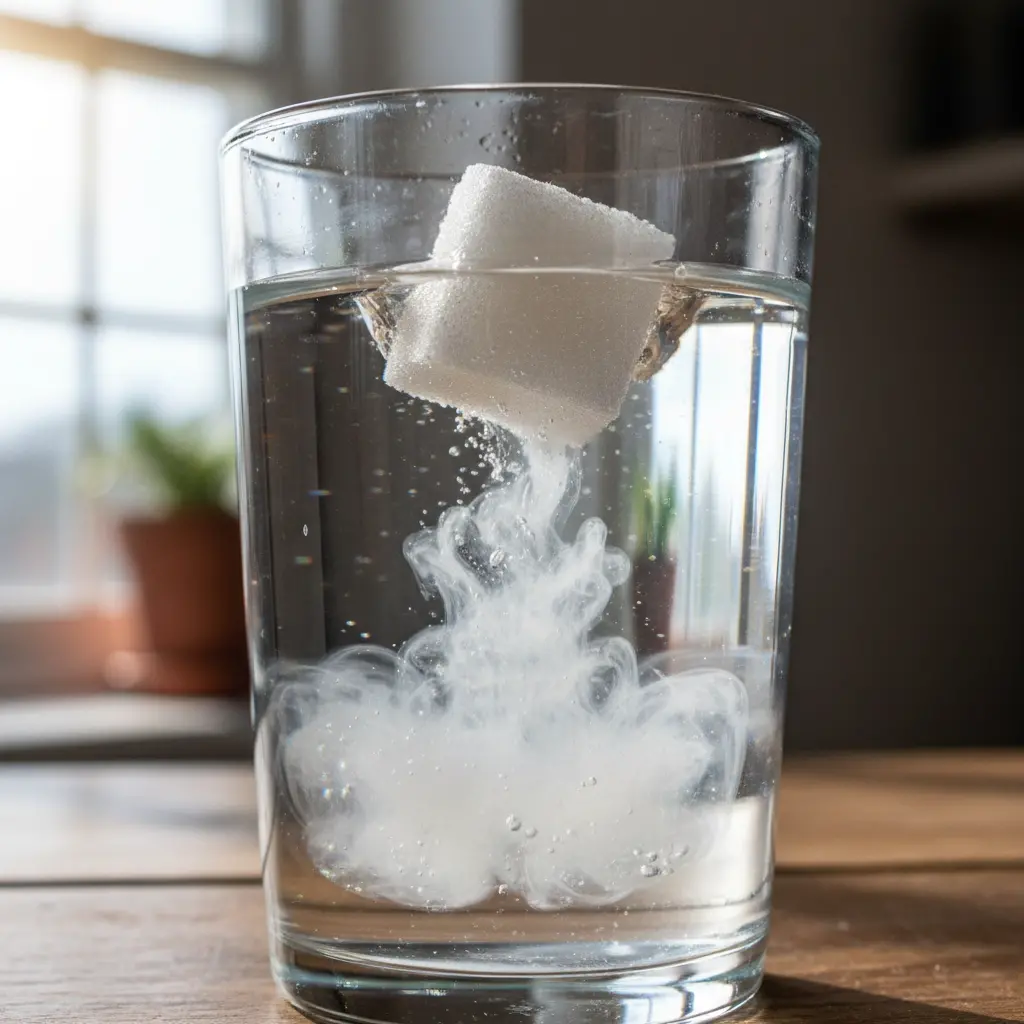
de- = from, away + solve = loosen. Originated from Latin 'dissolvere' to Old French 'dissolver' leading to English. Imagine a sugar cube slowly breaking down in water, disappearing into sweetness.
Note 1: These definitions and etymologies are not standard dictionary definitions, but extended explanations provided to help with memorization and understanding of the actual application of words. Through this background information, we strive to make words more vivid and easier to understand, and help you remember their meanings in real life.
Note 2: LexiTalk designs the learning flow around the linguistics principle of “Comprehensible Input.” When learners encounter material that is slightly above their level but still understandable from context, the brain naturally absorbs the language. That’s why we keep every word inside authentic contexts, using examples and associations to help you understand it and use it flexibly.
Read the FAQ explanation of Comprehensible InputI drop a sugar cube into hot tea and hold the spoon, guiding it to move in slow circles. I watch the solid grain loosen, shift, and melt into a clear liquid as the heat does its quiet work. The room stays warm and soft, and I feel a small effort in my wrist as I adjust the rhythm, sensing that this same change can spill into real life—let a plan dissolve and keep moving.
Dissolve has three core ideas for English learners: a physical change where a solid becomes part of a liquid, the ending of an agreement or relationship in legal or formal contexts, and a gradual disappearance or blending into something else in metaphorical use. In science, dissolve means a solid is broken down and suspended in a solvent, often helped by stirring or heat. In contracts, partnerships, or marriages, to dissolve means to terminate officially. In everyday speech, things can dissolve into nothingness or into another substance over time. Learners often mix up dissolve with solve, or assume dissolution happens instantly, and they may struggle with actor/agent combinations (what dissolves what). Context and tone matter across registers.
Native English users tend to separate physical dissolution from ending a relationship; learners may think the word always means solving a problem. Emphasize distinct contexts (laboratory vs. legal).
What does the word 'dissolve' mean?
Which sentence uses the word correctly?
Which word is most similar in meaning to 'dissolve'?
Which word is the opposite of 'dissolve'?
Can you think of a real-life context where using the word would fit?
Download LexiTalk app for personalized learning experience
Download AppCookies
We use cookies for essential site functions, analytics, and ads. You can accept, reject, or manage preferences. Privacy Policy