earth - Master This Word
Master this word with our 5-step learning method – Learn English in English
Train English Through Brain Routes, Not Translation.
This page helps you stop memorizing isolated translations and start understanding a word through its shared mental image, native-style thinking, and practical training steps.
Master this word with our 5-step learning method – Learn English in English
Example sentences are the start of understanding. Don't rush to memorize. First feel how the word works in a sentence.
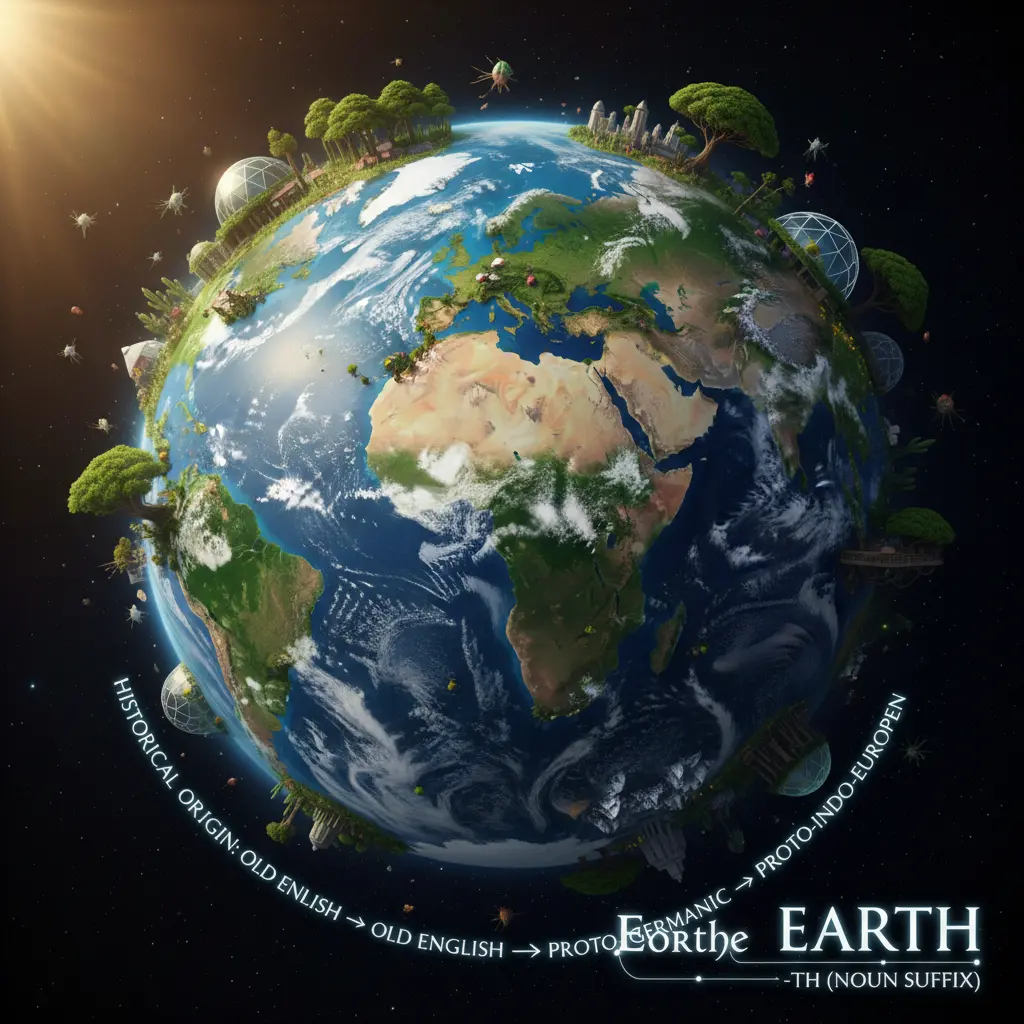
earth = eor(th)e (Old English) + -th (noun suffix). Historical origin: Old English → Proto-Germanic → Proto-Indo-European. Memory image: Picture a rich, vibrant garden full of life on the surface of the Earth, showcasing diverse ecosystems and human habitats.
Note 1: These definitions and etymologies are not standard dictionary definitions, but extended explanations provided to help with memorization and understanding of the actual application of words. Through this background information, we strive to make words more vivid and easier to understand, and help you remember their meanings in real life.
Note 2: LexiTalk designs the learning flow around the linguistics principle of “Comprehensible Input.” When learners encounter material that is slightly above their level but still understandable from context, the brain naturally absorbs the language. That’s why we keep every word inside authentic contexts, using examples and associations to help you understand it and use it flexibly.
Read the FAQ explanation of Comprehensible InputI press my feet into the floor and push myself upright, keeping my balance as the room settles around me. I shift my gaze and touch the ground, feeling how the earth holds under every step. I adjust my stance to keep my balance. Standing here, the earth feels like the stage of my days, the world I live in and slowly learn to take care of.
Earth is the planet we live on, a vast system of continents, oceans, atmosphere, and life. It also means the soil or ground beneath our feet in everyday language. In scientific and popular writing, we usually capitalize Earth when referring to the world as a whole, while earth (lowercase) appears when talking about dirt or ground. The word has deep roots in Old English, eor th e, linking to Proto-Germanic and Proto-Indo-European precedents. The memory image for learners is a lush garden on Earth’s surface showing diverse ecosystems, human habitats, and the dynamic interactions between geology, climate, and living beings.
Explain to an English speaker (meta, keep short)
What is the meaning of the word 'earth'?
Which sentence uses the word 'earth' correctly?
What is the most similar word to 'earth'?
What is the opposite of 'earth'?
Can you give an example of a real-life scenario involving 'earth'?
Download LexiTalk app for personalized learning experience
Download AppCookies
We use cookies for essential site functions, analytics, and ads. You can accept, reject, or manage preferences. Privacy Policy