emend - Master This Word
Master this word with our 5-step learning method – Learn English in English
Train English Through Brain Routes, Not Translation.
This page helps you stop memorizing isolated translations and start understanding a word through its shared mental image, native-style thinking, and practical training steps.
Master this word with our 5-step learning method – Learn English in English
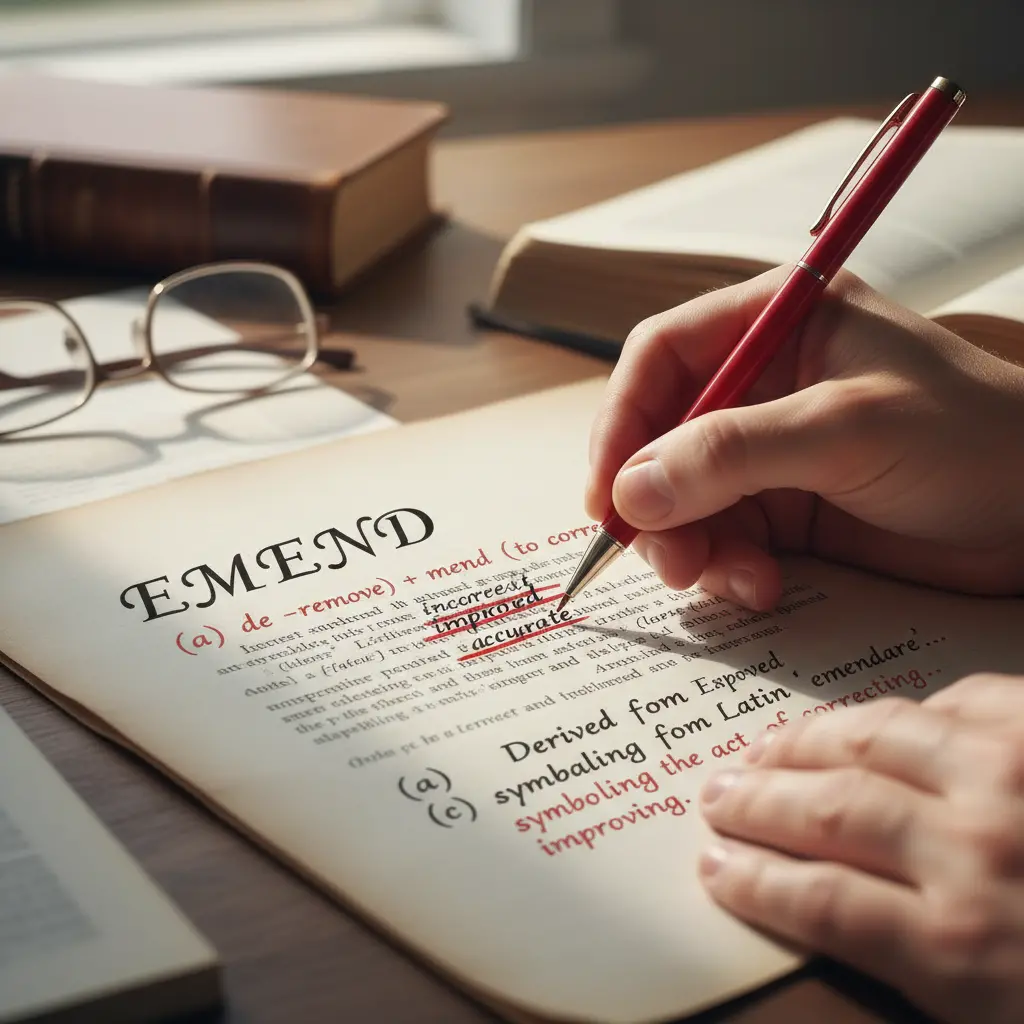
Example sentences are the start of understanding. Don't rush to memorize. First feel how the word works in a sentence.
(a) de- (remove) + mend (to correct). (b) Derived from Latin 'emendare', through Old French 'emender', entered English in the 15th century. (c) Imagine an editor with a red pen, meticulously crossing out mistakes and perfecting the text, symbolizing the act of correcting and improving.
Note 1: These definitions and etymologies are not standard dictionary definitions, but extended explanations provided to help with memorization and understanding of the actual application of words. Through this background information, we strive to make words more vivid and easier to understand, and help you remember their meanings in real life.
Note 2: LexiTalk designs the learning flow around the linguistics principle of “Comprehensible Input.” When learners encounter material that is slightly above their level but still understandable from context, the brain naturally absorbs the language. That’s why we keep every word inside authentic contexts, using examples and associations to help you understand it and use it flexibly.
Read the FAQ explanation of Comprehensible InputEmend means to correct a text by removing errors or making revisions to improve its accuracy and clarity. It belongs to the editing and scholarly writing domain, and it often implies careful, deliberate changes rather than casual rewriting. Historically the word comes from Latin emendare and was transmitted through Old French emender before entering English in the 15th century. In practice you emend typos, factual mistakes, or misleading statements in manuscripts, articles, and proofs. In modern usage emend can sound formal or technical, so you will usually see it in editorial notes, errata, or scholarly annotations rather than everyday conversation. Example: The editor emended the footnotes after a new source was discovered.
In English, emend is a formal, text focused verb often found in editing, scholarly notes, or legal contexts. Learners may overuse it in casual speech or confuse it with amends. Emend implies precise correction to an existing text rather than rewriting or updating unrelated ideas.
What does the word 'emend' mean?
Which sentence uses 'emend' correctly?
Which word is most similar to 'emend'?
What is the opposite of 'emend'?
Can you think of a real-life scenario where someone might need to 'emend'?
Download LexiTalk app for personalized learning experience
Download AppCookies
We use cookies for essential site functions, analytics, and ads. You can accept, reject, or manage preferences. Privacy Policy