emissions - Master This Word
Master this word with our 5-step learning method – Learn English in English
Train English Through Brain Routes, Not Translation.
This page helps you stop memorizing isolated translations and start understanding a word through its shared mental image, native-style thinking, and practical training steps.
Master this word with our 5-step learning method – Learn English in English
Example sentences are the start of understanding. Don't rush to memorize. First feel how the word works in a sentence.
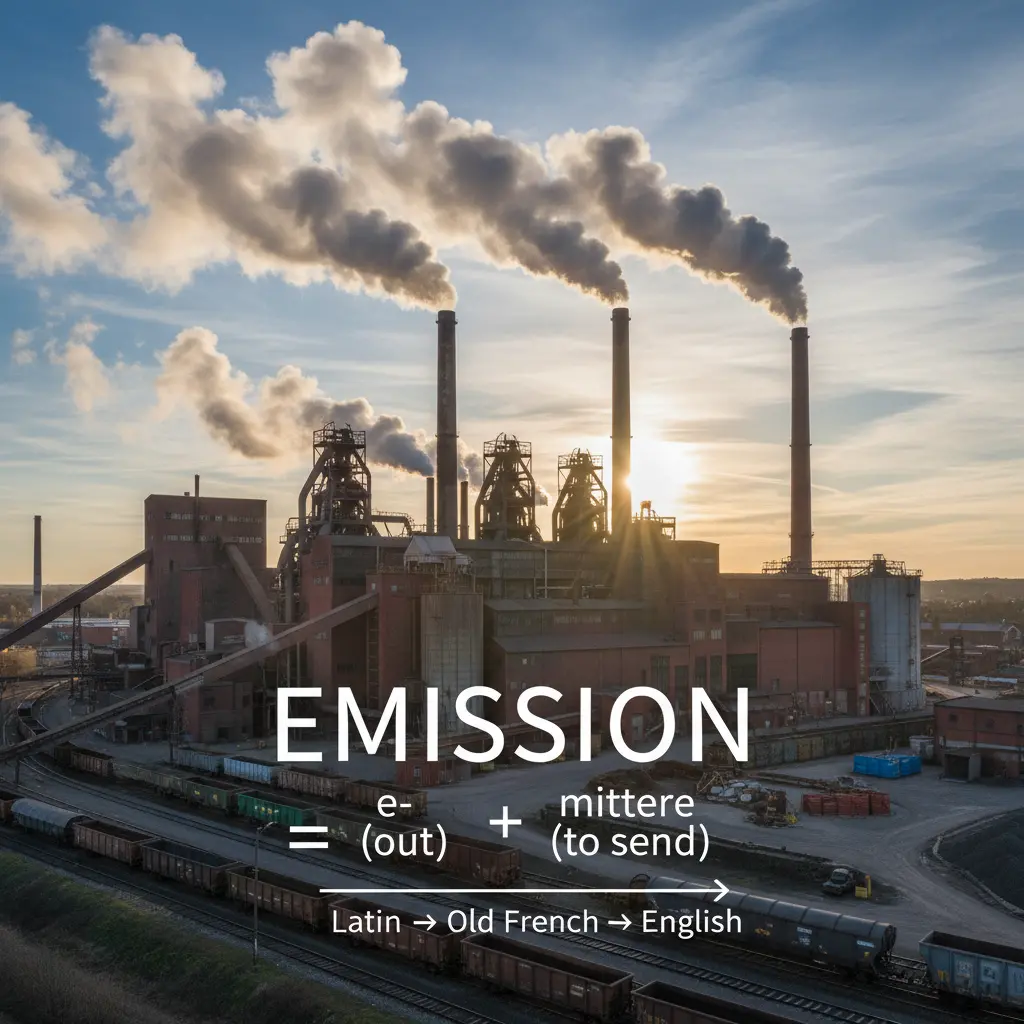
emission = e- (out) + mittere (to send) from Latin → Old French → English. Imagine a factory emitting smoke outward into the sky.
Note 1: These definitions and etymologies are not standard dictionary definitions, but extended explanations provided to help with memorization and understanding of the actual application of words. Through this background information, we strive to make words more vivid and easier to understand, and help you remember their meanings in real life.
Note 2: LexiTalk designs the learning flow around the linguistics principle of “Comprehensible Input.” When learners encounter material that is slightly above their level but still understandable from context, the brain naturally absorbs the language. That’s why we keep every word inside authentic contexts, using examples and associations to help you understand it and use it flexibly.
Read the FAQ explanation of Comprehensible InputI push the light switch and hold it as the lamp wakes up. The emission of warm light spills across the walls, and I keep my eyes moving to follow it. I adjust the lamp's height, turn the dial, and shift the brightness to where I need it. As the glow settles, I sense how the room responds and I let that feeling guide what I do next.
Emission is the act of producing or sending out something, especially gases, light, or signals. In everyday usage we talk about emissions from cars, factories, or machines as substances released into the air, water, or soil. Emission also refers to the output of a system or process, such as the electrical output of a device or data emissions in a network. The term comes from Latin mittere 'to send', with e- meaning 'out'. Learners often confuse emission with emit (verb) or with emitter (the source), and may misjudge how to quantify emissions in environmental writing.
In English, emission is a formal noun that often collocates with environment, industry, and policy terms like 'emissions standard' or 'emission reduction'; learners often try to treat it as a generic release. The seed from mittere is less intuitive in everyday usage, so keep the sense of release into air, water, or soil separate from any action of emitting.
What is the meaning of the word 'emissions'?
Which sentence uses 'emissions' correctly?
Which word is most similar to 'emissions'?
What is the opposite of 'emissions'?
Can you think of a real-life context where emissions are relevant?
Download LexiTalk app for personalized learning experience
Download AppCookies
We use cookies for essential site functions, analytics, and ads. You can accept, reject, or manage preferences. Privacy Policy