emotion - Master This Word
Master this word with our 5-step learning method – Learn English in English
Train English Through Brain Routes, Not Translation.
This page helps you stop memorizing isolated translations and start understanding a word through its shared mental image, native-style thinking, and practical training steps.
Master this word with our 5-step learning method – Learn English in English
Example sentences are the start of understanding. Don't rush to memorize. First feel how the word works in a sentence.
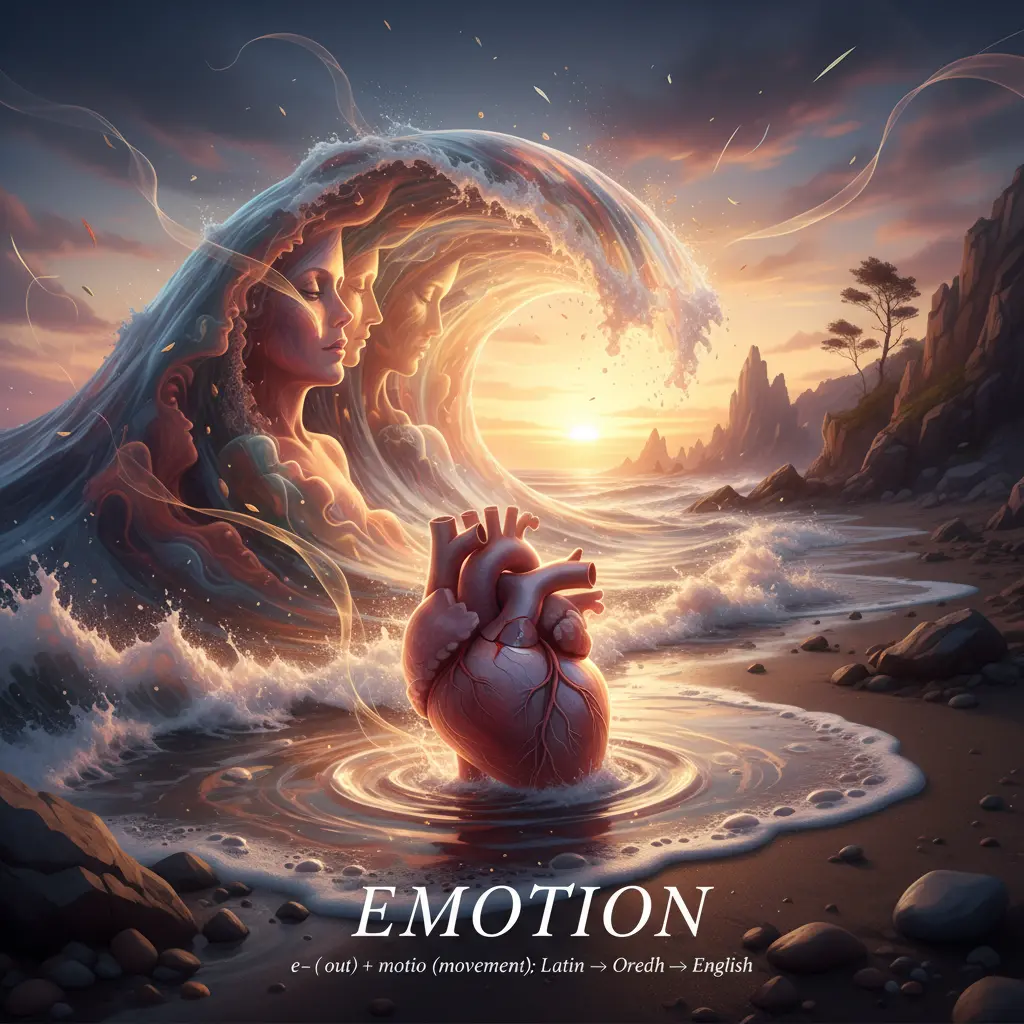
emotion = e- (out) + motio (movement); Latin → Old French → English. Imagine a wave of feelings rolling out, stirring your heart, like a tide washing over the shore.
Note 1: These definitions and etymologies are not standard dictionary definitions, but extended explanations provided to help with memorization and understanding of the actual application of words. Through this background information, we strive to make words more vivid and easier to understand, and help you remember their meanings in real life.
Note 2: LexiTalk designs the learning flow around the linguistics principle of “Comprehensible Input.” When learners encounter material that is slightly above their level but still understandable from context, the brain naturally absorbs the language. That’s why we keep every word inside authentic contexts, using examples and associations to help you understand it and use it flexibly.
Read the FAQ explanation of Comprehensible InputI pause and set my shoulders, then take a slow breath. A small current moves through me, a shift from tension toward a softer place. I adjust my grip on the cup and hold it there, watching the feeling loosen or tighten. That quiet change colors how I act next, and I decide how to carry on.
Emotion is a mental and physical state that colorizes how we perceive events, think about ourselves, and respond to others. It ranges from brief vivid bursts of joy or fear to deeper more lasting reactions that shape our memories and choices. An emotion can be triggered by a sight a sound a memory or a relationship and it often comes with physical signs such as a fast heartbeat or a fluttering chest. In everyday use emotion highlights the specific moment of feeling while mood refers to a longer emotional climate and feeling tends to emphasize the subjective sense. Imagine a wave of feelings rolling out, stirring your heart, like a tide washing over the shore
In English, emotion often points to a specific, felt reaction at a moment, whereas mood is a broader, longer lasting climate. Learners frequently say mood when they mean emotion and mix up feelings with emotions.
What is the meaning of the word 'emotion'?
Which sentence uses the word 'emotion' correctly?
Which word is most similar to 'emotion'?
What is the opposite of the word 'emotion'?
Can you give an example of a real-life scenario of 'emotion'?
English Learning Listening Content
Listen NowDownload LexiTalk app for personalized learning experience
Download AppCookies
We use cookies for essential site functions, analytics, and ads. You can accept, reject, or manage preferences. Privacy Policy