engine - Master This Word
Master this word with our 5-step learning method – Learn English in English
Train English Through Brain Routes, Not Translation.
This page helps you stop memorizing isolated translations and start understanding a word through its shared mental image, native-style thinking, and practical training steps.
Master this word with our 5-step learning method – Learn English in English
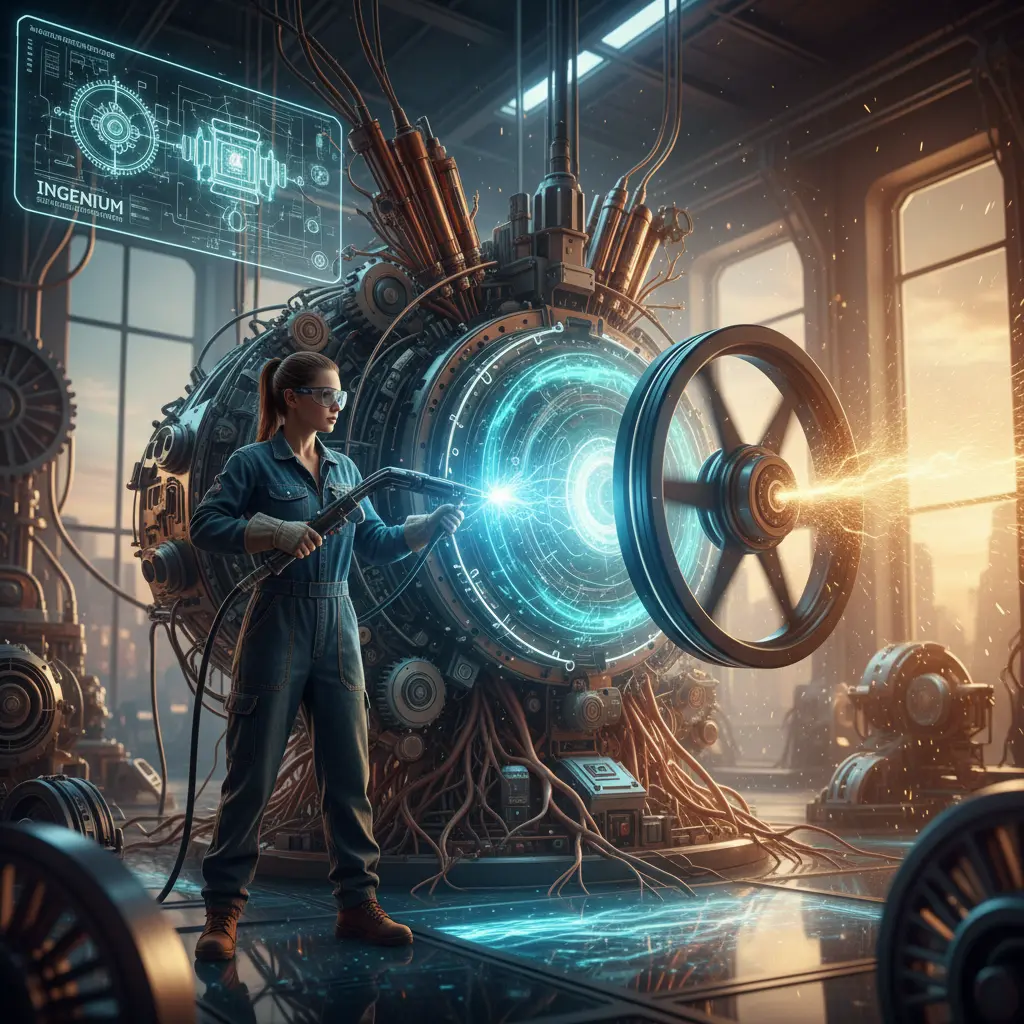
Example sentences are the start of understanding. Don't rush to memorize. First feel how the word works in a sentence.
en- = in, gene = to generate. Origin: Latin 'ingenium' → Old French 'engine' → English. Memory image: Imagine an engineer crafting a powerful machine to generate energy, sparking motion and innovation.
Note 1: These definitions and etymologies are not standard dictionary definitions, but extended explanations provided to help with memorization and understanding of the actual application of words. Through this background information, we strive to make words more vivid and easier to understand, and help you remember their meanings in real life.
Note 2: LexiTalk designs the learning flow around the linguistics principle of “Comprehensible Input.” When learners encounter material that is slightly above their level but still understandable from context, the brain naturally absorbs the language. That’s why we keep every word inside authentic contexts, using examples and associations to help you understand it and use it flexibly.
Read the FAQ explanation of Comprehensible InputI grip the key, turn it, and listen as the engine starts to wake. The car shivers a little, the dash lights glow, and the engine settles into a steady hum. I keep my hands on the wheel, adjust the pedal, and feel the power rise under me. That moment with the engine teaches me how I will move through the street and make quick, practical decisions on every trip.
An engine is a machine that converts energy into motion, powering vehicles, machines, and many devices. It can be a combustion engine that burns fuel to create torque and movement, or an electric engine that uses electricity to generate motion. People also use the term engine metaphorically to describe the driving force behind a project, organization, or system. In engineering, an engine usually includes components such as a cylinder block, pistons, valves, and crankshaft, all coordinating to turn energy into usable mechanical work. The word also appears in phrases like 'engine room', 'engineered solution', and 'to get the engine running'. The etymology links to Latin ingenium through Old French, and the memory image of an engineer crafting a powerful machine helps learners remember its core meaning.
In English, engine tends to be a concrete noun for power-generating machines, but many learners default to motor for almost all devices. Learners also misplace engine in metaphorical phrases, or think engine is only for cars. English differentiates engine from engineer clearly, which some students confuse due to the similar spelling.
What is the meaning of the word 'engine'?
In which of the following scenarios would you most likely find an engine?
Which word is similar to 'engine'?
What is the opposite of 'engine'?
How is the term 'engine' used in real life?
Download LexiTalk app for personalized learning experience
Download AppCookies
We use cookies for essential site functions, analytics, and ads. You can accept, reject, or manage preferences. Privacy Policy