
escapism - Master This Word
Master this word with our 5-step learning method – Learn English in English
Train English Through Brain Routes, Not Translation.
This page helps you stop memorizing isolated translations and start understanding a word through its shared mental image, native-style thinking, and practical training steps.
Master this word with our 5-step learning method – Learn English in English
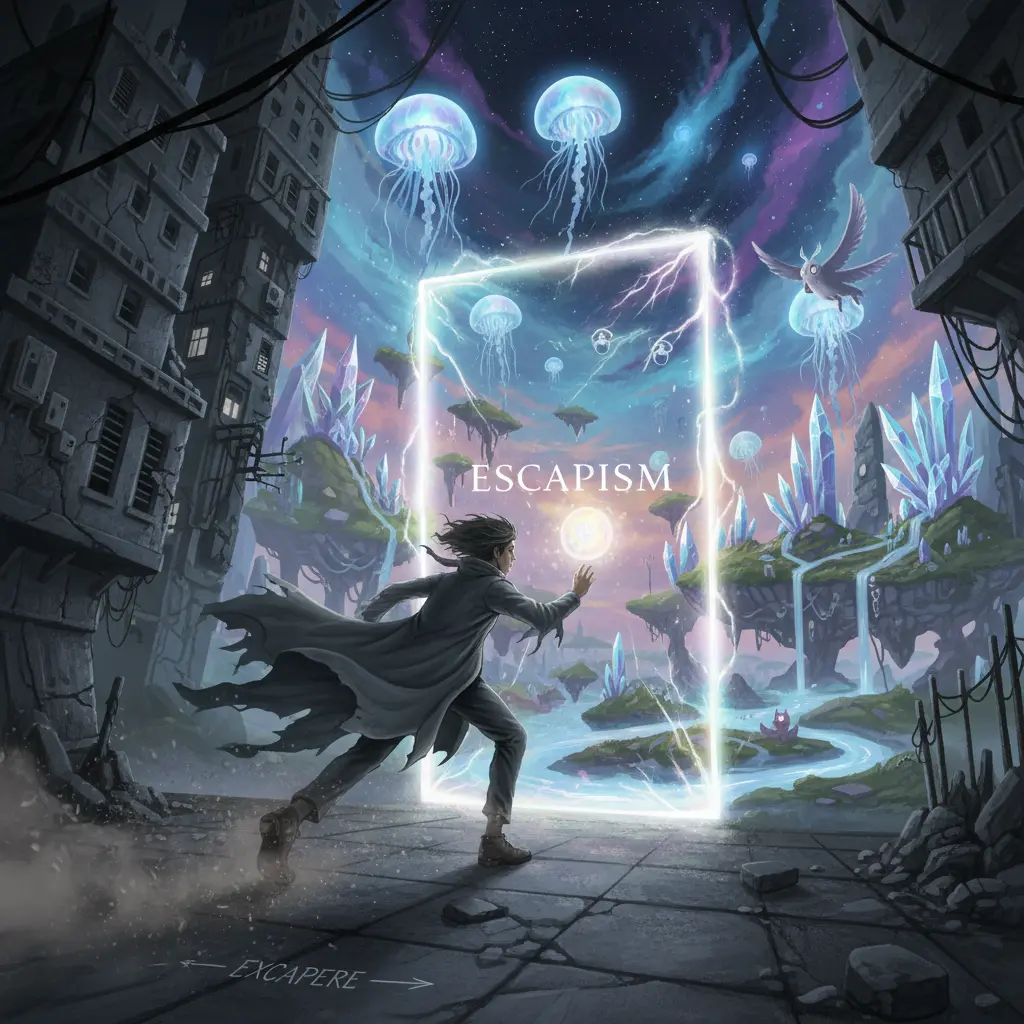
Example sentences are the start of understanding. Don't rush to memorize. First feel how the word works in a sentence.
(a) 'escape' (root) + '-ism' (suffix). (b) From Latin 'excapere' meaning 'to get away from' → Old French 'escapier' → English 'escapism'. (c) Imagine a character fleeing into a dream world, leaving behind the weight of their daily life, as they escape into a realm where everything is possible.
Note 1: These definitions and etymologies are not standard dictionary definitions, but extended explanations provided to help with memorization and understanding of the actual application of words. Through this background information, we strive to make words more vivid and easier to understand, and help you remember their meanings in real life.
Note 2: LexiTalk designs the learning flow around the linguistics principle of “Comprehensible Input.” When learners encounter material that is slightly above their level but still understandable from context, the brain naturally absorbs the language. That’s why we keep every word inside authentic contexts, using examples and associations to help you understand it and use it flexibly.
Read the FAQ explanation of Comprehensible InputEscapism refers to trying to avoid reality or responsibility by retreating into imagination, fantasy, or other distractions. It can be a harmless pastime when used to relax or cope with stress, such as reading a novel, watching a film, or daydreaming. In psychology and everyday speech, people describe its appeal as a way to gain temporary relief from difficult emotions or everyday pressures. However, persistent escapism can prevent addressing problems or fulfilling duties, and some forms—like excessive gaming, compulsive media binges, or avoidance—may hinder growth. The word combines 'escape' with the suffix '-ism' and is often used to talk about a protective but potentially avoidance-based impulse.
In English, escapism is often discussed as a spectrum from harmless relaxation to problematic avoidance, with emphasis on timing, intensity, and consequences; learners should watch collocations and the subtle shift from coping to avoidance.
What does the word 'escapism' mean?
Which sentence uses 'escapism' correctly?
Which word is most similar to 'escapism'?
What is the opposite of 'escapism'?
Can you think of a real-life context where someone might seek a break from reality?
Download LexiTalk app for personalized learning experience
Download AppCookies
We use cookies for essential site functions, analytics, and ads. You can accept, reject, or manage preferences. Privacy Policy