evolution - Master This Word
Master this word with our 5-step learning method – Learn English in English
Train English Through Brain Routes, Not Translation.
This page helps you stop memorizing isolated translations and start understanding a word through its shared mental image, native-style thinking, and practical training steps.
Master this word with our 5-step learning method – Learn English in English
Example sentences are the start of understanding. Don't rush to memorize. First feel how the word works in a sentence.
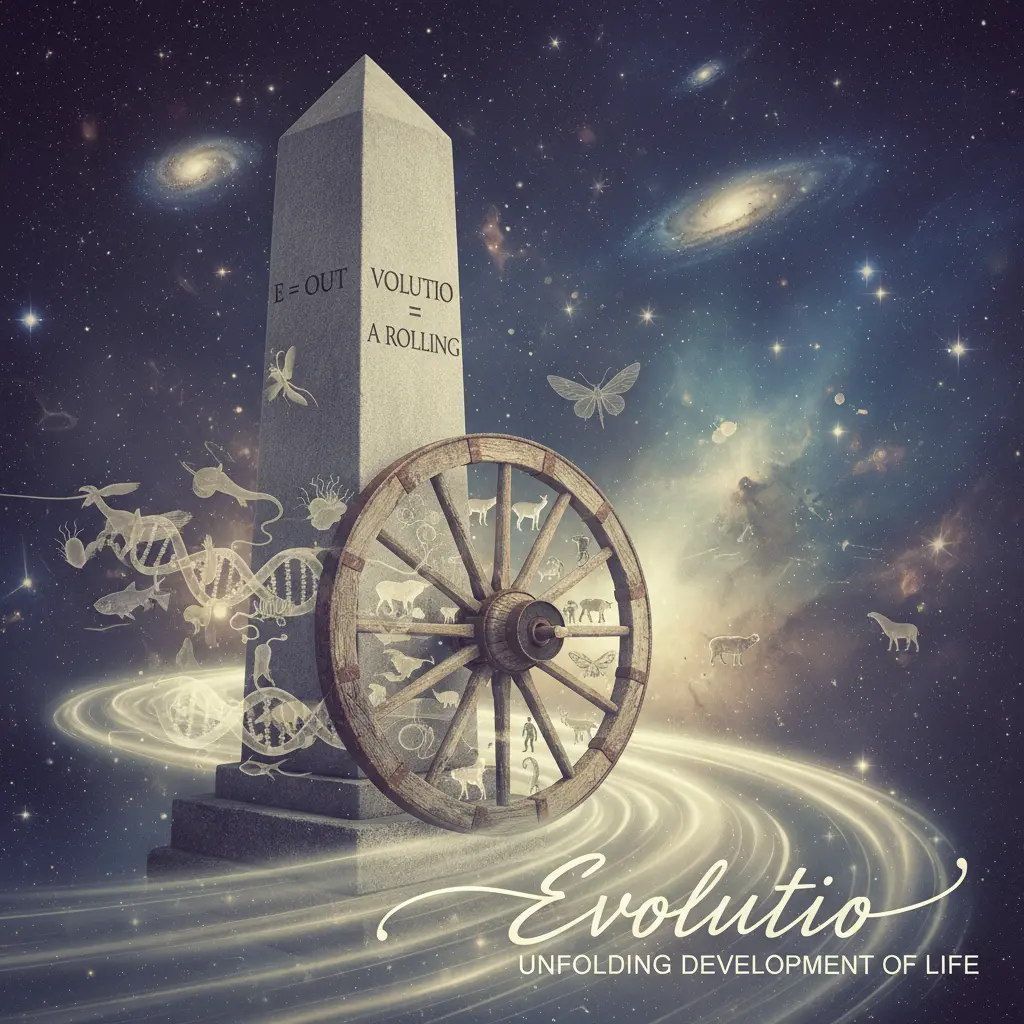
From 'e- = out' + 'volutio = a rolling' (Latin); derived from Latin 'evolutio', borrowed into Old French and then English. Imagine a wheel rolling out from a fixed point, symbolizing the unfolding development of life and species.
Note 1: These definitions and etymologies are not standard dictionary definitions, but extended explanations provided to help with memorization and understanding of the actual application of words. Through this background information, we strive to make words more vivid and easier to understand, and help you remember their meanings in real life.
Note 2: LexiTalk designs the learning flow around the linguistics principle of “Comprehensible Input.” When learners encounter material that is slightly above their level but still understandable from context, the brain naturally absorbs the language. That’s why we keep every word inside authentic contexts, using examples and associations to help you understand it and use it flexibly.
Read the FAQ explanation of Comprehensible InputI place a tiny model on the desk and keep nudging its pieces, turning screws and adjusting the balance. Each small move makes the whole thing shift a little, and I feel the change coming into view. By the end, the idea has evolved in my hands, and I see how this slow, patient push shapes real work.
Evolution is the idea that things change gradually through time, often in predictable directions. In everyday use, it describes the slow development of ideas, projects, or systems as new features accumulate and older ones fade. In science, it names a specific theory that species have diverged and adapted across many generations due to variation, selection, and inheritance. The word commonly collocates with speed, pace, and mechanism: gradual evolution, cultural evolution, technological evolution. Learners should note that evolution implies long time scales and cumulative change, but does not require intention or a conscious planner. The term also appears in debates about origins, diversity, and ongoing processes shaping life.
A concise note for English learners: evolution often implies slow, cumulative change across time, not a single dramatic event.
What is the meaning of the word 'evolution'?
In what context can the word 'evolution' be used?
Which word is similar to 'evolution'?
What is the opposite of 'evolution'?
Can you give an example of 'evolution' in real-life?
English Learning Listening Content
Listen NowDownload LexiTalk app for personalized learning experience
Download AppCookies
We use cookies for essential site functions, analytics, and ads. You can accept, reject, or manage preferences. Privacy Policy