fine - Master This Word
Master this word with our 5-step learning method – Learn English in English
Train English Through Brain Routes, Not Translation.
This page helps you stop memorizing isolated translations and start understanding a word through its shared mental image, native-style thinking, and practical training steps.
Master this word with our 5-step learning method – Learn English in English
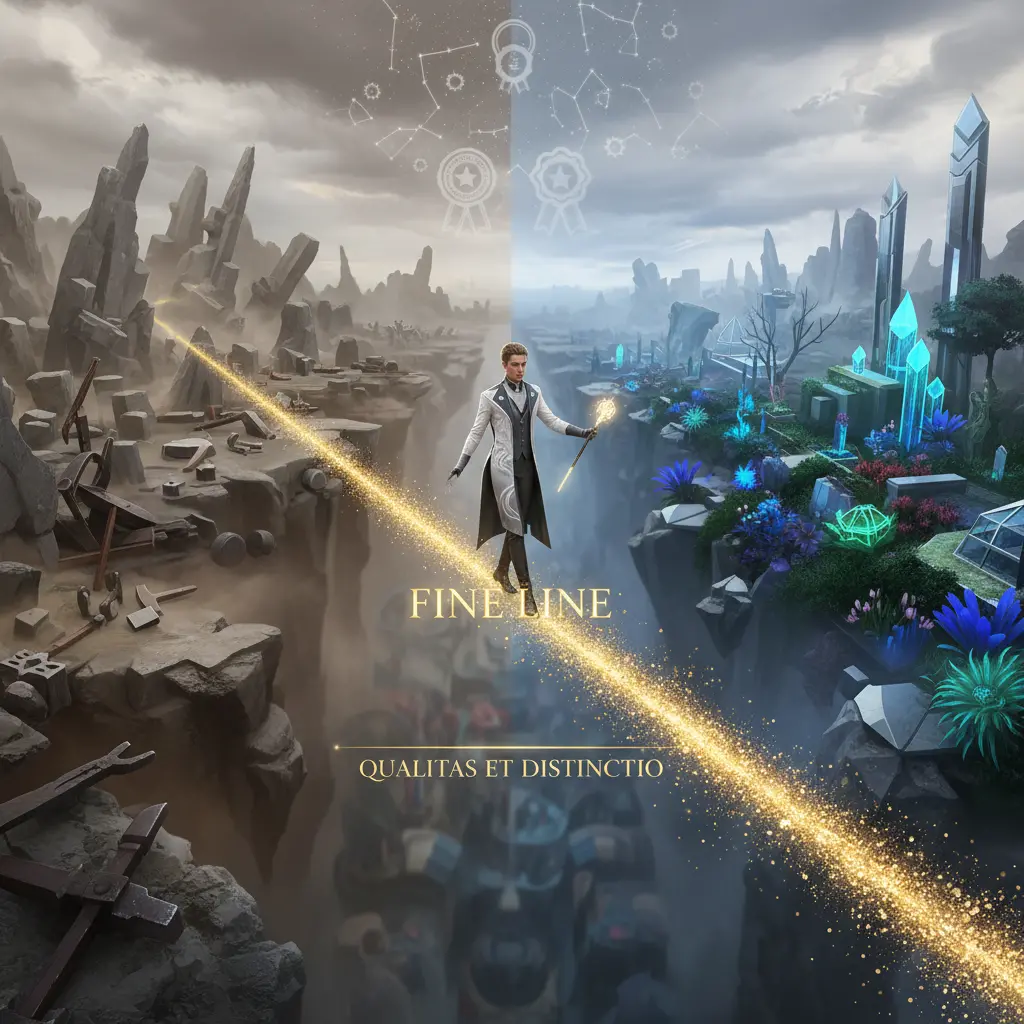
Example sentences are the start of understanding. Don't rush to memorize. First feel how the word works in a sentence.
fine = finis (Latin) + -e (French suffix) meaning 'end or boundary'. Historically from Latin to Old French and then to English. Imagine a fine line that separates two things, representing quality and distinction as if one is walking on a thin line of excellence.
Note 1: These definitions and etymologies are not standard dictionary definitions, but extended explanations provided to help with memorization and understanding of the actual application of words. Through this background information, we strive to make words more vivid and easier to understand, and help you remember their meanings in real life.
Note 2: LexiTalk designs the learning flow around the linguistics principle of “Comprehensible Input.” When learners encounter material that is slightly above their level but still understandable from context, the brain naturally absorbs the language. That’s why we keep every word inside authentic contexts, using examples and associations to help you understand it and use it flexibly.
Read the FAQ explanation of Comprehensible InputI reach for the kettle, move the handle, and adjust the flame until it hisses softly. I set the timer and listen for the click, feeling the heat rise; when it sounds off I shift the flame again. When the brew finally feels smooth and the cup sits steady, I hold the rim and nod, sensing that something is fine. Later a notice lands on the desk, and I feel the weight of a fine; I step back, adjust my routine so the next move goes more smoothly.
Fine is a versatile adjective, noun, and verb with several related meanings. When describing objects or performances, fine typically means high quality or acceptable, not outstanding but satisfactory. In legal or policing contexts, a fine is a monetary penalty for breaking a rule. The phrase 'fine line' conveys a subtle boundary between two states or qualities. Learners should note tone: 'fine' can express agreement or restraint in phrases like 'fine by me' or 'it's fine' while still leaving room for critique. Distinctions between fine and good, or fine and perfectly, can be subtle and culture-dependent, so exposure to different contexts helps accuracy.
Learners tend to overstate fine as 'great' or underestimate its modest tone; context or phrase like 'pay a fine' vs 'it's fine' often causes confusion.
How is the word 'fine' used in a sentence?
Which word is similar to 'fine'?
Which word is the opposite of 'fine'?
In what real-life context would you use the word 'fine'?
Download LexiTalk app for personalized learning experience
Download AppCookies
We use cookies for essential site functions, analytics, and ads. You can accept, reject, or manage preferences. Privacy Policy