five - Master This Word
Master this word with our 5-step learning method – Learn English in English
Train English Through Brain Routes, Not Translation.
This page helps you stop memorizing isolated translations and start understanding a word through its shared mental image, native-style thinking, and practical training steps.
Master this word with our 5-step learning method – Learn English in English
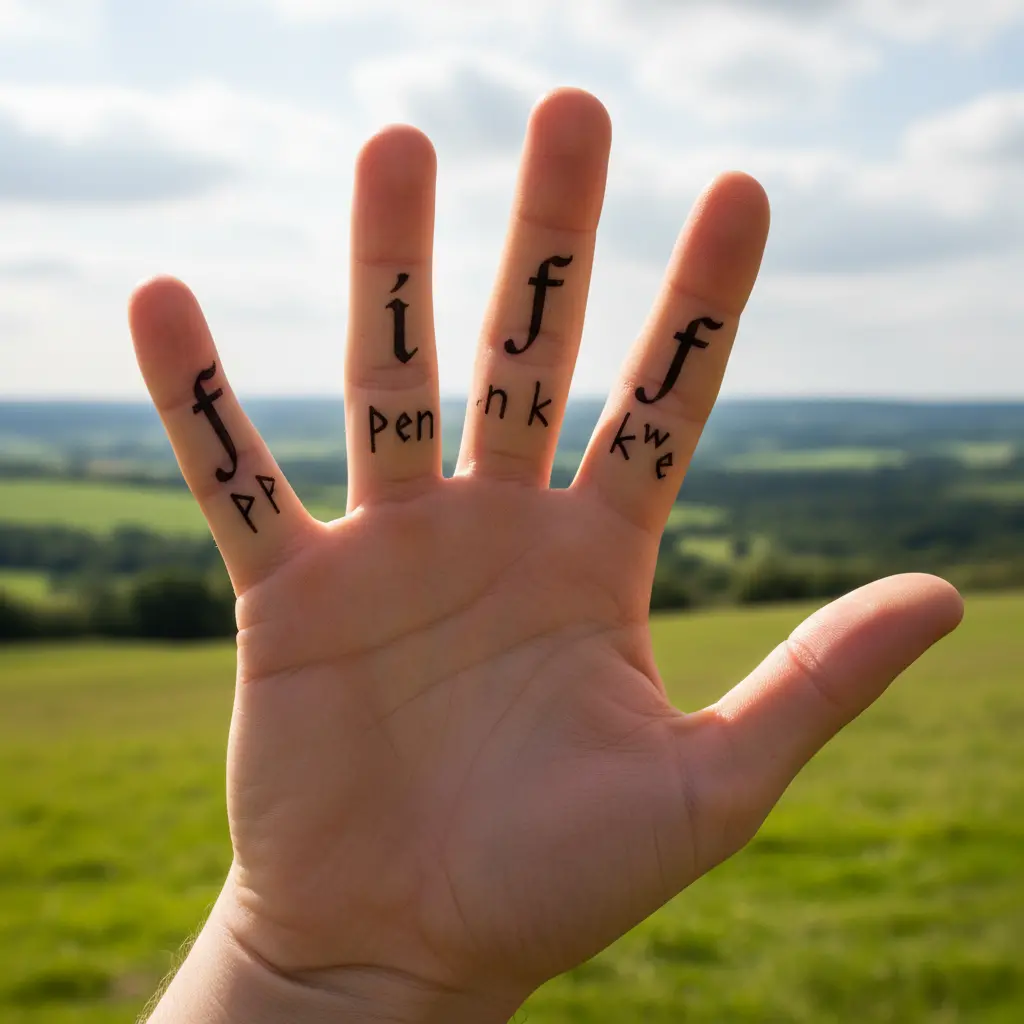
Example sentences are the start of understanding. Don't rush to memorize. First feel how the word works in a sentence.
Five = 'fīf' (Old English) from Proto-Germanic *fimf → Proto-Indo-European *penkʷe. Imagine five fingers on one hand, each representing a number, easily counting them as you wave goodbye.
Note 1: These definitions and etymologies are not standard dictionary definitions, but extended explanations provided to help with memorization and understanding of the actual application of words. Through this background information, we strive to make words more vivid and easier to understand, and help you remember their meanings in real life.
Note 2: LexiTalk designs the learning flow around the linguistics principle of “Comprehensible Input.” When learners encounter material that is slightly above their level but still understandable from context, the brain naturally absorbs the language. That’s why we keep every word inside authentic contexts, using examples and associations to help you understand it and use it flexibly.
Read the FAQ explanation of Comprehensible InputI set five coins on the table, one after another until they line up in a neat row. I push, then pull, and gently adjust their positions with a light touch. It takes a small effort, a moment of focus as my hand keeps the line steady. The five become a feel in my mind, a simple rhythm in a sequence I can point to when I count.
Five is the cardinal number that comes after four and before six. It is used to count groups of items, to describe age, time, scores, and to label positions in a sequence. You can say five apples, five people, or five minutes. In idiomatic English you also see phrases like a high five, five out of five, or five in a row, which extend the basic counting sense into social or evaluative contexts. Knowing five helps with everyday tasks such as shopping, telling time, or planning a meal. When you learn other numbers, picture five fingers on a hand to remember the basic unit.
Think of five as a concrete counting unit that you can visualize with fingers, helping beginners map numbers to real objects. Learners often overgeneralize five as always referring to exact groups or mix it with the ordinal fifth.
Which sentence uses the word 'five' correctly?
What is a similar word to 'five'?
What is the opposite of 'five'?
Can you give an example of a real-life scenario involving the number 'five'?
Download LexiTalk app for personalized learning experience
Download AppCookies
We use cookies for essential site functions, analytics, and ads. You can accept, reject, or manage preferences. Privacy Policy