glad - Master This Word
Master this word with our 5-step learning method – Learn English in English
Train English Through Brain Routes, Not Translation.
This page helps you stop memorizing isolated translations and start understanding a word through its shared mental image, native-style thinking, and practical training steps.
Master this word with our 5-step learning method – Learn English in English
Example sentences are the start of understanding. Don't rush to memorize. First feel how the word works in a sentence.
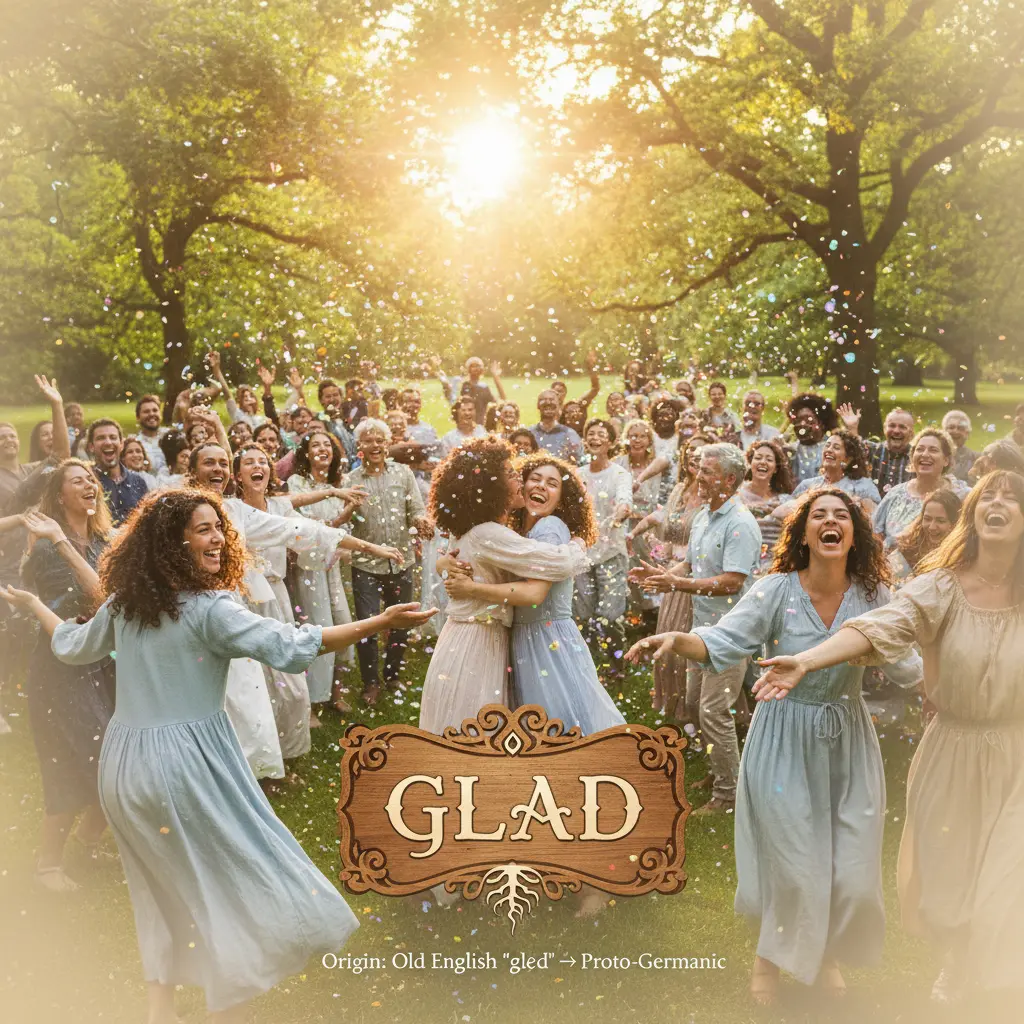
glad = glad (root). Origin: Old English 'glæd' → Proto-Germanic. Memory image: Picture a sunny day where everyone is smiling and laughing, embracing joy.
Note 1: These definitions and etymologies are not standard dictionary definitions, but extended explanations provided to help with memorization and understanding of the actual application of words. Through this background information, we strive to make words more vivid and easier to understand, and help you remember their meanings in real life.
Note 2: LexiTalk designs the learning flow around the linguistics principle of “Comprehensible Input.” When learners encounter material that is slightly above their level but still understandable from context, the brain naturally absorbs the language. That’s why we keep every word inside authentic contexts, using examples and associations to help you understand it and use it flexibly.
Read the FAQ explanation of Comprehensible InputI push open the kitchen window and let the fresh air move over my face. A note on the sill catches the light and shifts into view, and I read it. A small happiness rises, my shoulders loosen, and I feel quietly pleased. I set aside my to-do list for a moment, keep the warmth going, and say yes to a little task I’m glad to help with.
Glad is a friendly, light way to express happiness about something or someone, as in 'I am glad you could come' or 'We’re glad you enjoyed the talk.' It covers feeling pleased, not overwhelmed like 'ecstatic' or deeply sentimental like 'joyful.' It is also used to indicate willingness or readiness, as in 'I’d be glad to help.' In everyday speech, it can imply a pragmatic warmth rather than intense emotion. Learners often mix it with 'happy' or 'delighted,' but glad sits between mild pleasure and polite enthusiasm, so choose it for casual, genuine occasions rather than formal praise.
In English, glad sits between mild pleasure and polite enthusiasm; it’s common in everyday speech, but not as strong as happy or delighted. Learners often overstate intensity or apply it to formal praise. Remember: glad + to + verb is about willingness, while glad about + noun refers to a situation.
In which of the following sentences is 'glad' used correctly?
Which word is the opposite of 'glad'?
Can you think of a similar word to 'glad' that starts with the letter 'h'?
When was the last time you felt 'glad' and why?
Download LexiTalk app for personalized learning experience
Download AppCookies
We use cookies for essential site functions, analytics, and ads. You can accept, reject, or manage preferences. Privacy Policy