
glycogen - Master This Word
Master this word with our 5-step learning method – Learn English in English
Train English Through Brain Routes, Not Translation.
This page helps you stop memorizing isolated translations and start understanding a word through its shared mental image, native-style thinking, and practical training steps.
Master this word with our 5-step learning method – Learn English in English
Example sentences are the start of understanding. Don't rush to memorize. First feel how the word works in a sentence.
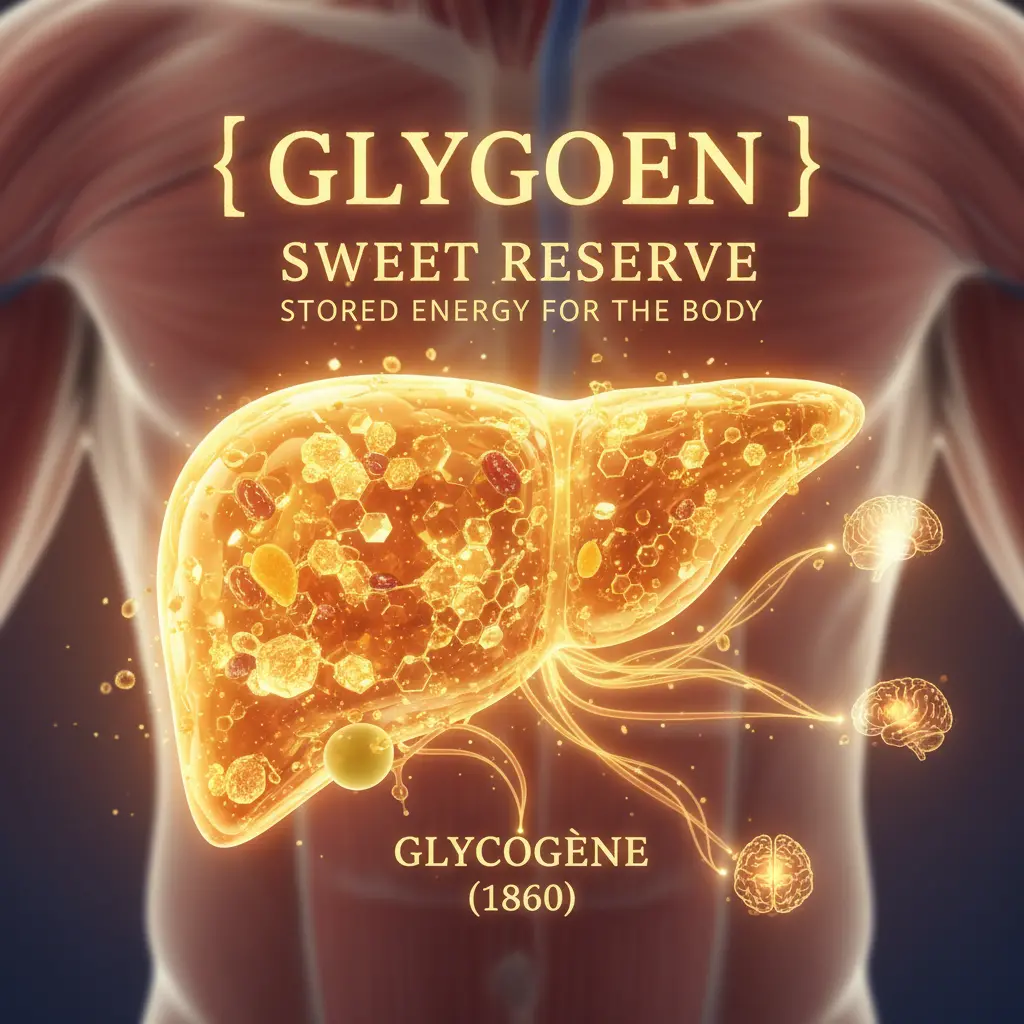
The word 'glycogen' comes from 'glyco-', meaning 'sweet', and '-gen', meaning 'to produce'. Initially coined in French (1860) to denote glucose production in the body, envision it as a sweet reserve stored in the liver, ready to fuel your body's energy needs.
Note 1: These definitions and etymologies are not standard dictionary definitions, but extended explanations provided to help with memorization and understanding of the actual application of words. Through this background information, we strive to make words more vivid and easier to understand, and help you remember their meanings in real life.
Note 2: LexiTalk designs the learning flow around the linguistics principle of “Comprehensible Input.” When learners encounter material that is slightly above their level but still understandable from context, the brain naturally absorbs the language. That’s why we keep every word inside authentic contexts, using examples and associations to help you understand it and use it flexibly.
Read the FAQ explanation of Comprehensible InputGlycogen is a large, branched polysaccharide that stores glucose in animals, mainly in the liver and skeletal muscles. It acts as a quick- release energy reserve during short bursts of activity and between meals when blood glucose drops. Liver glycogen helps maintain blood sugar for the whole body, whereas muscle glycogen fuels muscle contraction during exercise but is not released into the bloodstream. The molecule is built from glucose units activated as UDP-glucose and extended by glycogen synthase, with branching enzyme creating the many branches. Hormones such as insulin promote storage after eating, while glucagon and adrenaline promote mobilization during fasting or stress. In humans, glycogen stores are limited but essential for energy balance.
Explain glycogen concepts with a focus on how English often labels roles (liver vs muscle) and uses short, example-driven phrases.
What is the definition of 'glycogen'?
Choose the sentence that uses 'glycogen' correctly.
Which word is most similar to 'glycogen'?
What is the opposite of 'glycogen'?
In what context might 'glycogen' be discussed in daily life?
Download LexiTalk app for personalized learning experience
Download AppCookies
We use cookies for essential site functions, analytics, and ads. You can accept, reject, or manage preferences. Privacy Policy