mechanical - Master This Word
Master this word with our 5-step learning method – Learn English in English
Train English Through Brain Routes, Not Translation.
This page helps you stop memorizing isolated translations and start understanding a word through its shared mental image, native-style thinking, and practical training steps.
Master this word with our 5-step learning method – Learn English in English
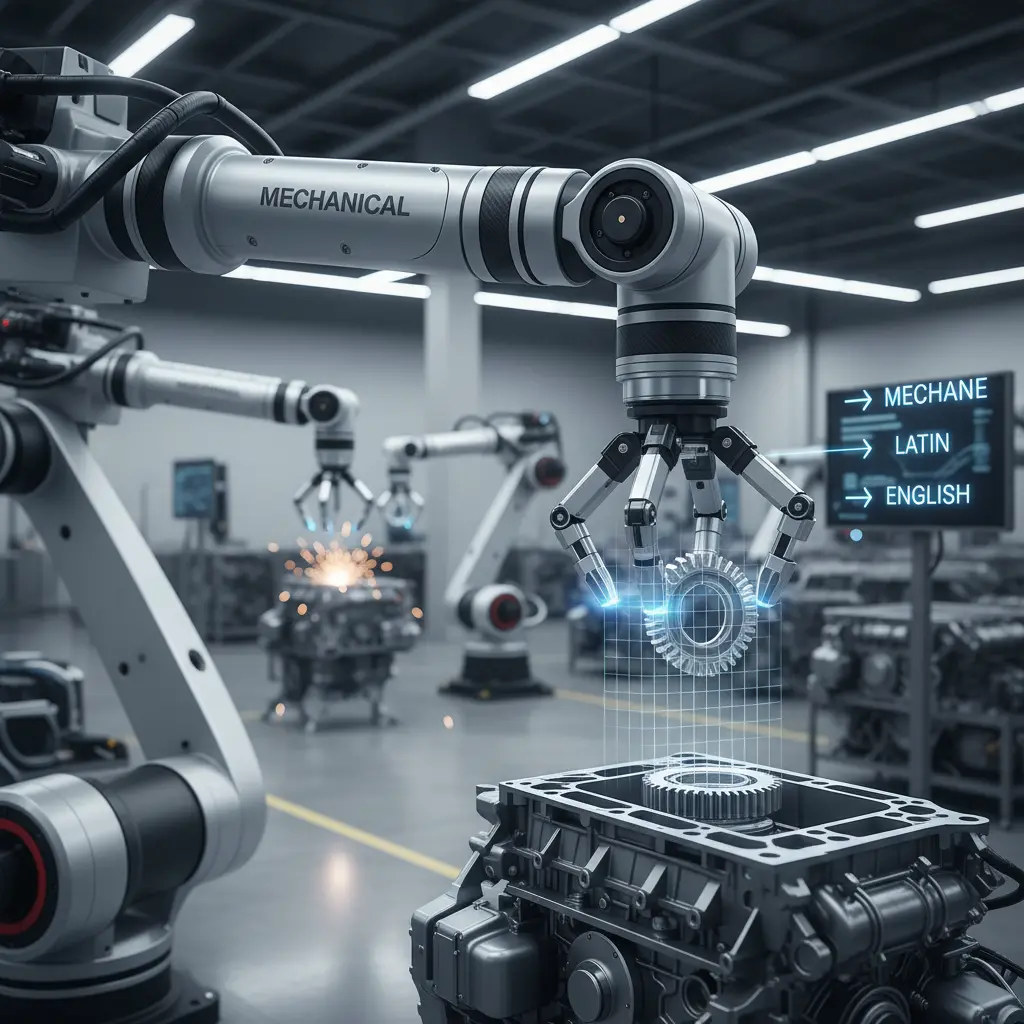
Example sentences are the start of understanding. Don't rush to memorize. First feel how the word works in a sentence.
mechanical = mechan- (from Greek 'mekhane' meaning 'machine') + -ical (related to). Origin: Greek → Latin → English. Imagine a robot arm moving precisely; it represents how machines manipulate physical objects.
Note 1: These definitions and etymologies are not standard dictionary definitions, but extended explanations provided to help with memorization and understanding of the actual application of words. Through this background information, we strive to make words more vivid and easier to understand, and help you remember their meanings in real life.
Note 2: LexiTalk designs the learning flow around the linguistics principle of “Comprehensible Input.” When learners encounter material that is slightly above their level but still understandable from context, the brain naturally absorbs the language. That’s why we keep every word inside authentic contexts, using examples and associations to help you understand it and use it flexibly.
Read the FAQ explanation of Comprehensible InputI grip the handle and pull with deliberate pressure. The gears begin to turn, and the machine hums back in a steady rhythm. I shift my stance, adjust the lever, and keep the pace even. That push and pull makes the tool feel like an extension of my own hands, and the word mechanical starts to live in the moment.
Mechanical describes things related to machines or physical forces, and it can also refer to actions carried out by machines rather than people. In everyday speech you might say a device has a mechanical fault, a process is mechanical, or a system is designed for mechanical operation. The word often carries a sense of precision, rigidity, or automatic movement. For technical contexts it contrasts with electrical, electronic, or hydraulic systems. Common learner traps include assuming it means manual, confusing 'mechanical' with 'mechanics,' or thinking all machines are mechanical by nature. Etymology: from Greek mechanē, 'machine', plus -ical; origin in Greek → Latin → English. Imagine a robot arm moving precisely; it illustrates machines manipulating objects.
To English learners, mechanical often signals machine involvement or automatic movement, not human action or thought. It can carry a hint of rigidity or impersonal function, so avoid using it to describe people or flexible, user-driven processes.
What does the word 'mechanical' mean?
Which sentence uses the word 'mechanical' correctly?
What is a synonym for 'mechanical'?
What is an antonym for 'mechanical'?
How is the word 'mechanical' used in real life?
English Learning Listening Content
Listen NowDownload LexiTalk app for personalized learning experience
Download AppCookies
We use cookies for essential site functions, analytics, and ads. You can accept, reject, or manage preferences. Privacy Policy