
microorganisms - Master This Word
Master this word with our 5-step learning method – Learn English in English
Train English Through Brain Routes, Not Translation.
This page helps you stop memorizing isolated translations and start understanding a word through its shared mental image, native-style thinking, and practical training steps.
Master this word with our 5-step learning method – Learn English in English
Example sentences are the start of understanding. Don't rush to memorize. First feel how the word works in a sentence.
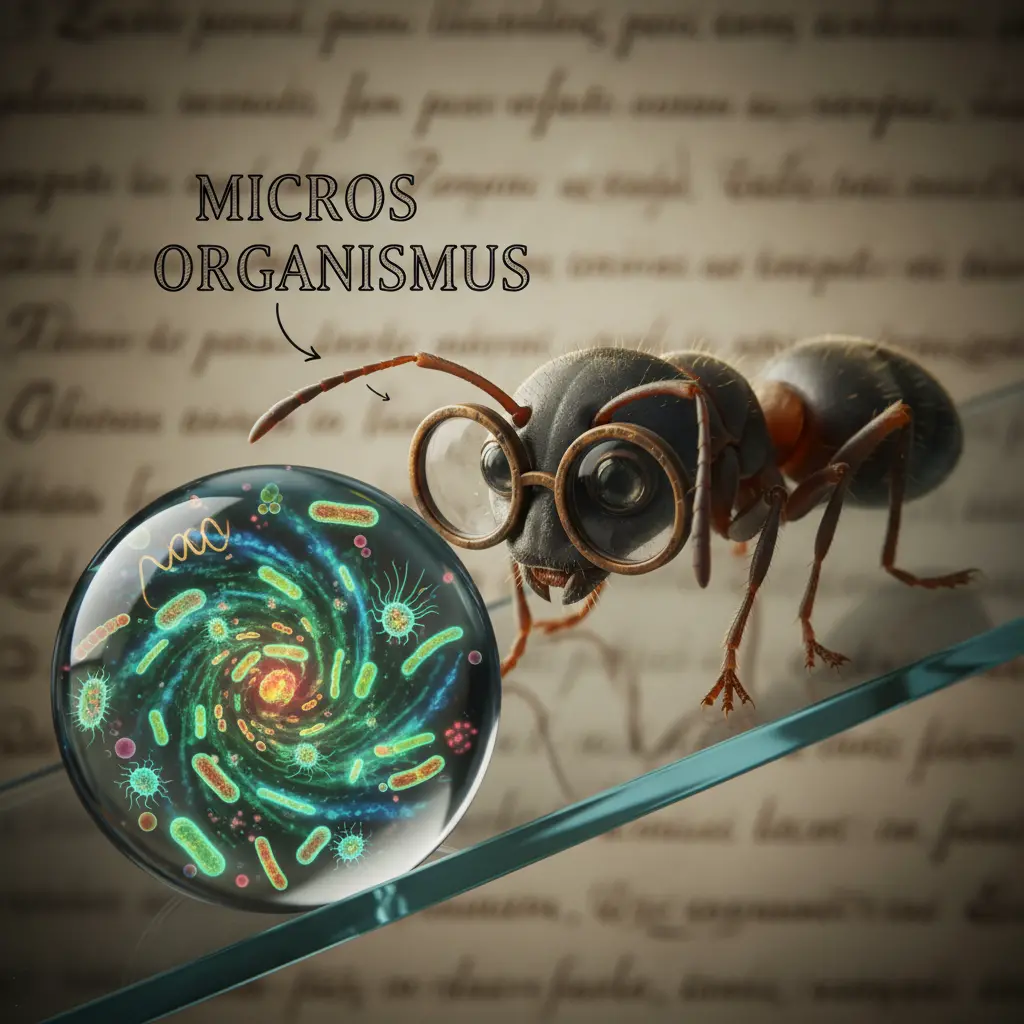
Root: 'micro-' (small) + 'organism' (living being). Historical origin: Greek 'micros' → Latin 'micro-' + 'organismus' → Old French → Middle English. Memory image: Imagine a tiny ant with a microscope as glasses, peering into the world of bacteria, discovering a miniature universe that's alive and bustling with activity.
Note 1: These definitions and etymologies are not standard dictionary definitions, but extended explanations provided to help with memorization and understanding of the actual application of words. Through this background information, we strive to make words more vivid and easier to understand, and help you remember their meanings in real life.
Note 2: LexiTalk designs the learning flow around the linguistics principle of “Comprehensible Input.” When learners encounter material that is slightly above their level but still understandable from context, the brain naturally absorbs the language. That’s why we keep every word inside authentic contexts, using examples and associations to help you understand it and use it flexibly.
Read the FAQ explanation of Comprehensible InputMicroorganisms are tiny living things that often go unseen with the naked eye, yet they play essential roles in health, environment, and industry. They include bacteria, viruses, fungi, and protists, and they can exist as single cells or in tiny colonies. Some microorganisms are beneficial, helping digestion, producing medicines, or fixing nitrogen in soil; others can cause disease, spoil food, or trigger allergies. Studying microorganisms requires tools such as microscopes, sterile technique, and careful observation over time. Their size ranges from hundreds of nanometers to a few micrometers, and their simple structures support a vast diversity of life processes and ecological interactions.
English learners often separate micro- from organism, imagining a tiny individual rather than a population; they may also mix up microbe with microorganism or misjudge plural forms.
Download LexiTalk app for personalized learning experience
Download AppCookies
We use cookies for essential site functions, analytics, and ads. You can accept, reject, or manage preferences. Privacy Policy