mill - Master This Word
Master this word with our 5-step learning method – Learn English in English
Train English Through Brain Routes, Not Translation.
This page helps you stop memorizing isolated translations and start understanding a word through its shared mental image, native-style thinking, and practical training steps.
Master this word with our 5-step learning method – Learn English in English
Example sentences are the start of understanding. Don't rush to memorize. First feel how the word works in a sentence.
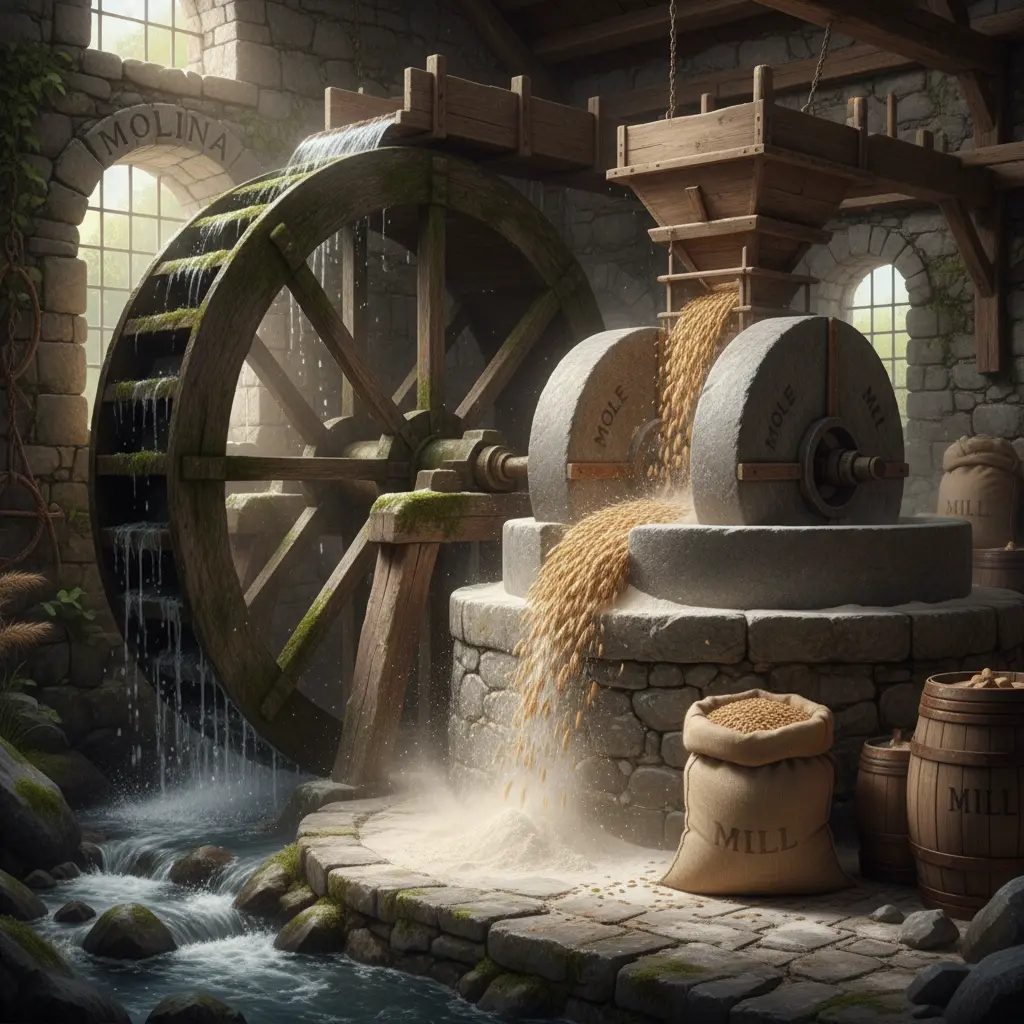
Root: mill = 'to grind'. Historical origin: Latin 'molina' → Old French 'mole' → English 'mill'. Memory image: Picture a large waterwheel turning as it crushes grain into flour, symbolizing the power of transformation.
Note 1: These definitions and etymologies are not standard dictionary definitions, but extended explanations provided to help with memorization and understanding of the actual application of words. Through this background information, we strive to make words more vivid and easier to understand, and help you remember their meanings in real life.
Note 2: LexiTalk designs the learning flow around the linguistics principle of “Comprehensible Input.” When learners encounter material that is slightly above their level but still understandable from context, the brain naturally absorbs the language. That’s why we keep every word inside authentic contexts, using examples and associations to help you understand it and use it flexibly.
Read the FAQ explanation of Comprehensible InputI lift a handful of grain and set it near the mill, then turn the crank with steady wrists. Grain slips in and a fine dust rises as I push and pull to keep the flow even. I adjust the distance and keep a calm rhythm, watching flour begin to show at the bottom. The small, focused action makes me feel in control, and that sense travels into other tasks I face today.
Mill is a building or machine used to grind grain into flour, or to grind something into small pieces. Historically mills were driven by wind or water; today many rely on electricity. The verb sense, to mill, means to grind or crush, often into a powder or fine pieces, or to move around in a milling process. The core idea is transformation by repeated crushing, shaping a rough material into smaller parts. In everyday English, 'to mill' is less common than 'to grind' but appears in contexts like milling wheat, milling flour, or milling the road to dust in an industrial setting. A memory image: a large wheel turning, grinding grain into flour, symbolizing change through force.
For native English speakers, mill often evokes historical machinery or industrial processes; many learners think 'mill' only means a factory building and confuse with 'grind'. It's common to misplace the noun/verb senses or use 'mill' in idioms where 'grind' would be more natural.
What does the word 'mill' refer to?
In which of the following sentences is 'mill' used correctly?
Which of the following words is most similar in meaning to 'mill'?
What is the opposite of 'mill'?
How would you apply the concept of 'mill' in your daily life?
Download LexiTalk app for personalized learning experience
Download AppCookies
We use cookies for essential site functions, analytics, and ads. You can accept, reject, or manage preferences. Privacy Policy