
misery - Master This Word
Master this word with our 5-step learning method – Learn English in English
Train English Through Brain Routes, Not Translation.
This page helps you stop memorizing isolated translations and start understanding a word through its shared mental image, native-style thinking, and practical training steps.
Master this word with our 5-step learning method – Learn English in English
Example sentences are the start of understanding. Don't rush to memorize. First feel how the word works in a sentence.
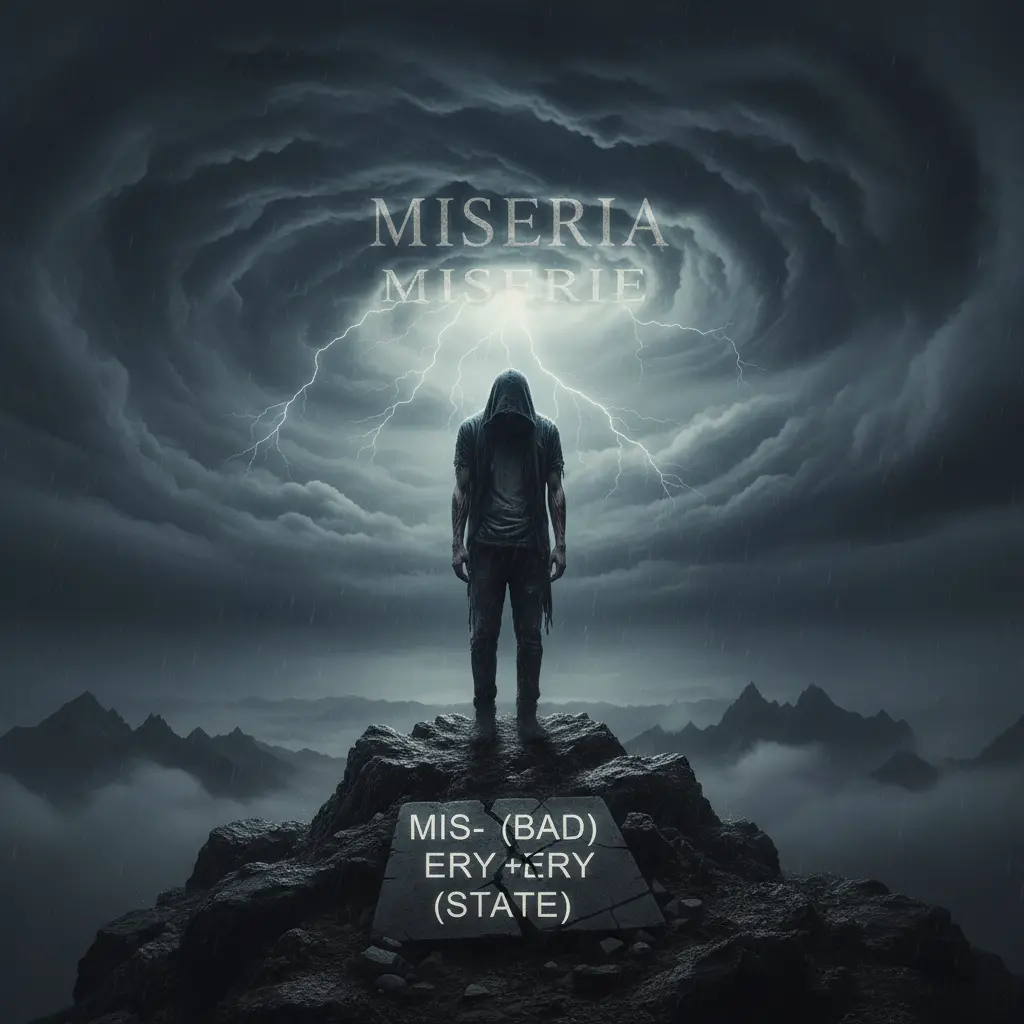
misery = mis- (bad) + ery (state of). Historical origin: Latin 'miseria' → Old French 'miserie' → English. Imagine a person surrounded by storm clouds, symbolizing their constant sadness and hardship.
Note 1: These definitions and etymologies are not standard dictionary definitions, but extended explanations provided to help with memorization and understanding of the actual application of words. Through this background information, we strive to make words more vivid and easier to understand, and help you remember their meanings in real life.
Note 2: LexiTalk designs the learning flow around the linguistics principle of “Comprehensible Input.” When learners encounter material that is slightly above their level but still understandable from context, the brain naturally absorbs the language. That’s why we keep every word inside authentic contexts, using examples and associations to help you understand it and use it flexibly.
Read the FAQ explanation of Comprehensible InputI sit with my shoulders lowered and move my thoughts from a small worry to something heavier. A slow shift in mood makes the room feel dimmer and the breath harder, and the sense of need just keeps growing. I try to hold steady, adjust my stance, and place attention on the ache as it settles in my chest. The word arrives not as a rule, but as a felt line in the air, telling me I am in misery—a quiet state of enduring hardship that I recognize in the body and in the day.
Misery refers to a state of great distress or hardship, an extreme form of suffering or discomfort, and a deep sadness that colors a person’s everyday life. It can describe physical pain, emotional torment, or prolonged misfortune that seems to drain energy and hope. In usage, misery often carries a sense of severity beyond ordinary unhappiness, and you might hear phrases like “in misery,” “bring misery to others,” or “to live in misery.” While closely tied to sadness, misery emphasizes enduring hardship and the weight of circumstances rather than momentary mood. It can appear in literature, journalism, and everyday speech to mark intense experiences.
Explain to an English speaker that misery signals enduring hardship and a weighty emotional tone, not just a momentary mood.
What is the meaning of the word 'misery'?
In which of the following sentences is 'misery' used correctly?
What is a synonym for 'misery'?
What is an antonym for 'misery'?
In what situation would someone likely experience 'misery'?
Download LexiTalk app for personalized learning experience
Download AppCookies
We use cookies for essential site functions, analytics, and ads. You can accept, reject, or manage preferences. Privacy Policy