nest - Master This Word
Master this word with our 5-step learning method – Learn English in English
Train English Through Brain Routes, Not Translation.
This page helps you stop memorizing isolated translations and start understanding a word through its shared mental image, native-style thinking, and practical training steps.
Master this word with our 5-step learning method – Learn English in English
Example sentences are the start of understanding. Don't rush to memorize. First feel how the word works in a sentence.
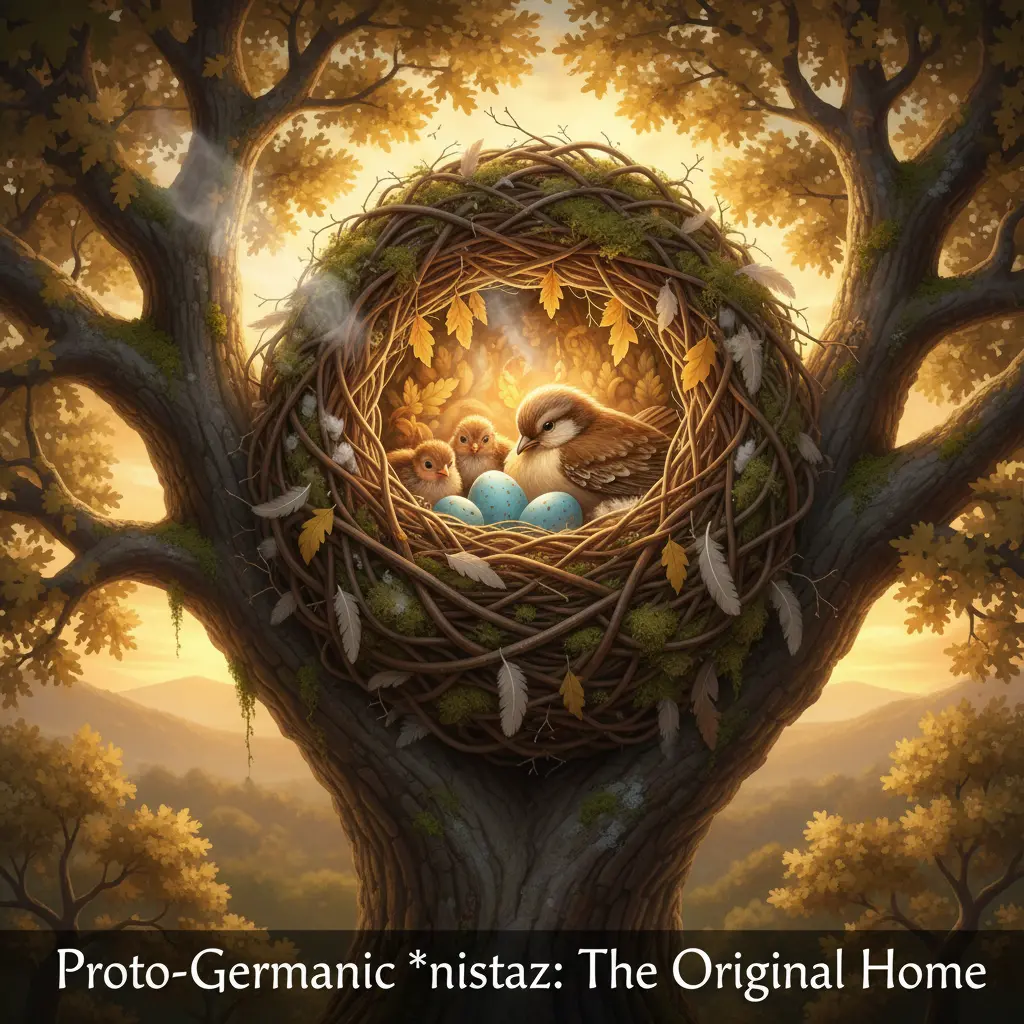
nest: from Proto-Germanic *nistaz (related to Old Norse 'nǫstr', meaning a nest). Visualize a cozy, egg-shaped structure high in a tree, safe and warm for the birds that call it home.
Note 1: These definitions and etymologies are not standard dictionary definitions, but extended explanations provided to help with memorization and understanding of the actual application of words. Through this background information, we strive to make words more vivid and easier to understand, and help you remember their meanings in real life.
Note 2: LexiTalk designs the learning flow around the linguistics principle of “Comprehensible Input.” When learners encounter material that is slightly above their level but still understandable from context, the brain naturally absorbs the language. That’s why we keep every word inside authentic contexts, using examples and associations to help you understand it and use it flexibly.
Read the FAQ explanation of Comprehensible InputOn a quiet afternoon, I grip a twig, turn my wrist to tuck it into place, and push a few more into the growing pile. I shift my weight as the little nest takes shape, holding the curve of space just right. The effort tightens my focus, and I sense a warm corner forming where something can rest or hatch, a place that belongs here. Soon the nest becomes more than sticks: it feels like home I can keep watching, even when I am away.
Nest is a word that covers both a bird’s home and a broader sense of safety and coziness. As a noun it describes a small, often twig-built structure where birds lay eggs and raise their young; as a verb it can mean to build or settle into a snug, sheltered space, or to tuck something into a nest-like arrangement. Metaphorically, a nest can be a home base, a place of security, or a carefully prepared environment for growth. English learners should note common collocations like nest egg, bird’s nest, nest in, and to nestle into a routine, as these shapes how the word is actually used in speech and writing.
In English, nest centers on concrete bird homes but also travels into broad metaphors of safety and home base; learners often assume it only refers to birds or mix up nest with rest in tense or form.
What is the meaning of the word 'nest'?
In which sentence is the word 'nest' used correctly?
Which word is an antonym of 'nest'?
In what real-life context would you find a 'nest'?
Can you use 'nest' in a sentence to describe a bird's home?
Download LexiTalk app for personalized learning experience
Download AppCookies
We use cookies for essential site functions, analytics, and ads. You can accept, reject, or manage preferences. Privacy Policy