
opera - Master This Word
Master this word with our 5-step learning method – Learn English in English
Train English Through Brain Routes, Not Translation.
This page helps you stop memorizing isolated translations and start understanding a word through its shared mental image, native-style thinking, and practical training steps.
Master this word with our 5-step learning method – Learn English in English
Example sentences are the start of understanding. Don't rush to memorize. First feel how the word works in a sentence.
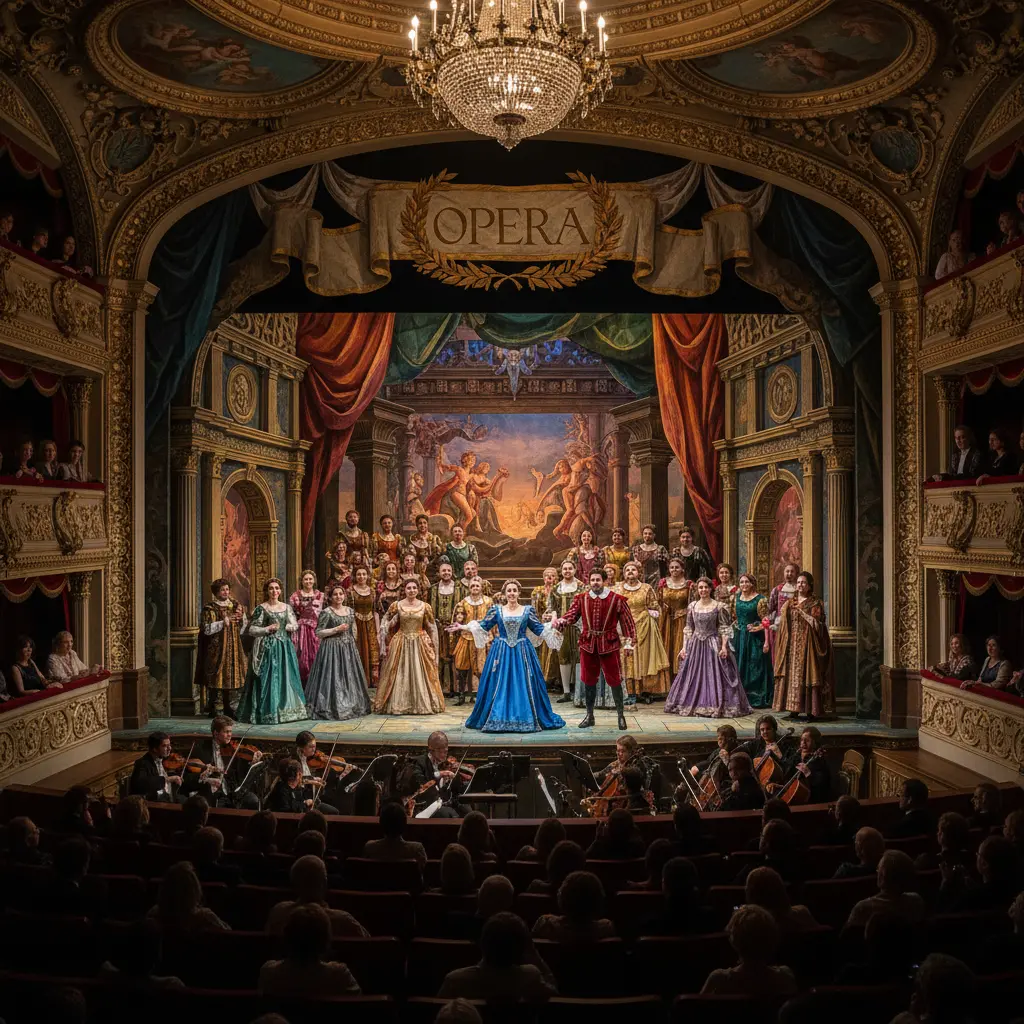
Opera: from 'opera' (work) in Latin, meaning 'a work'; evolved through Italian as 'opera' in the late 16th century. Imagine a colorful stage where singers and actors express stories through powerful emotions, captivating audiences with a blend of music and drama.
Note 1: These definitions and etymologies are not standard dictionary definitions, but extended explanations provided to help with memorization and understanding of the actual application of words. Through this background information, we strive to make words more vivid and easier to understand, and help you remember their meanings in real life.
Note 2: LexiTalk designs the learning flow around the linguistics principle of “Comprehensible Input.” When learners encounter material that is slightly above their level but still understandable from context, the brain naturally absorbs the language. That’s why we keep every word inside authentic contexts, using examples and associations to help you understand it and use it flexibly.
Read the FAQ explanation of Comprehensible InputI lean in, letting the seat hold me as the lights dim and the stage comes alive. The air shifts and the orchestra sets the tempo, and I move my gaze toward the singers. I adjust my breath with the rising chorus, and the drama pushes me to listen more closely. I keep listening, as the music and scene change the room inside me.
Opera is a dramatic work set to music, traditionally performed in a theater where singers, actors, and an orchestra convey a story through song, spoken dialogue, and instrumental interludes. The term originated in Latin as opera (work) and entered Italian usage in the late Renaissance, later evolving into a distinct art form across Europe. Modern operas range from grand, mythic epics with lavish scenery to intimate works that experiment with form and sound. When learners encounter the word, note that opera can refer to the art form in general or to a single production, depending on context and accompanying terms like house, composer, or title.
Opera is seen as a prestigious, European-born art form; learners often think 'opera' only means Italian-language works and grand staging.
What is the meaning of the word 'opera'?
In which of the following sentences is the word 'opera' used correctly?
Which word is a synonym of 'opera'?
What is the opposite meaning of 'opera'?
In what real-life context would you typically encounter an 'opera'?
Download LexiTalk app for personalized learning experience
Download AppCookies
We use cookies for essential site functions, analytics, and ads. You can accept, reject, or manage preferences. Privacy Policy