
optimist - Master This Word
Master this word with our 5-step learning method – Learn English in English
Train English Through Brain Routes, Not Translation.
This page helps you stop memorizing isolated translations and start understanding a word through its shared mental image, native-style thinking, and practical training steps.
Master this word with our 5-step learning method – Learn English in English
Example sentences are the start of understanding. Don't rush to memorize. First feel how the word works in a sentence.
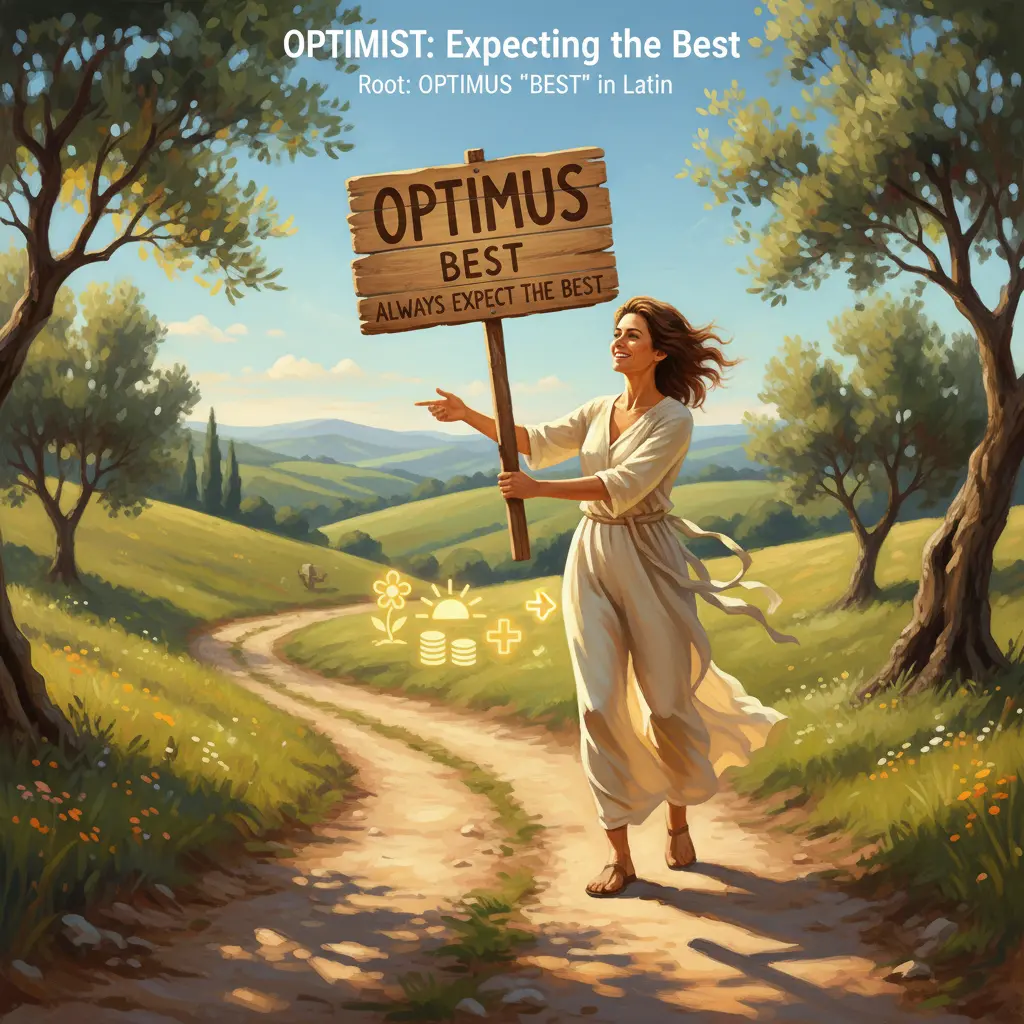
Root decomposition: root optim- + suffix -ist; the root comes from Latin optimus 'best'. Historical origin: from Latin optimus 'best', via Old French optimiste into English. Memory image: picture a person on a sunlit path holding a sign that says 'best', always expecting the best in every situation.
Note 1: These definitions and etymologies are not standard dictionary definitions, but extended explanations provided to help with memorization and understanding of the actual application of words. Through this background information, we strive to make words more vivid and easier to understand, and help you remember their meanings in real life.
Note 2: LexiTalk designs the learning flow around the linguistics principle of “Comprehensible Input.” When learners encounter material that is slightly above their level but still understandable from context, the brain naturally absorbs the language. That’s why we keep every word inside authentic contexts, using examples and associations to help you understand it and use it flexibly.
Read the FAQ explanation of Comprehensible InputAn optimist is someone who tends to expect good outcomes for the future and to see the bright side of most situations. They focus on possibilities over problems, believe that effort or luck can improve things, and try to stay hopeful even when things go wrong. This attitude can inspire others and keep teams moving, but it can also lead to unrealistic expectations if realism is neglected. In everyday speech, people might say that setbacks are temporary or that everything will work out in the end, and an optimist is the person who tends to say such things.
English speakers often hear 'optimist' as a neutral positive label for a person who tends to see good outcomes. Learners worry about sounding naive or unrealistically upbeat; context and tone matter, and pairing with other words can signal balanced optimism.
Which sentence uses the word 'optimist' correctly?
Which word is most similar in meaning to 'optimist'?
Which word is the opposite of 'optimist'?
Can you think of a real-life scenario that fits the meaning of the word without using the word itself?
Download LexiTalk app for personalized learning experience
Download AppCookies
We use cookies for essential site functions, analytics, and ads. You can accept, reject, or manage preferences. Privacy Policy