
orchestra - Master This Word
Master this word with our 5-step learning method – Learn English in English
Train English Through Brain Routes, Not Translation.
This page helps you stop memorizing isolated translations and start understanding a word through its shared mental image, native-style thinking, and practical training steps.
Master this word with our 5-step learning method – Learn English in English
Example sentences are the start of understanding. Don't rush to memorize. First feel how the word works in a sentence.
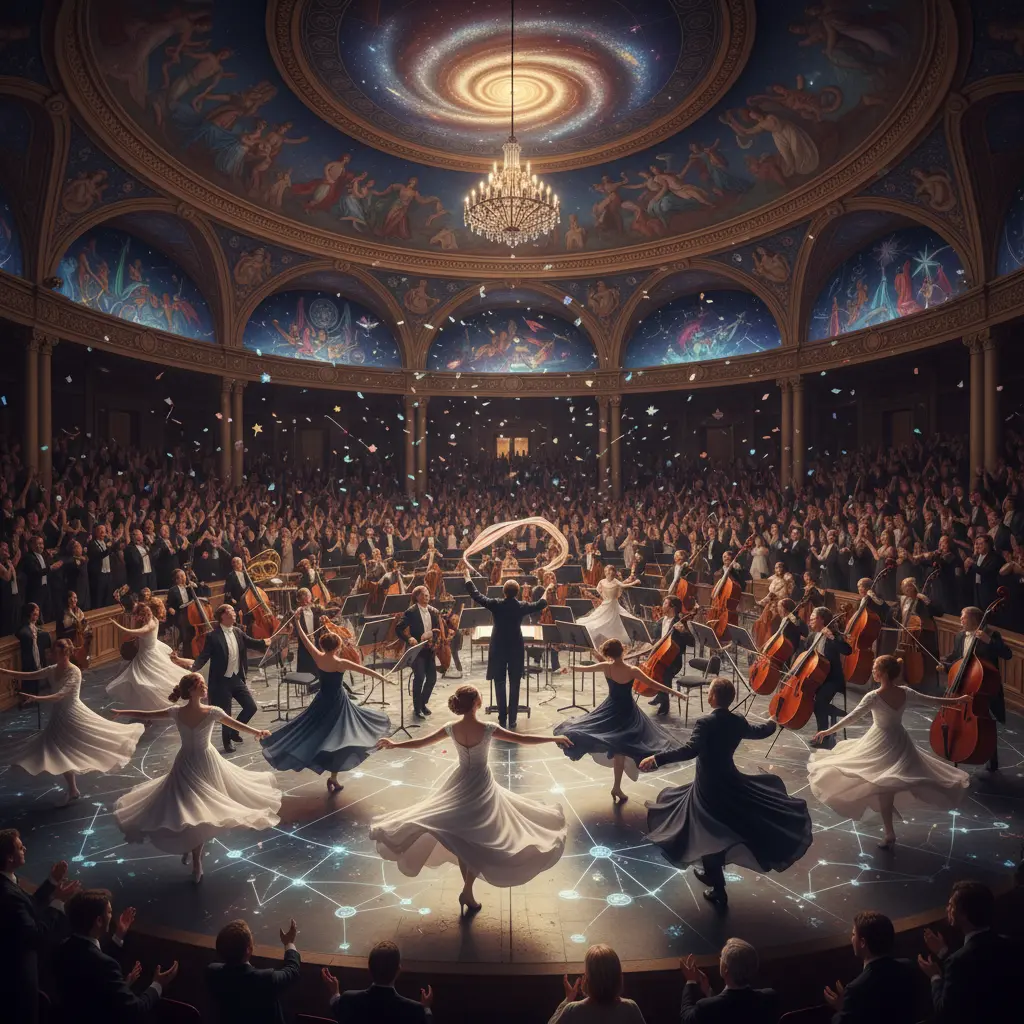
orchestra = orchestr(a) + suffix (related to space/position) → Greek 'orkhestra' (dancing place) → Late Latin → Old French → English; Imagine a grand stage where musicians gather and dance around their instruments in harmony.
Note 1: These definitions and etymologies are not standard dictionary definitions, but extended explanations provided to help with memorization and understanding of the actual application of words. Through this background information, we strive to make words more vivid and easier to understand, and help you remember their meanings in real life.
Note 2: LexiTalk designs the learning flow around the linguistics principle of “Comprehensible Input.” When learners encounter material that is slightly above their level but still understandable from context, the brain naturally absorbs the language. That’s why we keep every word inside authentic contexts, using examples and associations to help you understand it and use it flexibly.
Read the FAQ explanation of Comprehensible InputI lean into the hall, push aside my notebook, and adjust my chair to hear better. I watch the first violin lift a note, then shift my gaze to a sea of players, all moving together with one breath. The string section pulls and the brass holds a rhythm, and I feel the effort to keep pace with each tempo change. As the music grows, I sense the whole group forming a single voice—the orchestra—this living thing that lets the room hear what many can do together.
An orchestra is a large ensemble of musicians who play together under a conductor. It usually consists of four main families: strings, woodwinds, brass, and percussion, and may include a pianist or harp to accompany in some works. The term can also refer to the venue or setting of a performance, as in 'the orchestra performed in the concert hall' or 'the orchestra pit' where players sit during a show. Orchestras rehearse a wide range of repertoire, from symphonies and concertos to film scores and operatic scores. The word comes from Greek roots related to space and arrangement, with English usage emphasizing the collective, organized nature of the group.
Explain to an English speaker (meta, keep short)
What does the word 'orchestra' refer to?
Which of the following sentences uses 'orchestra' correctly?
Select the synonym of 'orchestra':
Select the opposite of 'orchestra':
In what real-life context would you find an orchestra performing?
Download LexiTalk app for personalized learning experience
Download AppCookies
We use cookies for essential site functions, analytics, and ads. You can accept, reject, or manage preferences. Privacy Policy