palm - Master This Word
Master this word with our 5-step learning method – Learn English in English
Train English Through Brain Routes, Not Translation.
This page helps you stop memorizing isolated translations and start understanding a word through its shared mental image, native-style thinking, and practical training steps.
Master this word with our 5-step learning method – Learn English in English
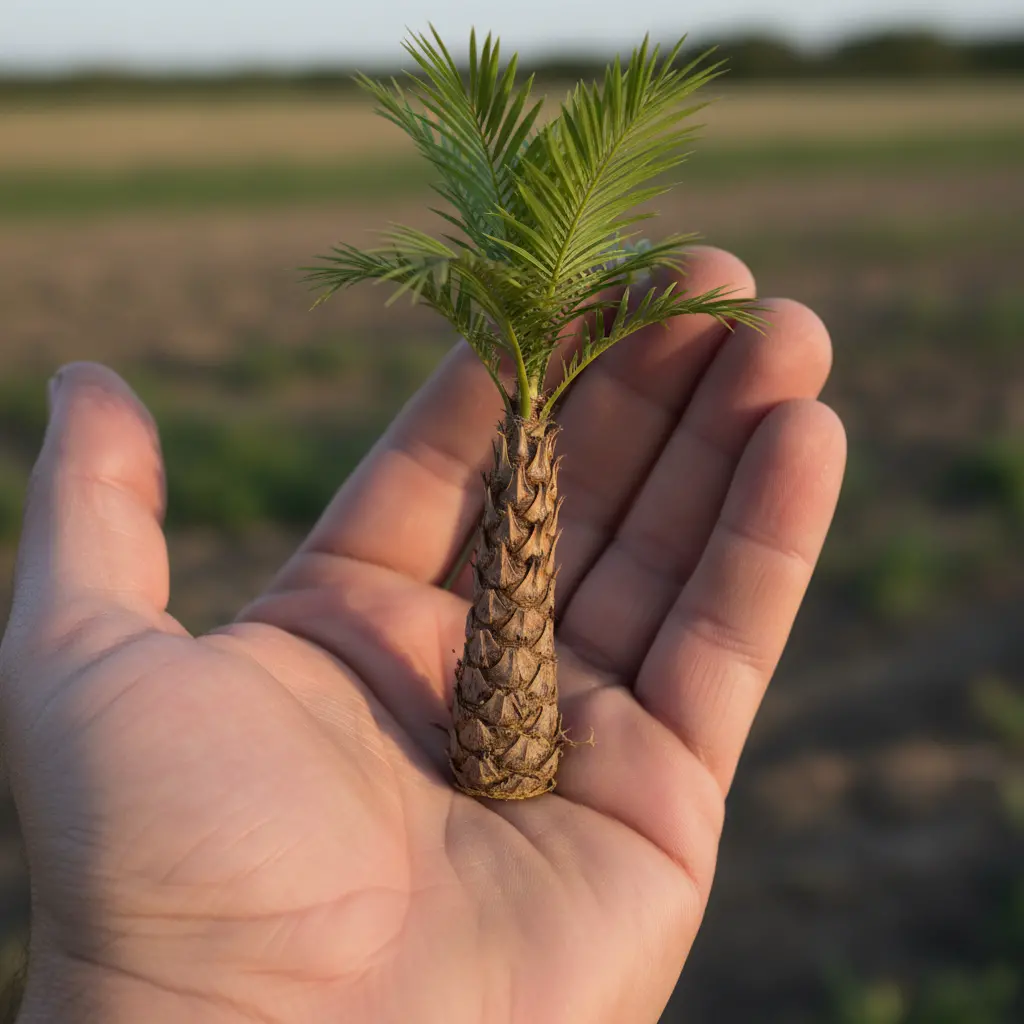
Example sentences are the start of understanding. Don't rush to memorize. First feel how the word works in a sentence.
palma = palm; from Latin 'palma' meaning 'palm of the hand' → old French → English. Imagine holding a small tree in the palm of your hand, feeling its texture and the roughness of its trunk against your skin.
Note 1: These definitions and etymologies are not standard dictionary definitions, but extended explanations provided to help with memorization and understanding of the actual application of words. Through this background information, we strive to make words more vivid and easier to understand, and help you remember their meanings in real life.
Note 2: LexiTalk designs the learning flow around the linguistics principle of “Comprehensible Input.” When learners encounter material that is slightly above their level but still understandable from context, the brain naturally absorbs the language. That’s why we keep every word inside authentic contexts, using examples and associations to help you understand it and use it flexibly.
Read the FAQ explanation of Comprehensible InputI open my palm and move my fingers to catch a small seed. I adjust my grip, hold it steady, and set it there so it won’t slip as I breathe and shift my stance. The warmth of the hand and the space inside it make the idea of the palm emerge: a surface that can cradle something, and a glimpse of a palm tree in the heat.
Palm is a small, versatile word with three broad meanings. Most commonly it denotes the inner surface of the hand, the soft, flexible area from the wrist to the fingers, which you use to grasp objects. It also names a palm tree, a tall, spiky-trunked plant with fan-like fronds that thrives in warm climates. A third sense is the action of holding something in the palm of your hand, emphasizing control or concealment in a literal or figurative way. The etymology traces to Latin palma, meaning palm of the hand, passing through Old French into English; the imagery of a tree resting in the hand often appears in examples and metaphors.
In English, palm is often clearly split between hand-related and plant-related meanings; learners must rely on context and collocations to avoid confusion.
What is the meaning of the word 'palm'?
How is the word 'palm' used in a sentence?
Which word is similar to 'palm'?
What is the opposite of 'palm'?
In what context might you find a 'palm'?
English Learning Listening Content
Listen NowDownload LexiTalk app for personalized learning experience
Download AppCookies
We use cookies for essential site functions, analytics, and ads. You can accept, reject, or manage preferences. Privacy Policy