perhaps - Master This Word
Master this word with our 5-step learning method – Learn English in English
Train English Through Brain Routes, Not Translation.
This page helps you stop memorizing isolated translations and start understanding a word through its shared mental image, native-style thinking, and practical training steps.
Master this word with our 5-step learning method – Learn English in English
Example sentences are the start of understanding. Don't rush to memorize. First feel how the word works in a sentence.
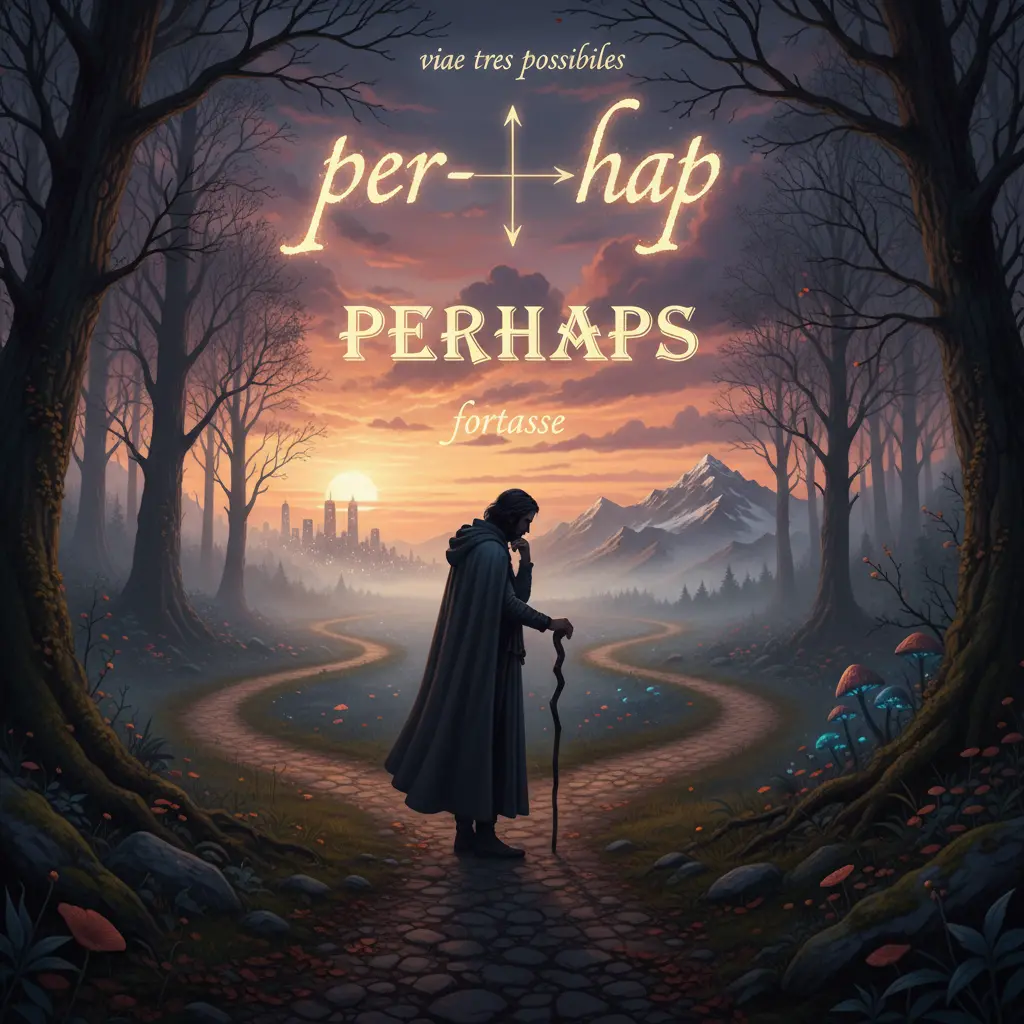
per- = through + hap = happen; Latin → Old French → English. Imagine a person at a crossroads, deliberating which path to take, embodying the uncertainty of 'perhaps' as they weigh their choices.
Note 1: These definitions and etymologies are not standard dictionary definitions, but extended explanations provided to help with memorization and understanding of the actual application of words. Through this background information, we strive to make words more vivid and easier to understand, and help you remember their meanings in real life.
Note 2: LexiTalk designs the learning flow around the linguistics principle of “Comprehensible Input.” When learners encounter material that is slightly above their level but still understandable from context, the brain naturally absorbs the language. That’s why we keep every word inside authentic contexts, using examples and associations to help you understand it and use it flexibly.
Read the FAQ explanation of Comprehensible InputI tilt my head and pause, then shift my attention to a choice. My mind moves, a glimmer of perhaps appears as I weigh what could be true. I adjust my stance, push away certainty, hold back a firmer yes, and keep one foot ready to move. The sense of perhaps grows when I decide to say it, not as a fact but as a gentle turn in thinking, a last check before I commit.
Perhaps is a mild hedge indicating possibility or uncertainty without committing to a definite outcome. It can precede a clause, as in perhaps we should wait, or appear before the main verb in cautious speech. The idea behind perhaps comes from weighing paths at a crossroads, a mental image echoed in its etymology: through hap, choosing among options. In everyday English, perhaps softens statements, signals tentativeness in planning, negotiation, or storytelling, and can appear in both formal and informal contexts. Learners should place perhaps before the main verb or clause, and avoid overusing it in decisive assertions.
English uses perhaps to softly hedge statements and gradually introduce a possibility; learners often place it too late or too early, or confuse it with maybe. It favors subtlety over certainty.
In which of the following sentences is 'perhaps' used correctly?
Which word is similar to 'perhaps'?
Which word is the opposite of 'perhaps'?
In what situation might someone use the word 'perhaps'?
Download LexiTalk app for personalized learning experience
Download AppCookies
We use cookies for essential site functions, analytics, and ads. You can accept, reject, or manage preferences. Privacy Policy