porcelain - Master This Word
Master this word with our 5-step learning method – Learn English in English
Train English Through Brain Routes, Not Translation.
This page helps you stop memorizing isolated translations and start understanding a word through its shared mental image, native-style thinking, and practical training steps.
Master this word with our 5-step learning method – Learn English in English
Example sentences are the start of understanding. Don't rush to memorize. First feel how the word works in a sentence.
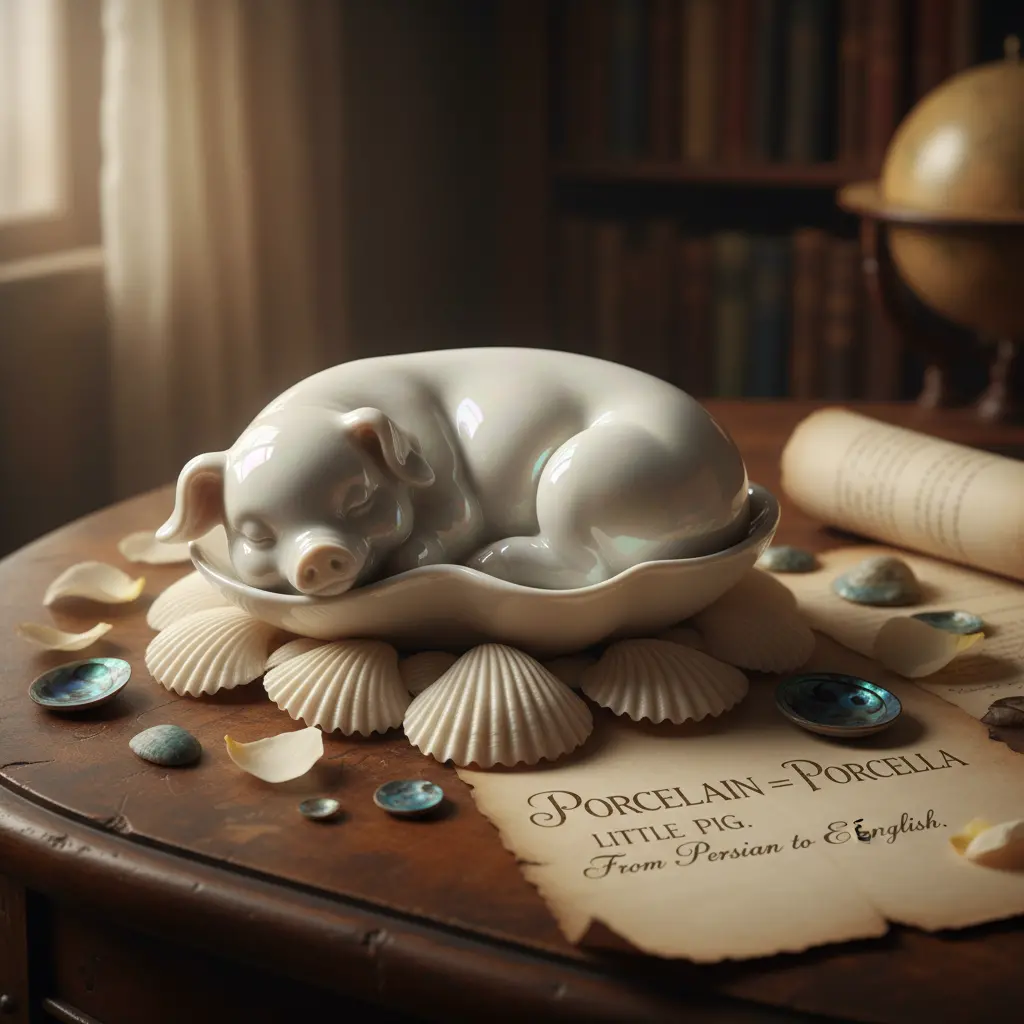
porcelain = porcella = little pig; from Italian 'porcellana', referring to the shell of a sea snail resembling a pig's back. Originally from Persian to Italian to English. Remember it as a delicate dish resembling a shiny pig's back, often admired for its beauty.
Note 1: These definitions and etymologies are not standard dictionary definitions, but extended explanations provided to help with memorization and understanding of the actual application of words. Through this background information, we strive to make words more vivid and easier to understand, and help you remember their meanings in real life.
Note 2: LexiTalk designs the learning flow around the linguistics principle of “Comprehensible Input.” When learners encounter material that is slightly above their level but still understandable from context, the brain naturally absorbs the language. That’s why we keep every word inside authentic contexts, using examples and associations to help you understand it and use it flexibly.
Read the FAQ explanation of Comprehensible InputPorcelain is a hard, shiny ceramic material prized for its whiteness, translucence, and strength. It covers a family of wares that include dishes, teaware, vases, and decorative objects. The word porcelain comes from porcellana, Italian for little pig, a playful reference to a shell like gloss that resembles a pig's back. The term later traveled from Persian to Italian and then English. Making true porcelain requires special clays, very high firing temperatures, and precise glazes, which is why it has historically been more expensive and more fragile than ordinary pottery. In everyday English porcelain often refers to fine tableware, but it can also describe something delicate or exquisitely crafted.
English speakers often separate porcelain as a distinct quality of a material with connotations of refinement. Learners should note the term is not interchangeable with generic ceramic and that bone china is a related subtype. Common mistakes include treating porcelain as just a color or as any white dishware, and confusing porcelain with broader terms like pottery.
What is the meaning of 'porcelain'?
Which of the following sentences uses 'porcelain' correctly?
What is a synonym for 'porcelain'?
What is an antonym for 'porcelain'?
In what real-life context would you find 'porcelain'?
Download LexiTalk app for personalized learning experience
Download AppCookies
We use cookies for essential site functions, analytics, and ads. You can accept, reject, or manage preferences. Privacy Policy