
pottery - Master This Word
Master this word with our 5-step learning method – Learn English in English
Train English Through Brain Routes, Not Translation.
This page helps you stop memorizing isolated translations and start understanding a word through its shared mental image, native-style thinking, and practical training steps.
Master this word with our 5-step learning method – Learn English in English
Example sentences are the start of understanding. Don't rush to memorize. First feel how the word works in a sentence.
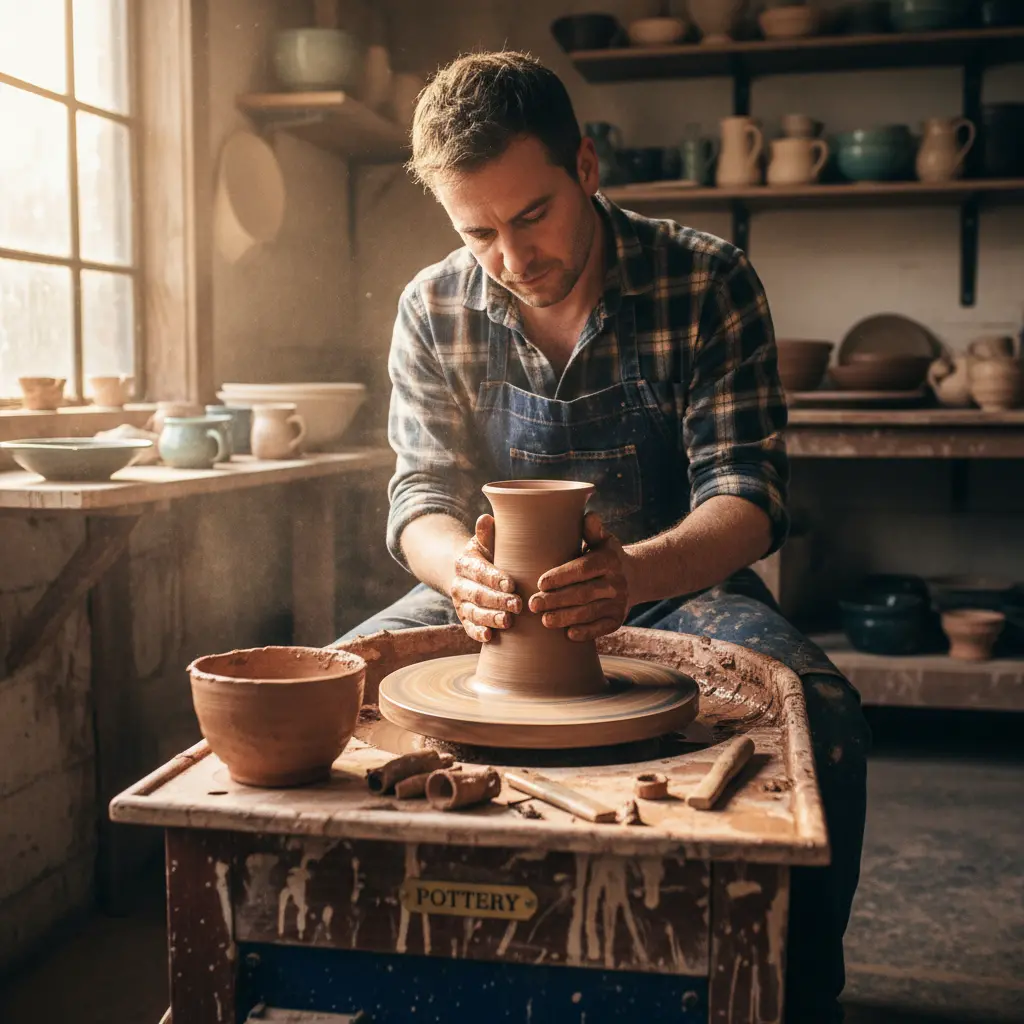
potter + -y (a suffix forming nouns) from Old French 'potiere' from Latin 'pottare' meaning 'to put, place'. Imagine a potter skillfully shaping a clay pot on a wheel, a blend of art and utility.
Note 1: These definitions and etymologies are not standard dictionary definitions, but extended explanations provided to help with memorization and understanding of the actual application of words. Through this background information, we strive to make words more vivid and easier to understand, and help you remember their meanings in real life.
Note 2: LexiTalk designs the learning flow around the linguistics principle of “Comprehensible Input.” When learners encounter material that is slightly above their level but still understandable from context, the brain naturally absorbs the language. That’s why we keep every word inside authentic contexts, using examples and associations to help you understand it and use it flexibly.
Read the FAQ explanation of Comprehensible InputPottery refers to objects made from clay that are shaped and then fired in a kiln, as well as the craft of making those objects. It covers everything from everyday dishes and bowls to decorative vases. Pottery involves steps like wedging clay, shaping by hand or on a wheel, drying, glazing, and firing at high temperatures. Styles vary by culture, with terms such as stoneware, earthenware, and porcelain highlighting different clays and firing ranges. The word pottery comes from potter plus the suffix -y, tracing back to Old French 'potiere' and Latin roots. In conversation, you might say 'traditional pottery' or 'modern pottery studio' to distinguish practice from finished wares.
For English speakers, pottery often carries dual sense: the material (clay-based objects) and the craft (the making process). Learners may default to 'ceramics' or 'porcelain' and miss distinctions like glazes, firing temperatures, or the difference between 'pottery' as a category and specific forms such as bowls or jars.
What is the meaning of the word 'pottery'?
In which of the following sentences is the word 'pottery' used correctly?
Which of the following is a synonym for 'pottery'?
In what real-life context would you most likely encounter 'pottery'?
Can you think of a situation where 'pottery' would be a practical skill to have?
Download LexiTalk app for personalized learning experience
Download AppCookies
We use cookies for essential site functions, analytics, and ads. You can accept, reject, or manage preferences. Privacy Policy