powerful - Master This Word
Master this word with our 5-step learning method – Learn English in English
Train English Through Brain Routes, Not Translation.
This page helps you stop memorizing isolated translations and start understanding a word through its shared mental image, native-style thinking, and practical training steps.
Master this word with our 5-step learning method – Learn English in English
Example sentences are the start of understanding. Don't rush to memorize. First feel how the word works in a sentence.
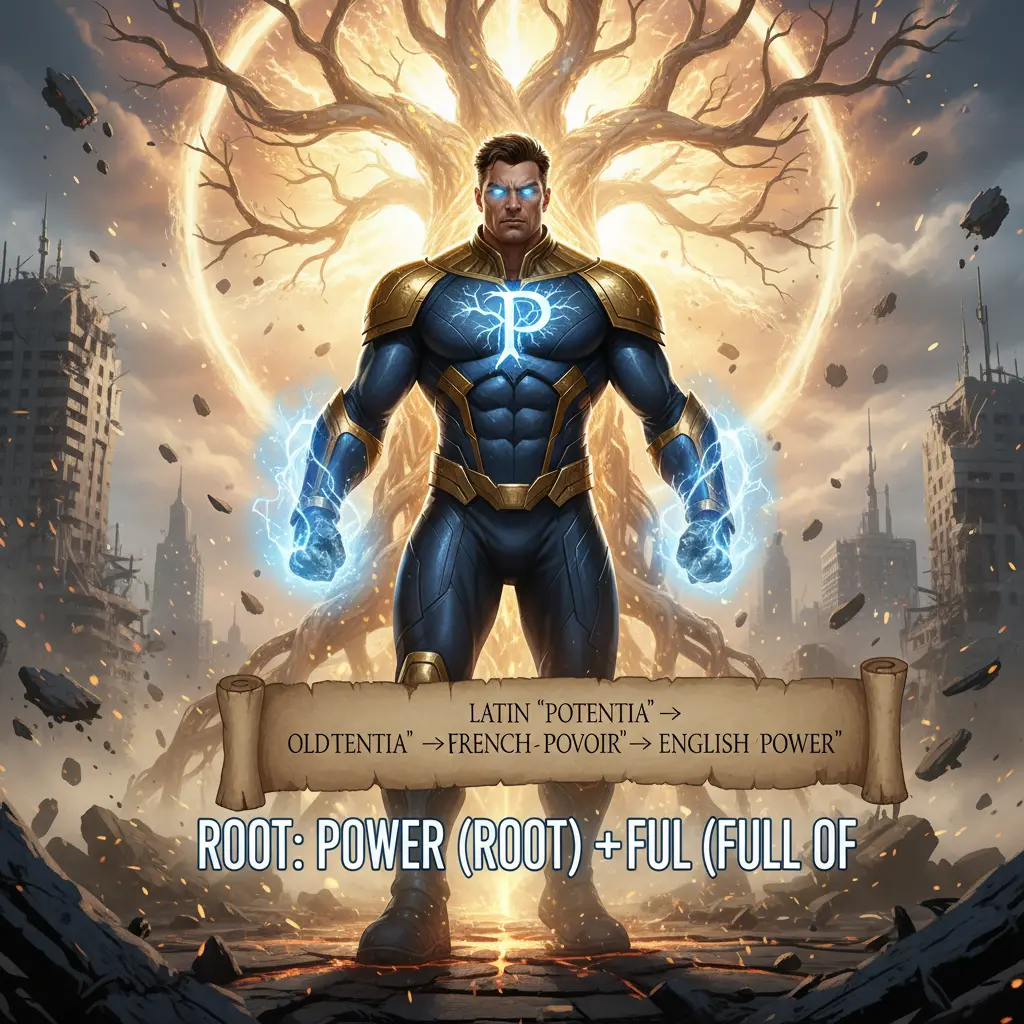
Root decomposition: power (root) + ful (suffix, meaning 'full of'). Historical origin: Latin 'potentia' → Old French 'povoir' → English 'power'. Memory image: Imagine a strong figure, like a superhero, radiating energy and strength.
Note 1: These definitions and etymologies are not standard dictionary definitions, but extended explanations provided to help with memorization and understanding of the actual application of words. Through this background information, we strive to make words more vivid and easier to understand, and help you remember their meanings in real life.
Note 2: LexiTalk designs the learning flow around the linguistics principle of “Comprehensible Input.” When learners encounter material that is slightly above their level but still understandable from context, the brain naturally absorbs the language. That’s why we keep every word inside authentic contexts, using examples and associations to help you understand it and use it flexibly.
Read the FAQ explanation of Comprehensible InputFirst I grip the handle, set my feet, and push. The object slides a little, I pull and adjust my stance as my body shifts. The effort tightens my breathing and makes my hands feel steady. When the result lands, I know I held power—not magic, just the ability to make things happen.
Powerful describes something with great strength, influence, or effectiveness. It can refer to people with authority, devices or engines that perform impressively, or ideas and arguments that persuade others. In everyday English you would say a powerful leader, a powerful engine, or a powerful argument. It is stronger than simply strong and is often used for emphasis in media, politics, technology, and advertising. Collocations include powerful influence, powerful impact, and a powerful speech. Learners should watch for nuance: powerful can imply both physical force and persuasive capacity, but it should not replace more precise terms like mighty, effective, or persuasive in the right context.
In English, powerful is broad and can apply to people, machines, or ideas with visible impact. Learners often overextend it to almost any strong thing, or miss its nuance with more precise words like persuasive or effective.
Which of the following words is the opposite of 'powerful'?
In which of the following situations would someone be considered powerful?
Which of the following words is a synonym of 'powerful'?
How can a teacher be powerful in a classroom setting?
If you were to describe a superhero, which word would you most likely use to describe them?
English Learning Listening Content
Listen NowDownload LexiTalk app for personalized learning experience
Download AppCookies
We use cookies for essential site functions, analytics, and ads. You can accept, reject, or manage preferences. Privacy Policy