
prosecutor - Master This Word
Master this word with our 5-step learning method – Learn English in English
Train English Through Brain Routes, Not Translation.
This page helps you stop memorizing isolated translations and start understanding a word through its shared mental image, native-style thinking, and practical training steps.
Master this word with our 5-step learning method – Learn English in English
Example sentences are the start of understanding. Don't rush to memorize. First feel how the word works in a sentence.
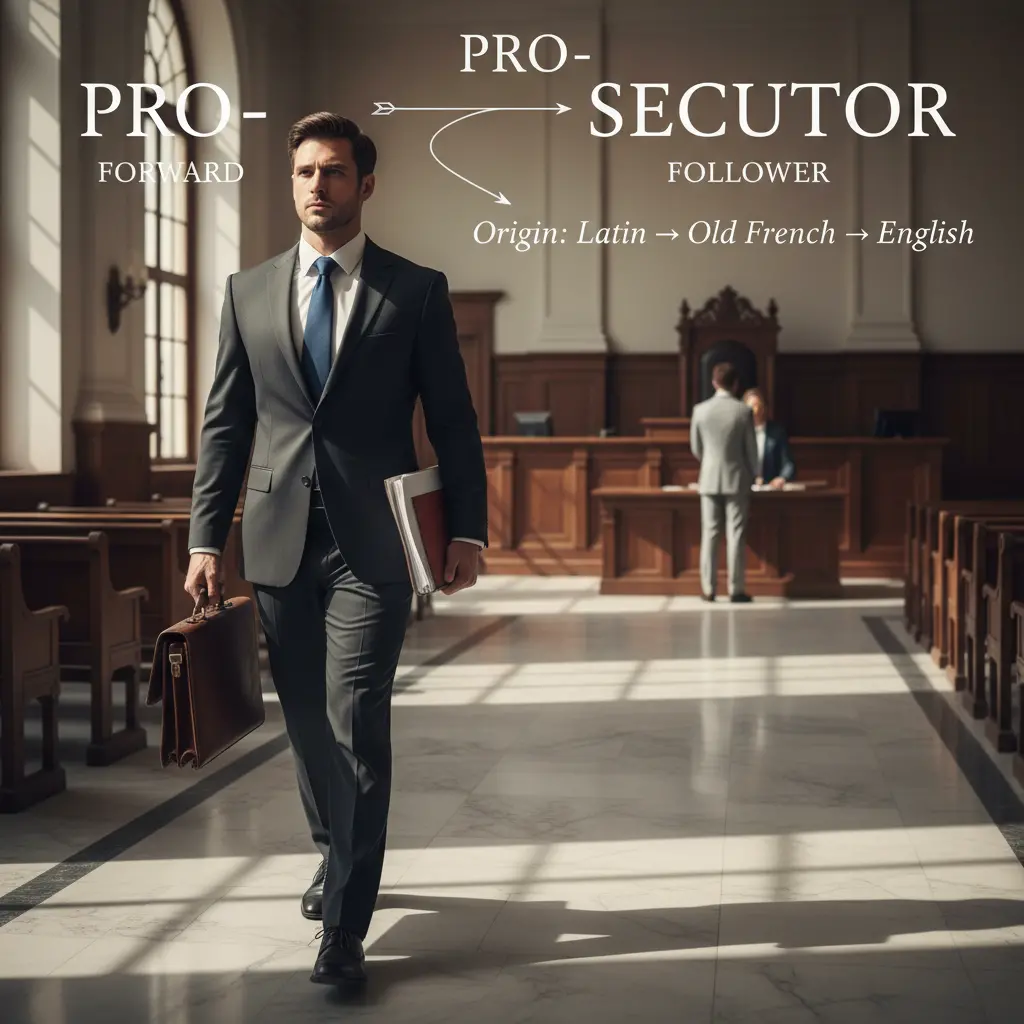
Prosecutor = pro- (forward) + secutor (follower); Origin: Latin → Old French → English. Imagine a lawyer marching forward with a briefcase to confront a defendant in court.
Note 1: These definitions and etymologies are not standard dictionary definitions, but extended explanations provided to help with memorization and understanding of the actual application of words. Through this background information, we strive to make words more vivid and easier to understand, and help you remember their meanings in real life.
Note 2: LexiTalk designs the learning flow around the linguistics principle of “Comprehensible Input.” When learners encounter material that is slightly above their level but still understandable from context, the brain naturally absorbs the language. That’s why we keep every word inside authentic contexts, using examples and associations to help you understand it and use it flexibly.
Read the FAQ explanation of Comprehensible InputFirst you sit up and adjust your chair, the room quieting as a scene begins to form. You push a stack of notes into a neat line and shift your attention to the defendant as a prosecutor steps forward, steady hands and clear eyes. You hold your breath for a beat, set your voice to the room’s rhythm, and let each question push the story forward. The moment you speak, you feel the weight of truth move through the room, and you keep shaping the case with careful hands and careful words.
Prosecutor is the legal professional who represents the government in criminal cases, arguing that the defendant committed the charged offenses. In many jurisdictions, prosecutors investigate crime, decide whether to bring charges, and pursue a case at trial, seeking a conviction or plea resolution. They must balance public safety with a duty to ensure fair treatment, disclose exculpatory evidence, and adhere to constitutional rights. The term covers district attorneys, crown prosecutors, state attorneys, and other officials who lead criminal prosecutions. While the role is adversarial in court, prosecutors also work with police, investigators, and defense counsel to resolve cases within the law.
Explain to an English speaker: English often separates law and order roles clearly; learners might assume prosecutors routinely win or have the same power as judges. Emphasize that prosecution is about presenting evidence within due process, not merely targeting guilt.
What is the meaning of the word 'prosecutor'?
In which of the following scenarios would you find a prosecutor?
Which of the following is a similar word to 'prosecutor'?
What is the opposite of a 'prosecutor'?
Can you think of a real-life example of a 'prosecutor' in action?
Download LexiTalk app for personalized learning experience
Download AppCookies
We use cookies for essential site functions, analytics, and ads. You can accept, reject, or manage preferences. Privacy Policy