
recession - Master This Word
Master this word with our 5-step learning method – Learn English in English
Train English Through Brain Routes, Not Translation.
This page helps you stop memorizing isolated translations and start understanding a word through its shared mental image, native-style thinking, and practical training steps.
Master this word with our 5-step learning method – Learn English in English
Example sentences are the start of understanding. Don't rush to memorize. First feel how the word works in a sentence.
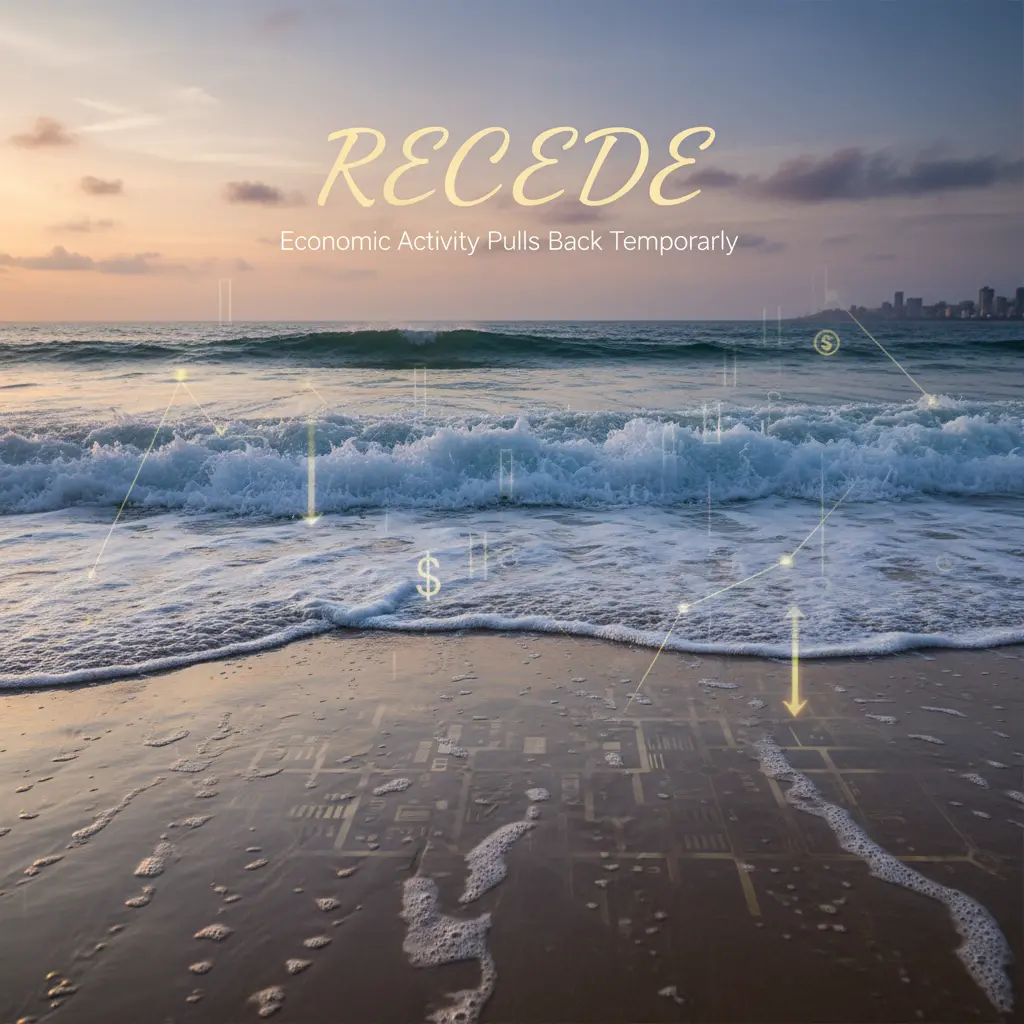
re- = again + cedere = to go back. Originated from Latin, then adopted into Old French and English. Imagine a wave receding back into the ocean, symbolizing economic activity pulling back temporarily.
Note 1: These definitions and etymologies are not standard dictionary definitions, but extended explanations provided to help with memorization and understanding of the actual application of words. Through this background information, we strive to make words more vivid and easier to understand, and help you remember their meanings in real life.
Note 2: LexiTalk designs the learning flow around the linguistics principle of “Comprehensible Input.” When learners encounter material that is slightly above their level but still understandable from context, the brain naturally absorbs the language. That’s why we keep every word inside authentic contexts, using examples and associations to help you understand it and use it flexibly.
Read the FAQ explanation of Comprehensible InputI place my palm on the desk and push the calendar back a week in my mind, watching the pace slow. I adjust the budget, pull back on big spends and set smaller steps for the month. It feels like turning a wheel, a stubborn shift that asks for patience and careful turn after turn. The sense of recession arrives as a lived reality: activity cools, but I keep my course and ride the temporary downturn.
A recession is a period when a country's economy shrinks, typically measured by falling GDP for two consecutive quarters, though the term is used more broadly to describe a sustained downturn in activity across many sectors. It can feature job losses, lower consumer demand, tighter credit, and reduced investment, though the exact trigger and duration vary. People talk about recessions as temporary retreats from growth or as waves pulling back before a new expansion. The word derives from re-cede 'to go back' in Latin, reflecting a return to weaker economic footing after a period of expansion.
Explain to an English speaker: recession is a macroeconomic cycle, not a personal financial decline; learners often mix it up with 'depression' or with stock-market fall.
What is the meaning of the word 'recession'?
In which context would you use the word 'recession'?
Which word is similar to 'recession'?
What is the opposite of 'recession'?
Can you give an example of a real-life situation where 'recession' would be used?
Download LexiTalk app for personalized learning experience
Download AppCookies
We use cookies for essential site functions, analytics, and ads. You can accept, reject, or manage preferences. Privacy Policy