
reject - Master This Word
Master this word with our 5-step learning method – Learn English in English
Train English Through Brain Routes, Not Translation.
This page helps you stop memorizing isolated translations and start understanding a word through its shared mental image, native-style thinking, and practical training steps.
Master this word with our 5-step learning method – Learn English in English
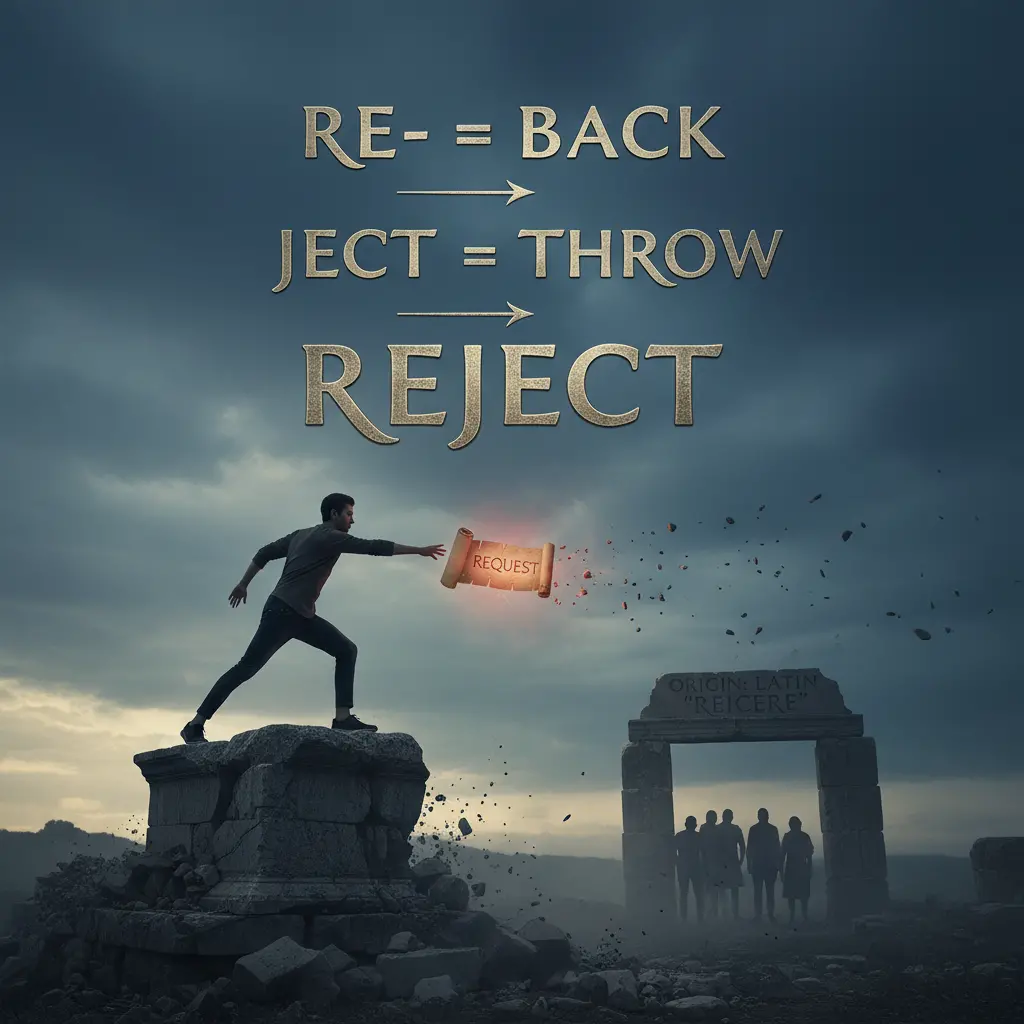
Example sentences are the start of understanding. Don't rush to memorize. First feel how the word works in a sentence.
Root decomposition: re- = back, ject = throw. Historical origin: Latin 'reicere' → Old French 'rejetter' → English. Memory image: Picture someone throwing something back, symbolizing denial or refusal.
Note 1: These definitions and etymologies are not standard dictionary definitions, but extended explanations provided to help with memorization and understanding of the actual application of words. Through this background information, we strive to make words more vivid and easier to understand, and help you remember their meanings in real life.
Note 2: LexiTalk designs the learning flow around the linguistics principle of “Comprehensible Input.” When learners encounter material that is slightly above their level but still understandable from context, the brain naturally absorbs the language. That’s why we keep every word inside authentic contexts, using examples and associations to help you understand it and use it flexibly.
Read the FAQ explanation of Comprehensible InputFirst I shift my shoulders, move my hands, and set a boundary in my thoughts. A request lands, I pause and pull the attention away, then push back with a calm no. The effort is soft but clear, like turning a dial until the signal changes. That sense of choice sticks with me the next time a proposal comes, and I keep my response ready.
Reject is a versatile verb meaning to refuse to accept or consider something; to dismiss an idea or proposal; and to turn down a submission or application. In everyday speech you might say you rejected the offer, that the proposal was rejected by the committee, or that a manuscript was rejected from the contest. The tone ranges from neutral to firm, depending on context. Its noun form rejection refers to the act or result of being refused. Related forms include rejected, rejecting, and rejection. The etymology links back to Latin reicere, through Old French rejetter, with the core image of throwing back or casting aside as a denial.
For English learners, reject often signals a formal evaluation outcome and pairs with 'rejection' as a noun. Learners may overuse 'reject' for people or feel it too harsh; focus on context: offer/proposal vs. a person. Note collocations like 'reject out of hand' or 'be rejected'.
What is the best definition of 'reject'?
Which sentence uses the word 'reject' correctly?
Which word is most similar in meaning to 'reject'?
Which word is the opposite of 'reject'?
Which real-life scenario is one where you would properly use the word 'reject'?
Download LexiTalk app for personalized learning experience
Download AppCookies
We use cookies for essential site functions, analytics, and ads. You can accept, reject, or manage preferences. Privacy Policy