
repertory - Master This Word
Master this word with our 5-step learning method – Learn English in English
Train English Through Brain Routes, Not Translation.
This page helps you stop memorizing isolated translations and start understanding a word through its shared mental image, native-style thinking, and practical training steps.
Master this word with our 5-step learning method – Learn English in English
Example sentences are the start of understanding. Don't rush to memorize. First feel how the word works in a sentence.
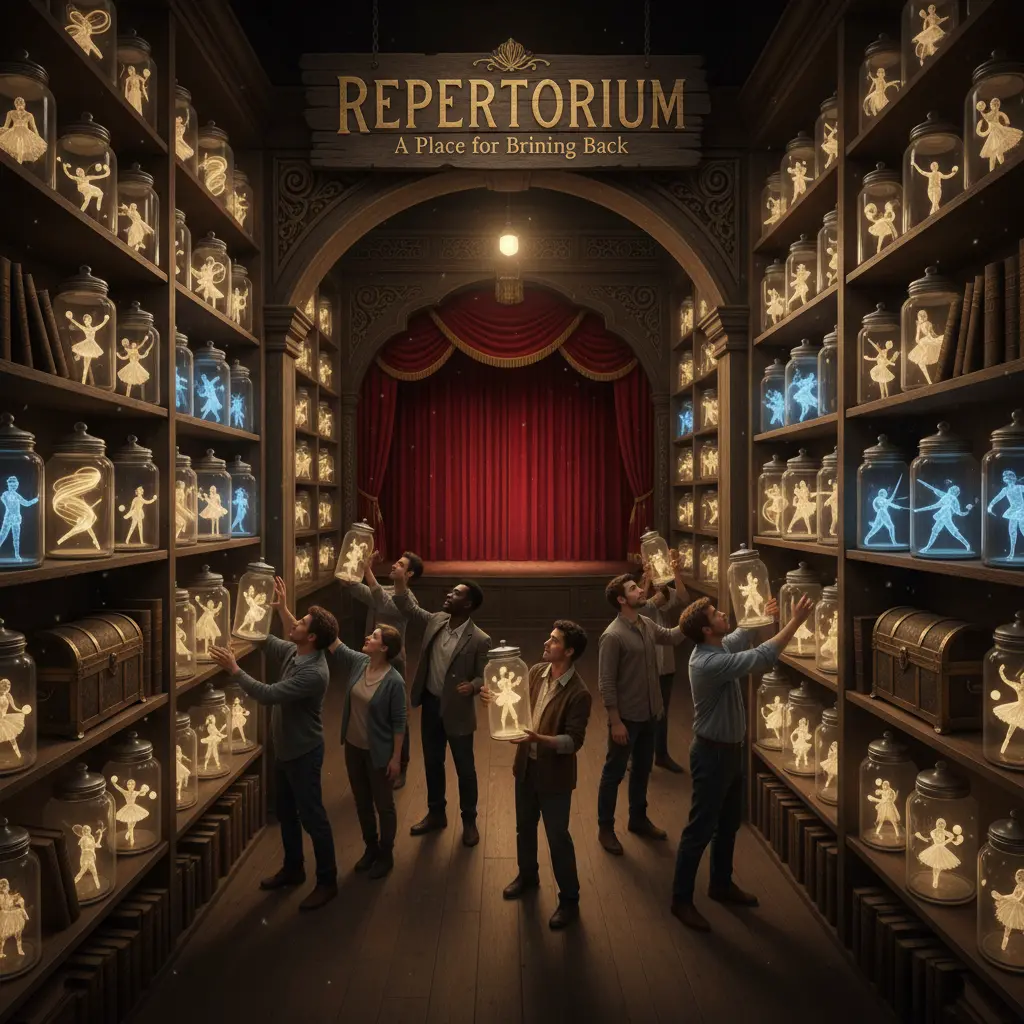
Repertory comes from 'repertorium', where 're-' means 'back' and 'pertory' relates to 'to bring'. Originally, it referred to a place for bringing back performances. Imagine a theater where actors store their performances like treasures, ready to impress the audience again.
Note 1: These definitions and etymologies are not standard dictionary definitions, but extended explanations provided to help with memorization and understanding of the actual application of words. Through this background information, we strive to make words more vivid and easier to understand, and help you remember their meanings in real life.
Note 2: LexiTalk designs the learning flow around the linguistics principle of “Comprehensible Input.” When learners encounter material that is slightly above their level but still understandable from context, the brain naturally absorbs the language. That’s why we keep every word inside authentic contexts, using examples and associations to help you understand it and use it flexibly.
Read the FAQ explanation of Comprehensible InputRepertory refers to a collection of performances, works, or skills that a person or organization keeps ready for use. In theatre, a repertory is a rotating set of plays or operas that a troupe can stage, often housed in a single company or venue. More broadly, it can mean a stock of tools, resources, or procedures that are available for ongoing use. While it is easy to confuse repertory with repertoire, the two terms are distinct: repertory emphasizes the storehouse or catalog kept for practical deployment, whereas repertoire describes the entire body of works or capabilities that someone regularly performs or draws on. The word has a historical origin in Latin via repertorium, conveying back-bringing performances into readiness.
English learners should note that repertory often leans toward an organized storehouse concept (inventory) rather than the broader, performance-focused sense of repertoire. This can lead to confusion when speakers say “the repertory” versus “the repertoire” about plays and skills.
What is the definition of 'repertory'?
Which sentence uses 'repertory' correctly?
Which word is most similar to 'repertory'?
What is the opposite of 'repertory'?
In which context might the term 'repertory' be appropriately used?
Download LexiTalk app for personalized learning experience
Download AppCookies
We use cookies for essential site functions, analytics, and ads. You can accept, reject, or manage preferences. Privacy Policy