
ruminants - Master This Word
Master this word with our 5-step learning method – Learn English in English
Train English Through Brain Routes, Not Translation.
This page helps you stop memorizing isolated translations and start understanding a word through its shared mental image, native-style thinking, and practical training steps.
Master this word with our 5-step learning method – Learn English in English
Example sentences are the start of understanding. Don't rush to memorize. First feel how the word works in a sentence.
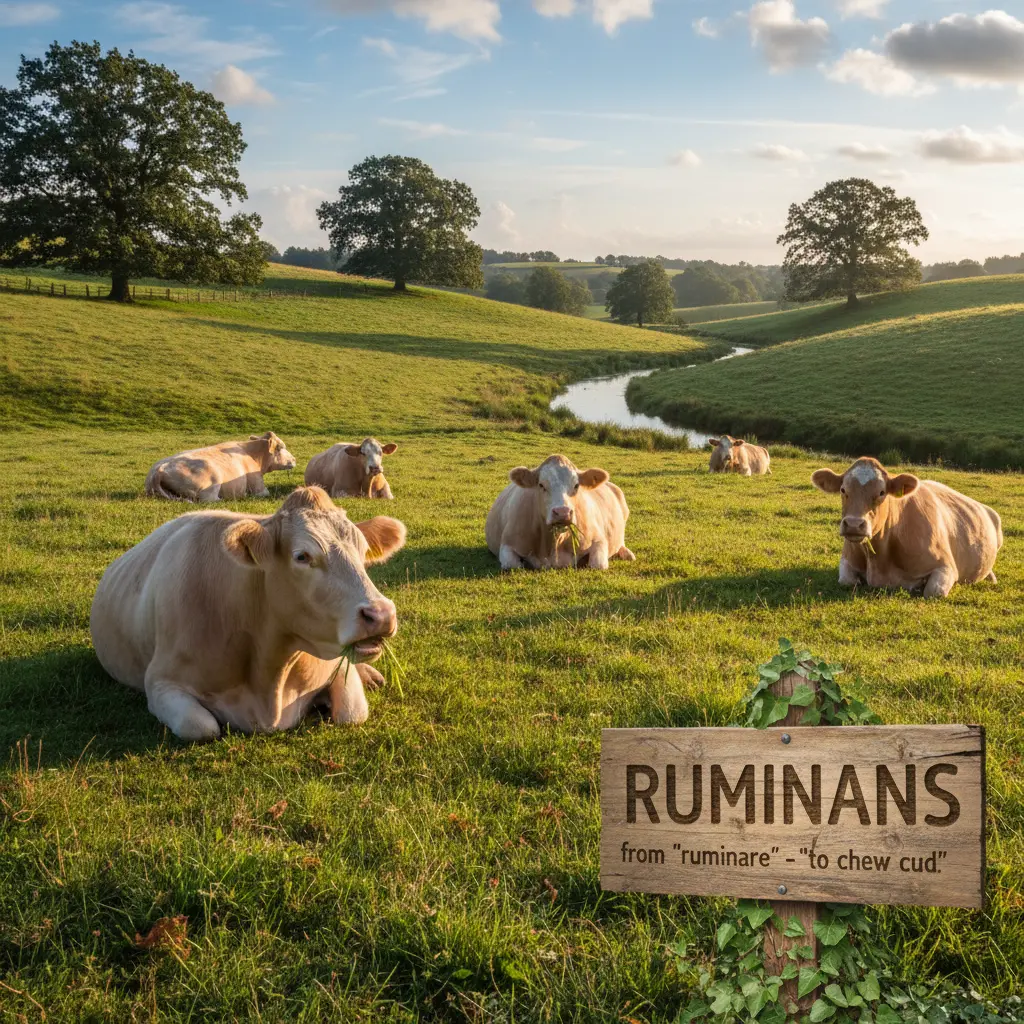
The word is derived from the Latin 'ruminans', from 'ruminare' meaning 'to chew cud'. This evokes an image of a serene pasture where cows leisurely chew their food, reminiscent of the calm process of rumination.
Note 1: These definitions and etymologies are not standard dictionary definitions, but extended explanations provided to help with memorization and understanding of the actual application of words. Through this background information, we strive to make words more vivid and easier to understand, and help you remember their meanings in real life.
Note 2: LexiTalk designs the learning flow around the linguistics principle of “Comprehensible Input.” When learners encounter material that is slightly above their level but still understandable from context, the brain naturally absorbs the language. That’s why we keep every word inside authentic contexts, using examples and associations to help you understand it and use it flexibly.
Read the FAQ explanation of Comprehensible InputRuminant is a term used in biology and agriculture to describe animals that chew cud. These animals, such as cows, sheep, goats, deer, and giraffes, have a specialized stomach system with four compartments that allows them to regurgitate partially digested food from the first stomach and chew it again before it passes on for final digestion. This process, called rumination, helps break down tough fibrous plant material and extract nutrients more efficiently. In everyday English, ruminant can refer specifically to these cud-chewers or more generally to any animal that digests by regurgitating food, though in practice the term is most often used in zoological or farming contexts.
English speakers tend to separate the biological sense of ruminant from the common English verb ruminate (to think deeply). Learners often assume a ruminant means someone who contemplates, which leads to odd phrasings like 'I am ruminating about it' instead of using the animal sense. Emphasize the biology/ agriculture context and the cud-regurgitation cycle to avoid translation errors.
Download LexiTalk app for personalized learning experience
Download AppCookies
We use cookies for essential site functions, analytics, and ads. You can accept, reject, or manage preferences. Privacy Policy