stall - Master This Word
Master this word with our 5-step learning method – Learn English in English
Train English Through Brain Routes, Not Translation.
This page helps you stop memorizing isolated translations and start understanding a word through its shared mental image, native-style thinking, and practical training steps.
Master this word with our 5-step learning method – Learn English in English
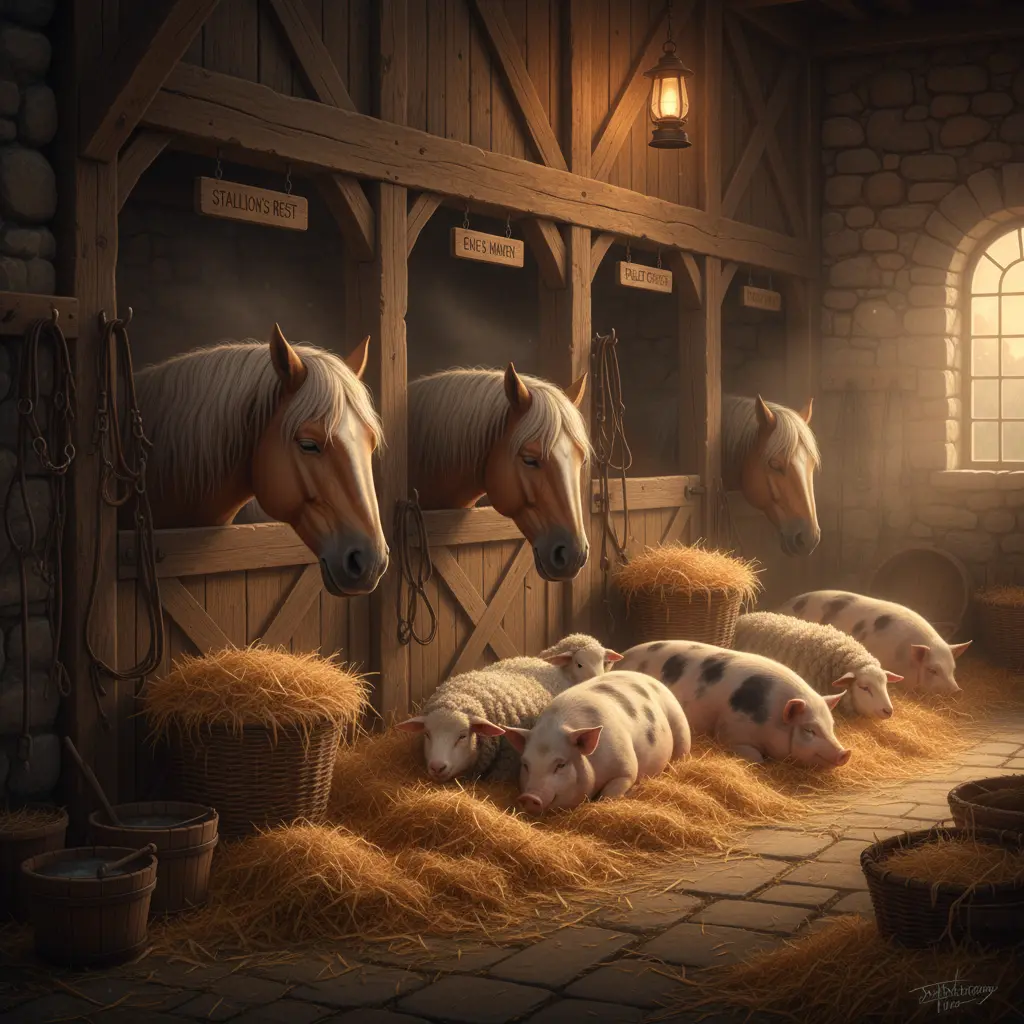
Example sentences are the start of understanding. Don't rush to memorize. First feel how the word works in a sentence.
The word 'stall' comes from Old English 'styr', meaning a place where livestock are kept. The image of a stall is that of animals resting in cozy compartments, safe and secure.
Note 1: These definitions and etymologies are not standard dictionary definitions, but extended explanations provided to help with memorization and understanding of the actual application of words. Through this background information, we strive to make words more vivid and easier to understand, and help you remember their meanings in real life.
Note 2: LexiTalk designs the learning flow around the linguistics principle of “Comprehensible Input.” When learners encounter material that is slightly above their level but still understandable from context, the brain naturally absorbs the language. That’s why we keep every word inside authentic contexts, using examples and associations to help you understand it and use it flexibly.
Read the FAQ explanation of Comprehensible InputStarting with a breath, I lean in and push the curtain aside, stepping toward a market stall. I move the basket one step closer, shift my weight, and set my mind on asking for apples. A small pause inside feels like a decision to hold my line, then I let the vendor pick the fruit as I keep track of the change in price. The scene threads together the idea of stall: a place you enter, a moment you decide, and a little space you keep for what you want.
Stall is a versatile word with two broad noun senses and a common verb sense. As a noun, a stall is a small enclosed space, often in a barn or stable, where a single animal such as a horse, sheep, or cow rests or is fed. It can also refer to a small shop in a market—a market stall where vendors display goods. As a verb, to stall means to block progress or delay action, either intentionally or because conditions prevent movement. You might stall for time in a negotiation, or a car may stall if the engine momentarily stops running. Context often clarifies which sense is meant.
Think of stall as a word that travels across domains: farm, market, and action. Learners often map it only to shops or only to stopping. The English sense set is clearer with noun-verb contrasts and common collocations like stall for time, stall engine, animal stall, market stall.
What is the meaning of 'stall'?
In which sentence is 'stall' used correctly?
Which word is a synonym of 'stall'?
What is the opposite of 'stall'?
In what real-life scenario might someone need to stall?
Download LexiTalk app for personalized learning experience
Download AppCookies
We use cookies for essential site functions, analytics, and ads. You can accept, reject, or manage preferences. Privacy Policy