straightforward - Master This Word
Master this word with our 5-step learning method – Learn English in English
Train English Through Brain Routes, Not Translation.
This page helps you stop memorizing isolated translations and start understanding a word through its shared mental image, native-style thinking, and practical training steps.
Master this word with our 5-step learning method – Learn English in English
Example sentences are the start of understanding. Don't rush to memorize. First feel how the word works in a sentence.
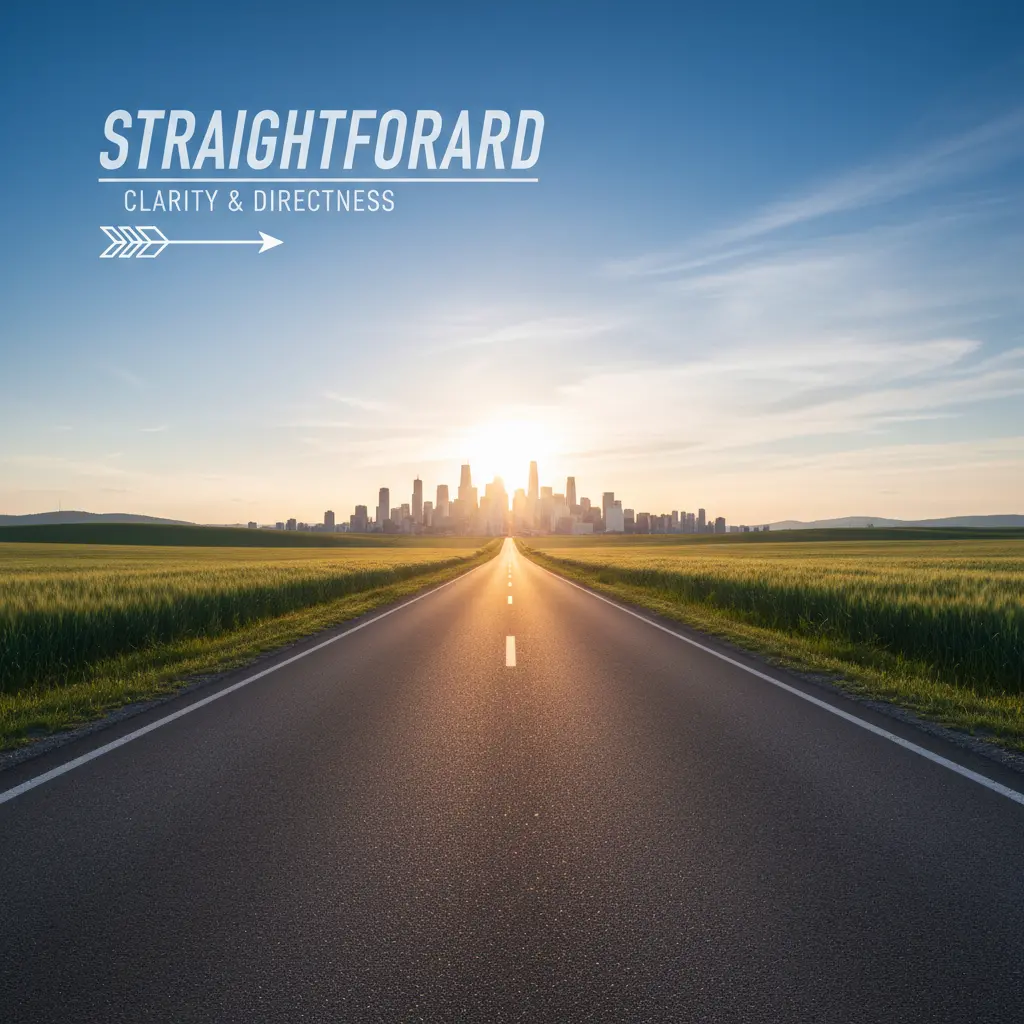
Straightforward is composed of 'straight' meaning direct and 'forward' meaning toward the front. It originated from Middle English 'streightforward' via Old English from Old French. Imagine a road that leads straight to your destination, symbolizing clarity and directness in communication.
Note 1: These definitions and etymologies are not standard dictionary definitions, but extended explanations provided to help with memorization and understanding of the actual application of words. Through this background information, we strive to make words more vivid and easier to understand, and help you remember their meanings in real life.
Note 2: LexiTalk designs the learning flow around the linguistics principle of “Comprehensible Input.” When learners encounter material that is slightly above their level but still understandable from context, the brain naturally absorbs the language. That’s why we keep every word inside authentic contexts, using examples and associations to help you understand it and use it flexibly.
Read the FAQ explanation of Comprehensible InputFirst I press my palm flat on the page and push it forward, letting the words settle. I shift my attention from chaos to order, letting each line fall into place. It feels calm and practical, a straightforward rhythm that I feel more than I can explain. When the path becomes clear, I move the plan forward and keep going, step by step.
Straightforward is an adjective that describes something easy to understand or a person who communicates directly and honestly. It can mean simple, clear, and not confusing, as well as a method that follows a direct path without detours. The word often appears with nouns like explanation, answer, plan, or approach, highlighting clarity over complexity. It can describe a person who is candid, which is usually valued, but in some settings it may feel blunt. Etymology links straight and forward, suggesting directness and progress toward a goal. Derived from Middle English streightforward, via Old English and Old French, the term uses a road metaphor: a straight route to your destination with no unnecessary turns.
In English, straightforward often conveys clear, practical directness and can carry a neutral to positive tone. Learners may over-extend it to mean easy or assume it always refers to people rather than explanations or plans.
Which sentence uses 'straightforward' correctly?
What is a synonym for 'straightforward'?
What is an antonym for 'straightforward'?
How would you apply 'straightforward' in a work situation?
Download LexiTalk app for personalized learning experience
Download AppCookies
We use cookies for essential site functions, analytics, and ads. You can accept, reject, or manage preferences. Privacy Policy