subtracting - Master This Word
Master this word with our 5-step learning method – Learn English in English
Train English Through Brain Routes, Not Translation.
This page helps you stop memorizing isolated translations and start understanding a word through its shared mental image, native-style thinking, and practical training steps.
Master this word with our 5-step learning method – Learn English in English
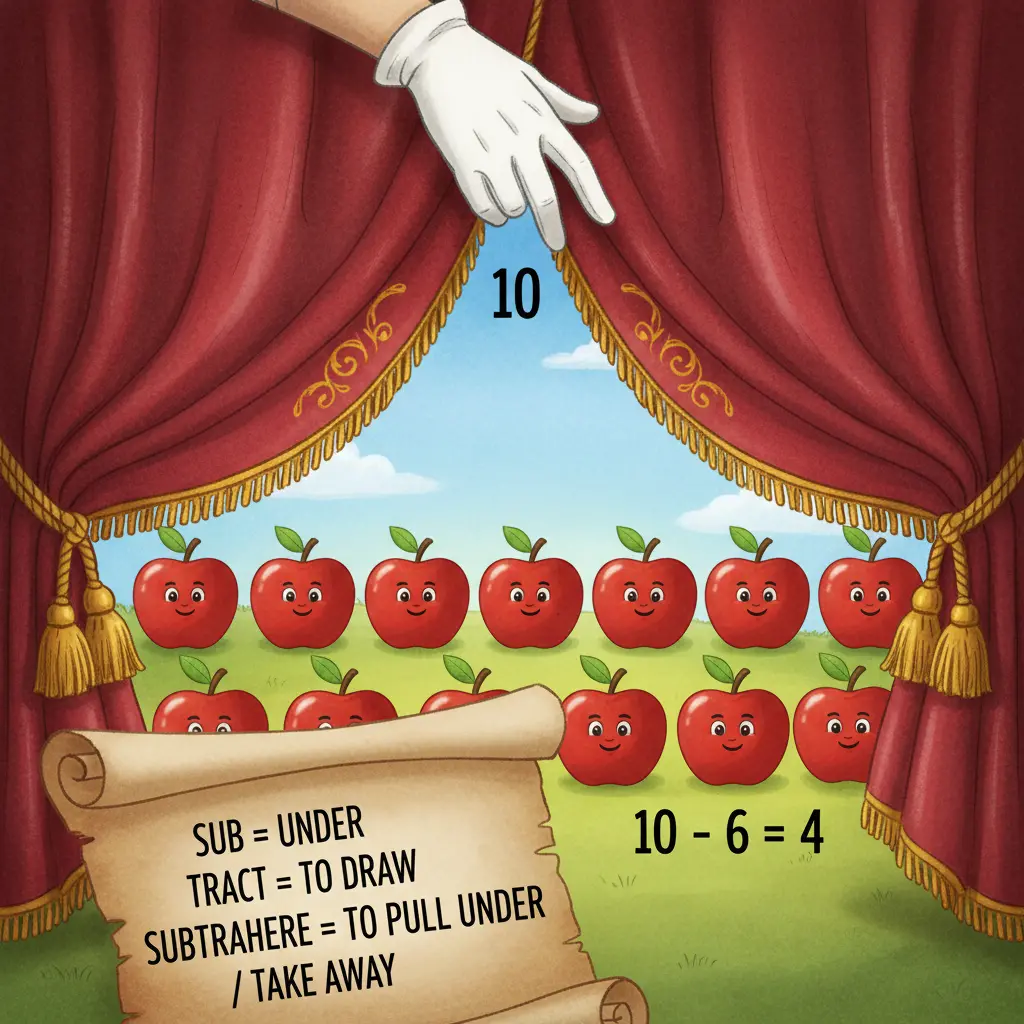
Example sentences are the start of understanding. Don't rush to memorize. First feel how the word works in a sentence.
sub- = under, tract = to draw; From Latin 'subtrahere' which means to pull under. Imagine pulling a curtain down to hide what’s behind it.
Note 1: These definitions and etymologies are not standard dictionary definitions, but extended explanations provided to help with memorization and understanding of the actual application of words. Through this background information, we strive to make words more vivid and easier to understand, and help you remember their meanings in real life.
Note 2: LexiTalk designs the learning flow around the linguistics principle of “Comprehensible Input.” When learners encounter material that is slightly above their level but still understandable from context, the brain naturally absorbs the language. That’s why we keep every word inside authentic contexts, using examples and associations to help you understand it and use it flexibly.
Read the FAQ explanation of Comprehensible InputSubtract is a verb used to remove a quantity from another and to reduce an amount. In math it helps you find the difference between two numbers, and in everyday life you subtract minutes from a schedule, calories from a meal, or expenses from a budget. The word comes from Latin subtrahere, literally pulling under or away, and English kept that sense of removing from a whole. In metaphorical use you can subtract features, subtract risks, or subtract distractions to focus better. Learners often mix subtract with divide or multiply, or assume subtracting a negative means adding; remember the result is what remains after removal.
Think of subtraction as removing a portion from a whole to reveal what remains; in math and rhetoric, it signals reduction. English uses the idea of difference on a number line and in phrases like subtract from, take away, or deduct. Learners often struggle with the idea that subtracting a negative can yield a positive, and with keeping track of the minuend vs the subtrahend.
Download LexiTalk app for personalized learning experience
Download AppCookies
We use cookies for essential site functions, analytics, and ads. You can accept, reject, or manage preferences. Privacy Policy