thrilled - Master This Word
Master this word with our 5-step learning method – Learn English in English
Train English Through Brain Routes, Not Translation.
This page helps you stop memorizing isolated translations and start understanding a word through its shared mental image, native-style thinking, and practical training steps.
Master this word with our 5-step learning method – Learn English in English
Example sentences are the start of understanding. Don't rush to memorize. First feel how the word works in a sentence.
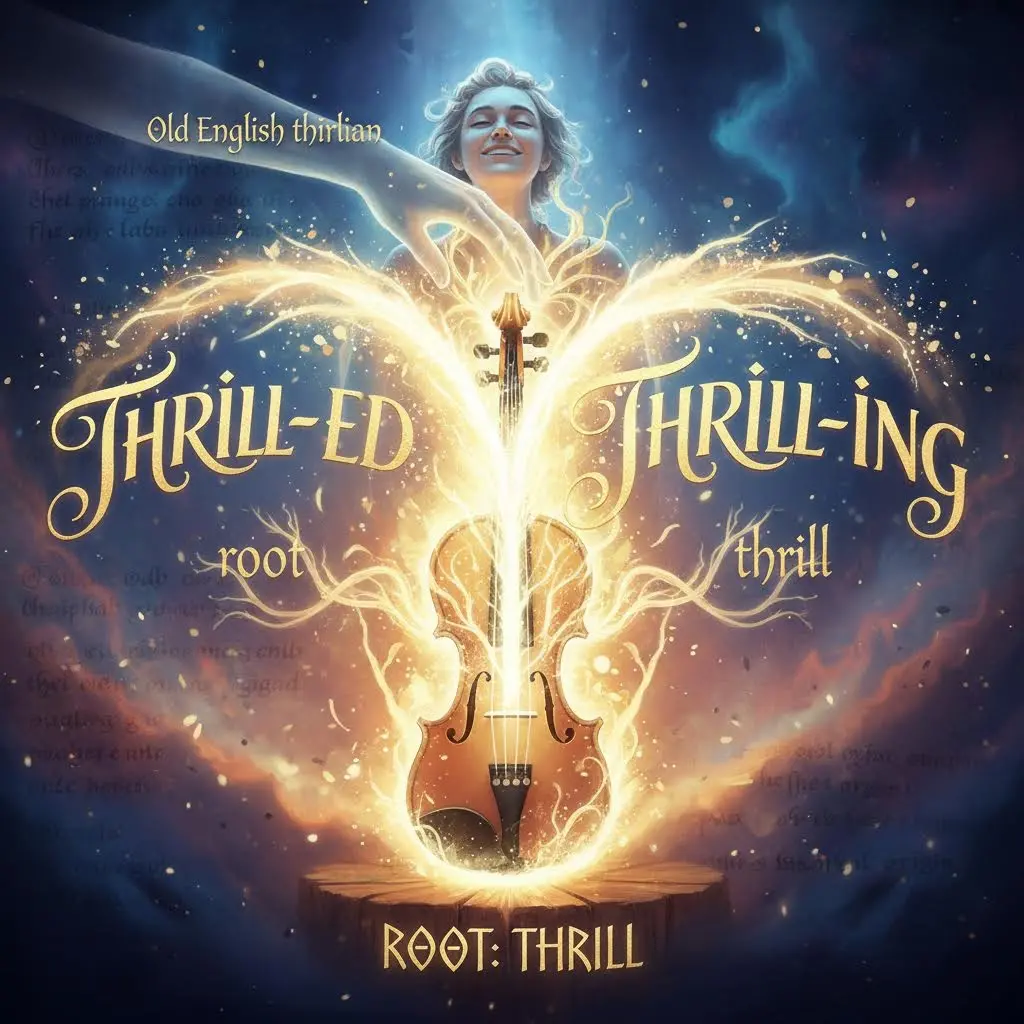
(a) Root decomposition: root thrill; suffixes -ed and -ing attach to form thrilled and thrilling; no prefix. (b) Historical origin: from Old English thirlian meaning to pierce, later extended metaphorically to mean to excite or arouse emotion. (c) Memory image: picture a violin string being plucked suddenly, sending a bright rush of joy through you.
Note 1: These definitions and etymologies are not standard dictionary definitions, but extended explanations provided to help with memorization and understanding of the actual application of words. Through this background information, we strive to make words more vivid and easier to understand, and help you remember their meanings in real life.
Note 2: LexiTalk designs the learning flow around the linguistics principle of “Comprehensible Input.” When learners encounter material that is slightly above their level but still understandable from context, the brain naturally absorbs the language. That’s why we keep every word inside authentic contexts, using examples and associations to help you understand it and use it flexibly.
Read the FAQ explanation of Comprehensible InputI drum my fingers on the steering wheel and lean forward, letting a small change in pace lift my mood. A quick turn of the head as good news lands, my breath tightens then eases, and my chest seems to open a touch. It feels like a warm spark running through me, a push of excitement that makes me want to push ahead with the plan. In real life, I keep the smile and set my mind on the next step, knowing I’m thrilled about what’s coming.
Thrilled is a strong, positive emotion meaning you feel extremely excited and pleased about something that is happening or about to happen. It goes beyond simply being happy or excited; it implies a vivid, joyful surge of emotion you want to share. You can be thrilled about a big achievement, a surprise, a special event, or the thought of a future opportunity. In sentences you can say 'I am thrilled to meet you,' 'She was thrilled with the news,' or 'They are thrilled about the project.' Context and intensity matter; use it when the emotion is powerful and personal.
For English learners, thrill signals a peak emotional state tied to personally meaningful events; avoid translating as ‘very excited’ in all contexts, and watch for appropriate collocations and tense.
What does the word 'thrilled' mean?
Which sentence uses 'thrilled' correctly?
Which word is most similar to 'thrilled'?
What is the opposite of 'thrilled'?
Can you think of a real-life scenario where someone would feel thrilled?
Download LexiTalk app for personalized learning experience
Download AppCookies
We use cookies for essential site functions, analytics, and ads. You can accept, reject, or manage preferences. Privacy Policy