throne - Master This Word
Master this word with our 5-step learning method – Learn English in English
Train English Through Brain Routes, Not Translation.
This page helps you stop memorizing isolated translations and start understanding a word through its shared mental image, native-style thinking, and practical training steps.
Master this word with our 5-step learning method – Learn English in English
Example sentences are the start of understanding. Don't rush to memorize. First feel how the word works in a sentence.
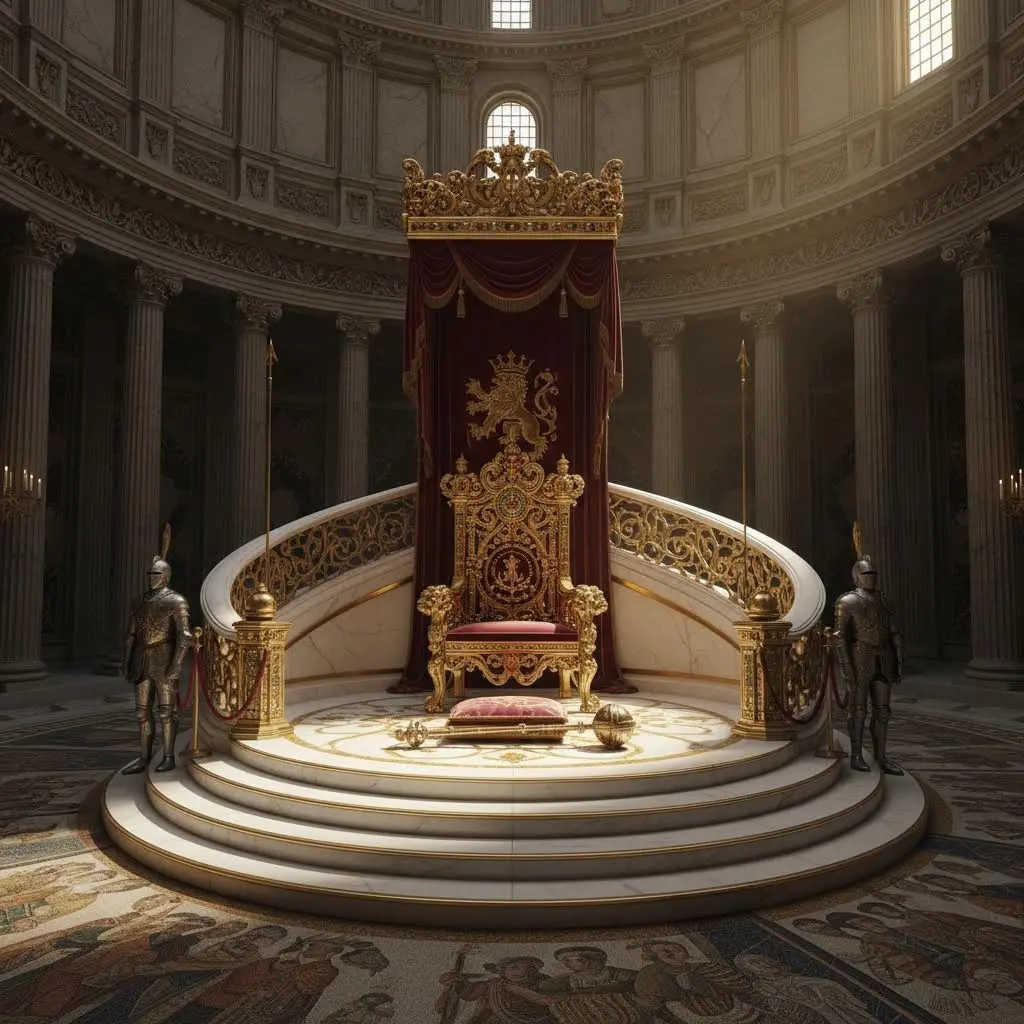
(a) Root decomposition: thron- + e forms a noun; (b) Historical origin: Greek thronos, Latin thronum/thronus, Old French trone, into English throne. (c) Memory image: a gilded royal throne on a raised dais, symbolizing sovereignty; extended meaning: to sit on the throne means to hold power.
Note 1: These definitions and etymologies are not standard dictionary definitions, but extended explanations provided to help with memorization and understanding of the actual application of words. Through this background information, we strive to make words more vivid and easier to understand, and help you remember their meanings in real life.
Note 2: LexiTalk designs the learning flow around the linguistics principle of “Comprehensible Input.” When learners encounter material that is slightly above their level but still understandable from context, the brain naturally absorbs the language. That’s why we keep every word inside authentic contexts, using examples and associations to help you understand it and use it flexibly.
Read the FAQ explanation of Comprehensible InputThrone refers to the chair a monarch sits on as well as the broader office of sovereign power. It stands for authority, legitimacy, and ceremonial rule, and appears in history, literature, and current events when discussing succession, governance, or peak leadership. In everyday use, we talk about a country being on the throne during a dynasty, or a leader about to sit on the throne meaning to assume power. The imagery evokes dignity, public duty, and responsibilities of rulership, not merely comfort. Phrases like to sit on the throne emphasize authority, while throne of grace and similar expressions show metaphorical or religious dimensions.
English tends to separate the literal throne as a chair from the figurative throne as political power; learners often miss the metaphor and misapply it to furniture. Also, many idioms (sit on the throne, throne of grace) require cultural context beyond a dictionary.
In which of the following sentences is 'throne' used correctly?
Which word is a synonym for 'throne'?
Which word is an opposite of 'throne'?
How is the concept of 'throne' relevant in modern society?
Download LexiTalk app for personalized learning experience
Download AppCookies
We use cookies for essential site functions, analytics, and ads. You can accept, reject, or manage preferences. Privacy Policy