tour - Master This Word
Master this word with our 5-step learning method – Learn English in English
Train English Through Brain Routes, Not Translation.
This page helps you stop memorizing isolated translations and start understanding a word through its shared mental image, native-style thinking, and practical training steps.
Master this word with our 5-step learning method – Learn English in English
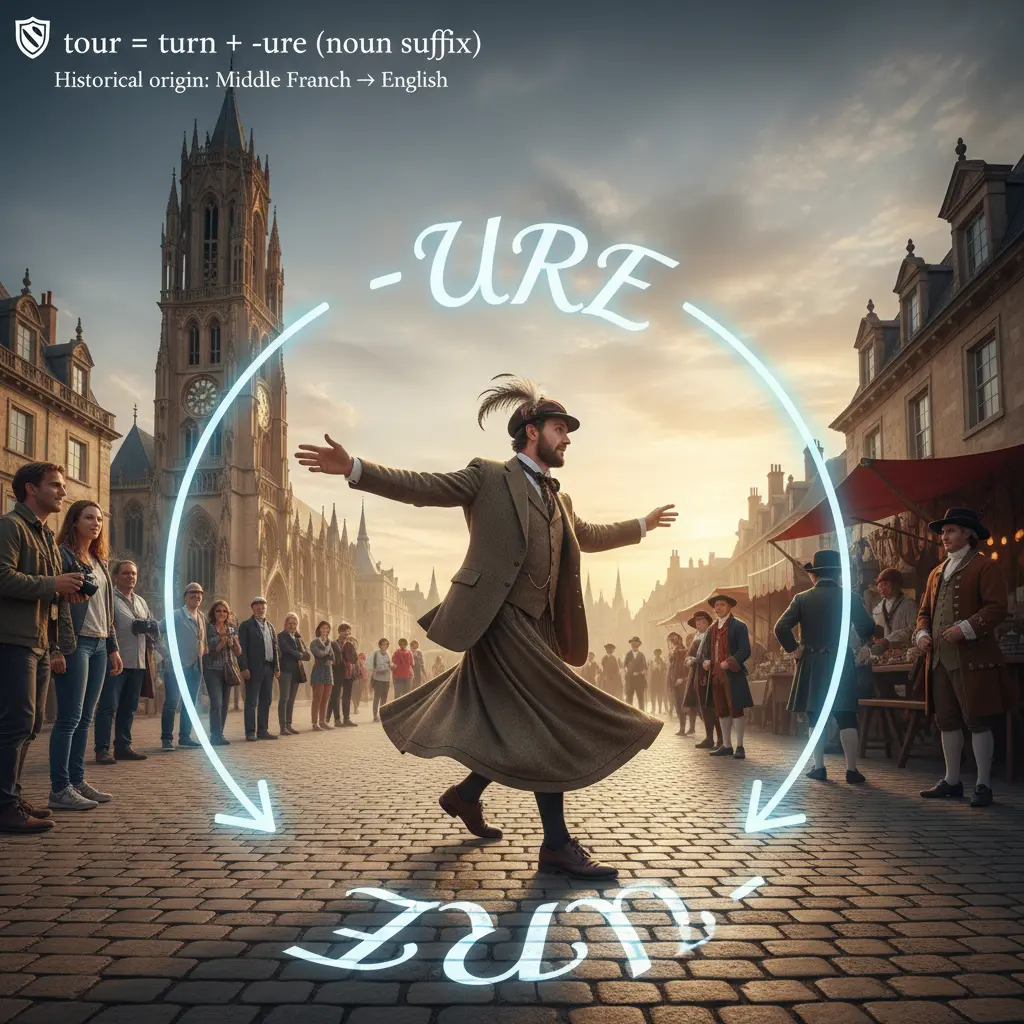
Example sentences are the start of understanding. Don't rush to memorize. First feel how the word works in a sentence.
tour = turn + -ure (noun suffix). Historical origin: Middle French → English. Imagine a guide spinning around to show various attractions to tourists.
Note 1: These definitions and etymologies are not standard dictionary definitions, but extended explanations provided to help with memorization and understanding of the actual application of words. Through this background information, we strive to make words more vivid and easier to understand, and help you remember their meanings in real life.
Note 2: LexiTalk designs the learning flow around the linguistics principle of “Comprehensible Input.” When learners encounter material that is slightly above their level but still understandable from context, the brain naturally absorbs the language. That’s why we keep every word inside authentic contexts, using examples and associations to help you understand it and use it flexibly.
Read the FAQ explanation of Comprehensible InputI lace up my shoes and step outside, the door sighing shut behind me. I move along the sidewalk, a loose plan in my head guiding a turn here and there. The crowd nudges and pulls, I adjust my pace and decide what to focus on. This little outing becomes a tour in practice: a way to see a place by walking, choosing, and keeping control of where I go.
Tour is a word that covers both a planned outing and the act of moving from place to place with purpose. As a noun, it often refers to a structured route or a short break from home, such as a guided tour of a city or a museum circuit. As a verb, to tour means to travel around an area to see the sights, sometimes with a host or guide. It can be used for short local explorations or multi-location itineraries. English speakers use tour with prepositions like on a tour, tour of, or tour around, and the related noun tourist designates someone who takes such journeys. The concept blends movement, interest, and organized visiting.
Explain to an English speaker (meta, keep short)
What is the meaning of the word 'tour'?
Which sentence uses the word 'tour' correctly?
What is the most similar word to 'tour'?
What is the opposite of the word 'tour'?
Can you give an example of a real-life scenario of 'tour'?
Download LexiTalk app for personalized learning experience
Download AppCookies
We use cookies for essential site functions, analytics, and ads. You can accept, reject, or manage preferences. Privacy Policy