
transistors - Master This Word
Master this word with our 5-step learning method – Learn English in English
Train English Through Brain Routes, Not Translation.
This page helps you stop memorizing isolated translations and start understanding a word through its shared mental image, native-style thinking, and practical training steps.
Master this word with our 5-step learning method – Learn English in English
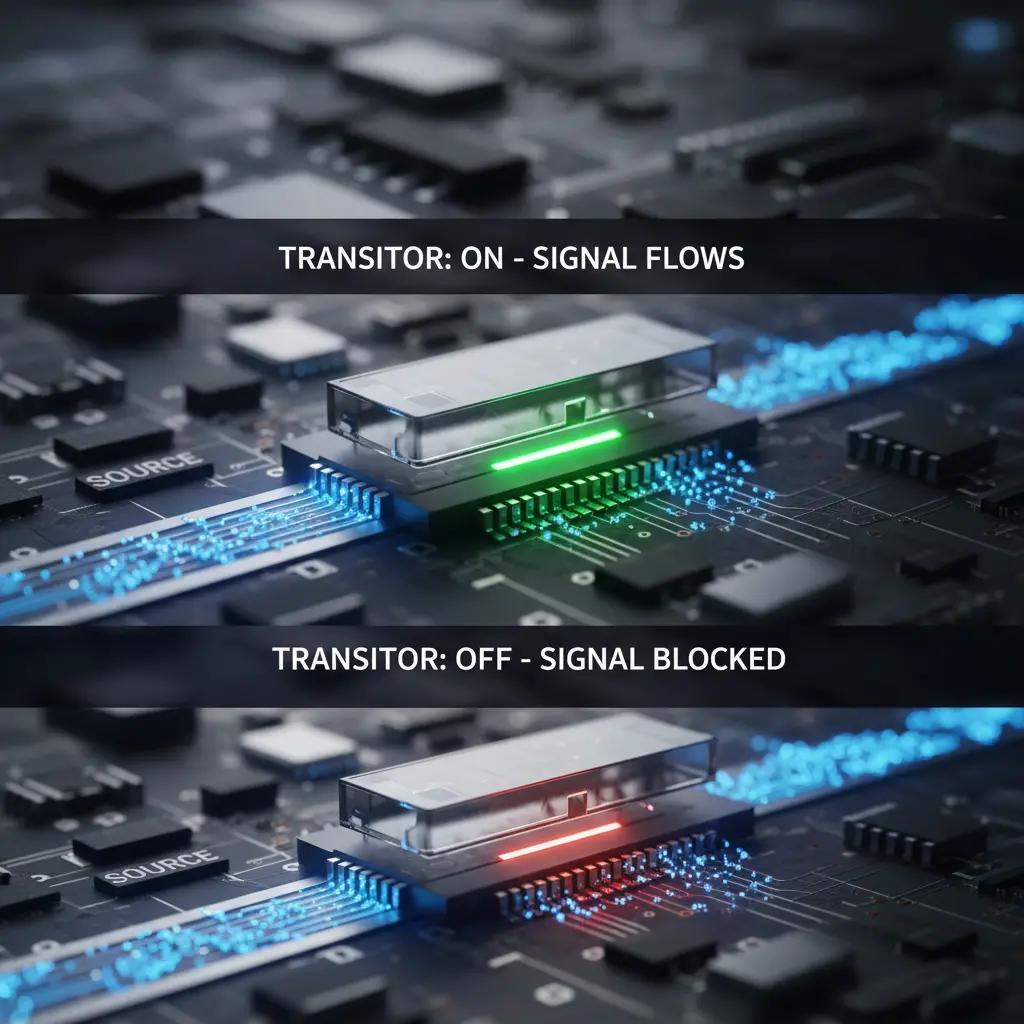
Example sentences are the start of understanding. Don't rush to memorize. First feel how the word works in a sentence.
The word 'transistor' comes from 'trans' (to transfer) + 'istor' (a device), formed in the early 20th century to describe a device that transfers electrical signals. Imagine a tiny switch inside electronic devices that allows signals to flow or stop, like a light switch in your home that controls the flow of electricity.
Note 1: These definitions and etymologies are not standard dictionary definitions, but extended explanations provided to help with memorization and understanding of the actual application of words. Through this background information, we strive to make words more vivid and easier to understand, and help you remember their meanings in real life.
Note 2: LexiTalk designs the learning flow around the linguistics principle of “Comprehensible Input.” When learners encounter material that is slightly above their level but still understandable from context, the brain naturally absorbs the language. That’s why we keep every word inside authentic contexts, using examples and associations to help you understand it and use it flexibly.
Read the FAQ explanation of Comprehensible InputTransistor is a small semiconductor device that can amplify or switch electronic signals. It started the era of solid state electronics by replacing bulky vacuum tubes, making devices smaller, more reliable, and more energy efficient. A transistor has three terminals in most configurations: base, collector, and emitter for a bipolar transistor, or gate, drain, and source for a field effect transistor. Modern electronics rely on millions of transistors in integrated circuits, forming the fundamental building blocks of amplifiers, switches, and digital logic. Understanding how a transistor controls current helps learners grasp circuits from radios to computers.
English speakers often picture a transistor as a tiny three-terminal switch or amplifier; learners may confuse the device with vacuum tubes or with the phrase transistor radio, and may mispronounce base/collector/emitter or gate/drain/source.
Download LexiTalk app for personalized learning experience
Download AppCookies
We use cookies for essential site functions, analytics, and ads. You can accept, reject, or manage preferences. Privacy Policy