wallow - Master This Word
Master this word with our 5-step learning method – Learn English in English
Train English Through Brain Routes, Not Translation.
This page helps you stop memorizing isolated translations and start understanding a word through its shared mental image, native-style thinking, and practical training steps.
Master this word with our 5-step learning method – Learn English in English
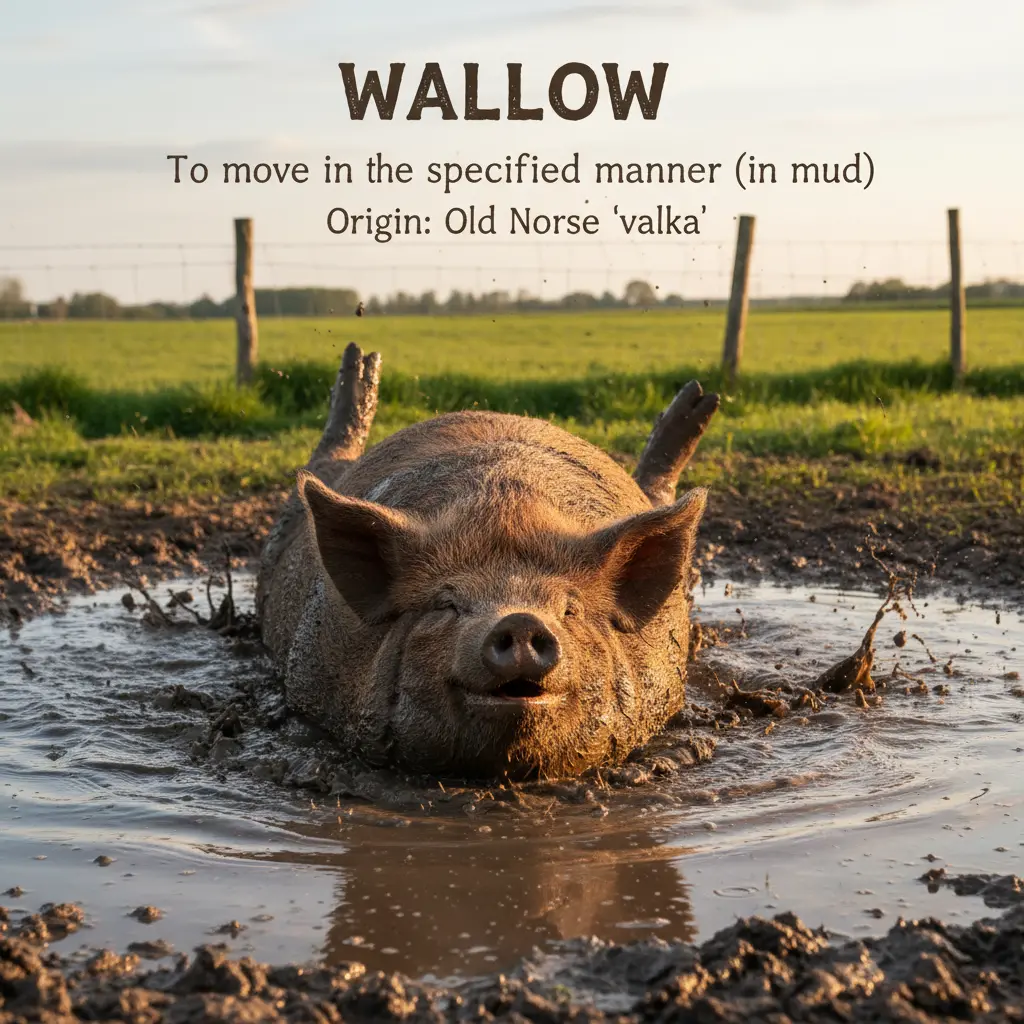
Example sentences are the start of understanding. Don't rush to memorize. First feel how the word works in a sentence.
wallow = wall (mud) + -ow (to move in a specified manner); Historical origin: Middle English from Old Norse 'valka', related to Old English 'walwian'. Memory image: Imagine a pig joyfully rolling in a muddy puddle, embracing the dirt and enjoying the sensation.
Note 1: These definitions and etymologies are not standard dictionary definitions, but extended explanations provided to help with memorization and understanding of the actual application of words. Through this background information, we strive to make words more vivid and easier to understand, and help you remember their meanings in real life.
Note 2: LexiTalk designs the learning flow around the linguistics principle of “Comprehensible Input.” When learners encounter material that is slightly above their level but still understandable from context, the brain naturally absorbs the language. That’s why we keep every word inside authentic contexts, using examples and associations to help you understand it and use it flexibly.
Read the FAQ explanation of Comprehensible InputTo wallow means more than simply lying in mud or water; it also describes a physical act of rolling about for relief or pleasure, and a range of figurative uses that mean to indulge in a feeling or activity at length. You can say someone wallows in self-pity, or a pig wallows in a muddy puddle after rain. The nuance depends on context: light and playful when describing animals; more negative when referring to overindulgence or moody dwelling in misery. Common collocations include wallow in mud, wallow in self-pity, or wallow for hours. Etymology: wall (mud) + -ow, from Middle English; related to Old Norse valka and Old English walwian. Memory image: imagine a contented pig rolling in dirt.
English often relies on both literal and figurative senses, with strong connotations of messiness or self-indulgence in negative contexts. Learners may overgeneralize to all emotions or assume wallow is always negative for people, or confuse with linger or indulge. Remember the animal sense is neutral; the self-pity sense is typically negative and not used for everyday resilience.
What is the meaning of the word 'wallow'?
Which of the following sentences uses 'wallow' correctly?
What is a synonym for 'wallow'?
What is an antonym for 'wallow'?
In what situation would someone likely 'wallow'?
English Learning Listening Content
Listen NowDownload LexiTalk app for personalized learning experience
Download AppCookies
We use cookies for essential site functions, analytics, and ads. You can accept, reject, or manage preferences. Privacy Policy