
warrior - Master This Word
Master this word with our 5-step learning method – Learn English in English
Train English Through Brain Routes, Not Translation.
This page helps you stop memorizing isolated translations and start understanding a word through its shared mental image, native-style thinking, and practical training steps.
Master this word with our 5-step learning method – Learn English in English
Example sentences are the start of understanding. Don't rush to memorize. First feel how the word works in a sentence.
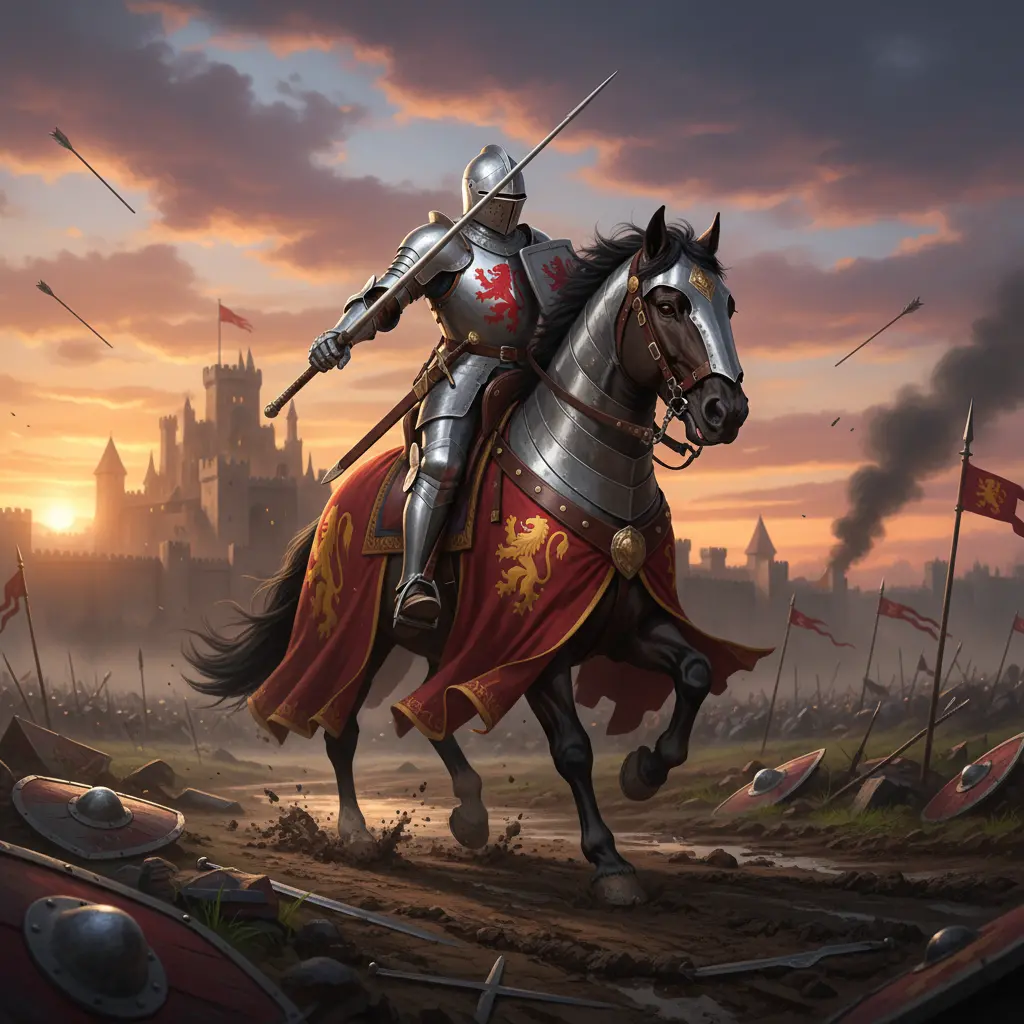
The word 'warrior' comes from the Old French 'werreior', derived from 'werre' (war) and the suffix '-ior', meaning a person who does. It can be visualized as a fierce individual standing tall on a battlefield, ready to fight with bravery for their cause. This idea of fighting evokes the image of a knight in shining armor, valiantly charging forward.
Note 1: These definitions and etymologies are not standard dictionary definitions, but extended explanations provided to help with memorization and understanding of the actual application of words. Through this background information, we strive to make words more vivid and easier to understand, and help you remember their meanings in real life.
Note 2: LexiTalk designs the learning flow around the linguistics principle of “Comprehensible Input.” When learners encounter material that is slightly above their level but still understandable from context, the brain naturally absorbs the language. That’s why we keep every word inside authentic contexts, using examples and associations to help you understand it and use it flexibly.
Read the FAQ explanation of Comprehensible InputI plant my feet, then push off the ground and shift my weight toward the path ahead. The moment tightens as my shoulders settle, my grip tightens and I straighten into focus. It feels like a warm resolve rising with every breath, a choice held in my chest that changes the room around me. In that tone of readiness, I carry the idea forward into real life when the next challenge asks me to act.
Warrior is a noun for a person engaged in warfare, especially a soldier, but it also admits a broader sense: someone who shows bravery, skill, and tenacity in a difficult field. The word carries martial and heroic overtones, often linked to training, discipline, and a personal code of honor. In modern usage, a warrior can be a firefighter, athlete, or activist who fights hard for a cause. Its imagery ranges from ancient knights to modern combatants, yet the core idea remains steadfast courage under pressure and commitment to a meaningful goal.
Explain to an English speaker that warrior often carries noble, battle-ready connotations and can be metaphorical; avoid assuming it always refers to soldiers or to combat; emphasize its heroic and disciplined undertones.
What is the meaning of the word 'warrior'?
In which sentence is the word 'warrior' used correctly?
Which word is a synonym of 'warrior'?
What is the opposite of 'warrior'?
In which situation would you likely encounter a 'warrior'?
Download LexiTalk app for personalized learning experience
Download AppCookies
We use cookies for essential site functions, analytics, and ads. You can accept, reject, or manage preferences. Privacy Policy