
distress - Master This Word
Master this word with our 5-step learning method – Learn English in English
Train English Through Brain Routes, Not Translation.
This page helps you stop memorizing isolated translations and start understanding a word through its shared mental image, native-style thinking, and practical training steps.
Master this word with our 5-step learning method – Learn English in English
Example sentences are the start of understanding. Don't rush to memorize. First feel how the word works in a sentence.
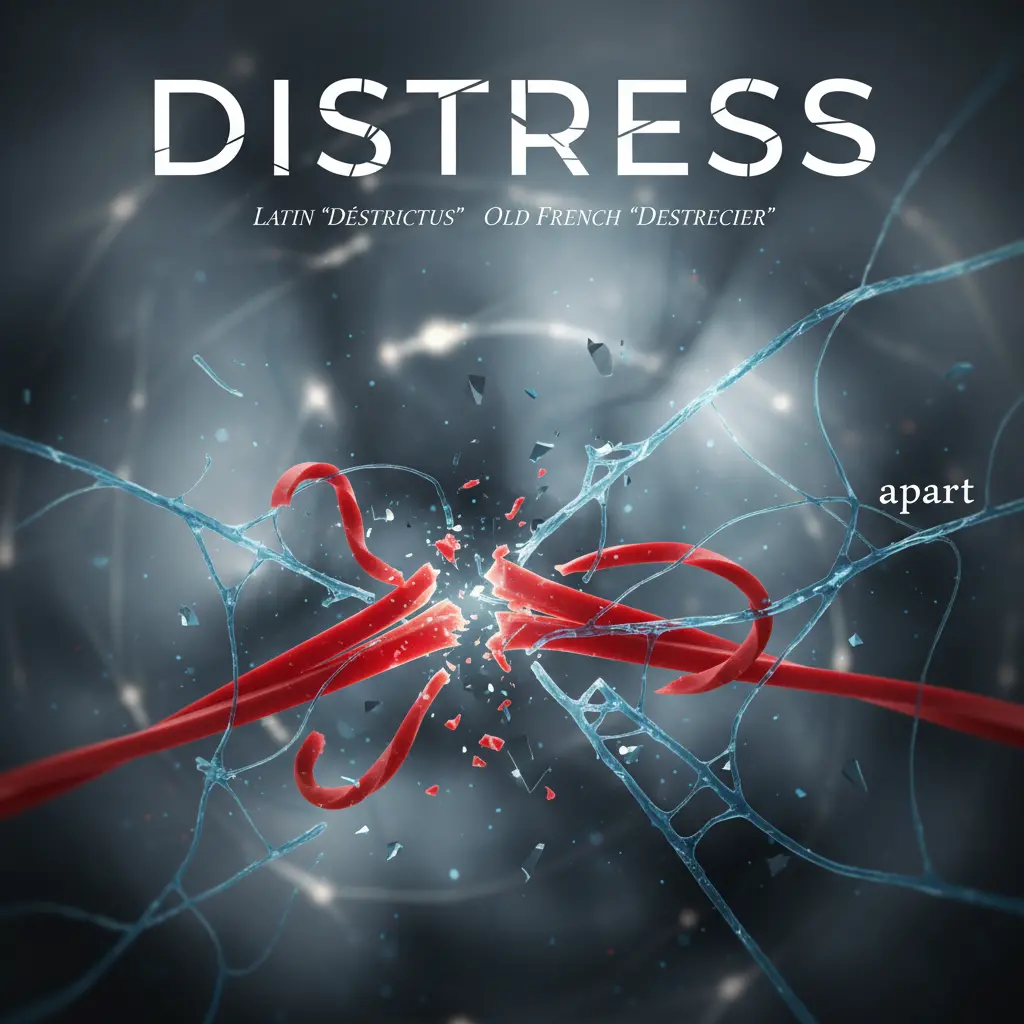
dis- = apart, stress = to draw tight. Historical origin: Latin 'dēstrictus' → Old French 'destrecier' → English. Memory image: Imagine a rubber band pulled tight and then snapping back, representing the stress that pulls you apart emotionally.
Note 1: These definitions and etymologies are not standard dictionary definitions, but extended explanations provided to help with memorization and understanding of the actual application of words. Through this background information, we strive to make words more vivid and easier to understand, and help you remember their meanings in real life.
Note 2: LexiTalk designs the learning flow around the linguistics principle of “Comprehensible Input.” When learners encounter material that is slightly above their level but still understandable from context, the brain naturally absorbs the language. That’s why we keep every word inside authentic contexts, using examples and associations to help you understand it and use it flexibly.
Read the FAQ explanation of Comprehensible InputI place my palms on the steering wheel and take a slow breath, watching the road as the car shifts into a quiet pace. A knot in my chest tightens, I hold still, then tilt my head and adjust my grip to steady the tremor of worry. The moment feels like a push against a rush of thoughts, a decision to stay present rather than bolt toward fear. With the road ahead, distress becomes a signal I carry, a learned rhythm I keep in check as I use it to guide my next move.
Distress is a strong feeling of emotional suffering or anxiety, often triggered by a difficult situation, loss, danger, or overwhelming news. In everyday use, we distinguish distress from ordinary worry or fatigue: distress implies a severe, sometimes immediate, impact on a person’s well being. It can describe a state (a person in distress) or the act of causing distress to others (to distress someone). Distress can be mental, emotional or physical, and it commonly appears in medical, legal or humanitarian contexts, such as distress signals, in distress at sea, or a country in economic distress. In informal speech, people might say they are in distress or feel distressed about a personal problem; the tone is serious, not casual.
English learners often note that distress is more severe than regular stress and can describe both emotional and physical states; they may overgeneralize to all anxious feelings and overuse distress in casual contexts.
What is the meaning of 'distress'?
In which sentence is 'distress' used correctly?
Which word is an antonym of 'distress'?
In what real-life context might someone experience distress?
Reflect on a time when you or someone you know experienced distress.
Download LexiTalk app for personalized learning experience
Download AppCookies
We use cookies for essential site functions, analytics, and ads. You can accept, reject, or manage preferences. Privacy Policy