emergency - Master This Word
Master this word with our 5-step learning method – Learn English in English
Train English Through Brain Routes, Not Translation.
This page helps you stop memorizing isolated translations and start understanding a word through its shared mental image, native-style thinking, and practical training steps.
Master this word with our 5-step learning method – Learn English in English
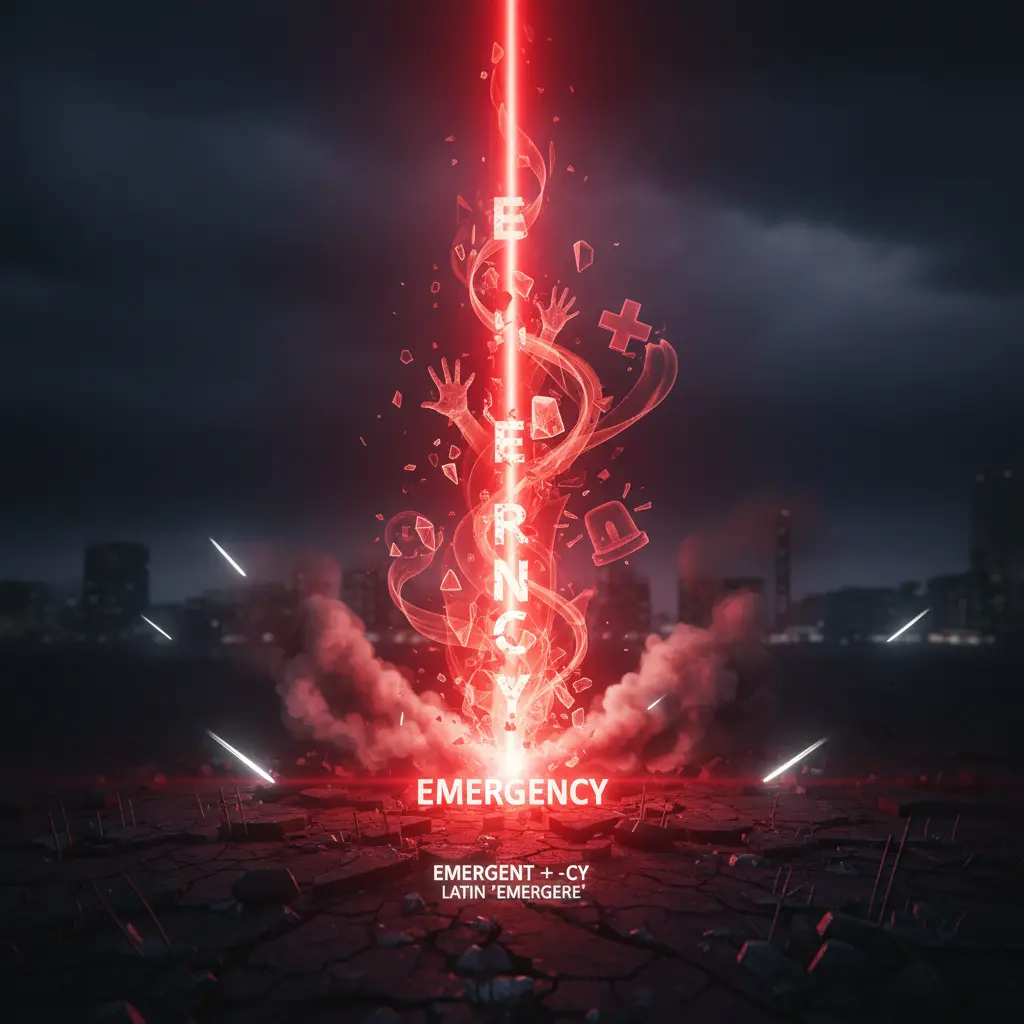
Example sentences are the start of understanding. Don't rush to memorize. First feel how the word works in a sentence.
emergency = emergent + -cy (condition of being) from Latin 'emergere' (to rise out) → Old French 'emergent' → English. Imagine a situation suddenly rising up, like a flashing light signaling need for help.
Note 1: These definitions and etymologies are not standard dictionary definitions, but extended explanations provided to help with memorization and understanding of the actual application of words. Through this background information, we strive to make words more vivid and easier to understand, and help you remember their meanings in real life.
Note 2: LexiTalk designs the learning flow around the linguistics principle of “Comprehensible Input.” When learners encounter material that is slightly above their level but still understandable from context, the brain naturally absorbs the language. That’s why we keep every word inside authentic contexts, using examples and associations to help you understand it and use it flexibly.
Read the FAQ explanation of Comprehensible InputHands on the phone, I shift my weight and push the chair aside. I listen, my breath tight, and adjust my stance as the room suddenly feels out of rhythm. An alarm blares, and I move toward the door, keeping a clear path and pulling the handle open. In that quick moment I set my plan—get help, protect others—and the sense of emergency becomes a test of reflex and choice rather than a label.
An emergency is a sudden situation that requires immediate action to prevent harm or loss. It can be a medical crisis, a fire, a natural disaster, or any unexpected event that interrupts normal routines and demands quick decisions and coordination with authorities or first responders. In everyday speech, people describe situations as emergencies when time is critical and delaying actions could worsen outcomes. The term appears in safety protocols, insurance policies, and public announcements, often with phrases like emergency services or emergency exit. Knowing emergency vocabulary helps you stay calm, call for help, and follow safety instructions during urgent moments.
English tends to rely on a clear, countable noun form with many common collocations (emergency services, emergency exit). Other languages may use broader terms for danger or crisis; learners should map to specific phrases used in safety contexts.
What is the meaning of the word 'emergency'?
How is the word 'emergency' used in a sentence?
Which word is similar to 'emergency'?
What is the opposite of 'emergency'?
In what real-life context would you most likely encounter an emergency?
Download LexiTalk app for personalized learning experience
Download AppCookies
We use cookies for essential site functions, analytics, and ads. You can accept, reject, or manage preferences. Privacy Policy